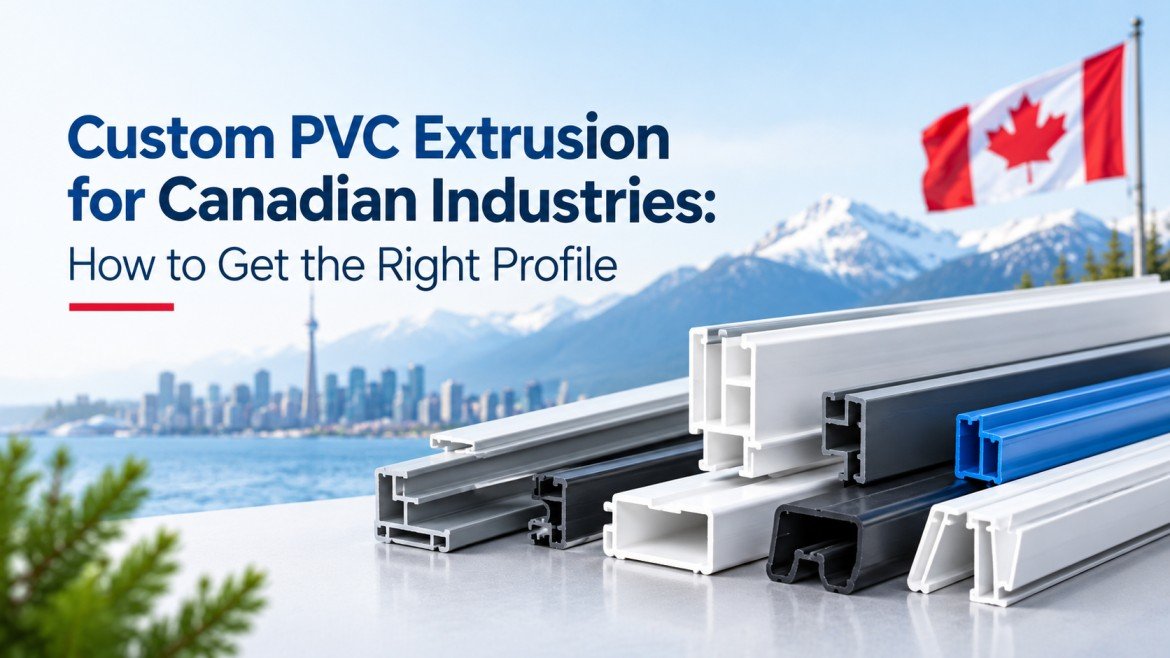
With the growing demand for custom-made components for construction, electrical systems, furniture, and industrial equipment in Canada, more and more businesses are turning to custom PVC extrusion to meet their design and production needs. These profiles can be designed to meet the specific needs of Canadian industries, including the dimensions, material properties, and weather resistance required for their intended applications.
However, while you can find a range of companies offering custom PVC extrusion for Canadian industries, getting the right profile takes more than sharing a drawing with a manufacturer. The PVC material must suit the intended use, the dimensions must meet the design needs, and the profile must handle the conditions in which it will be used.
Nonetheless, by understanding your project needs and doing some research, you can find custom PVC extrusion profiles that match your design, material, and performance requirements.
5 Factors to Consider When Choosing Custom PVC Extrusion Profiles for Canadian Industries
Choosing custom PVC extrusion profiles requires careful attention to their design, material, and intended use. For Canadian industries, factors such as cold weather, temperature changes, and product fit can also affect which profile works best. Besides, custom plastic extrusion benefits Canadian manufacturers only when the profiles are designed to meet their specific product requirements, material needs, and operating conditions.
Here are five factors to consider before making your choice:
1. Define the Profile Shape and Design
One of the major factors that you need to consider before ordering custom PVC extrusion profiles is the profile’s shape and design. The dimensions, wall thickness, and cross-section must match the product’s requirements to ensure a proper fit and function.
Before placing an order, review these details:
- Profile Shape: Confirm the cross-section and overall shape required for the application.
- Dimensions: Set the required width, height, and length.
- Wall Thickness: Choose a thickness that suits the profile’s purpose and strength needs.
- Slots and Grooves: Include any openings, ridges, or edges needed for fitting.
- Fit: Check how the profile will connect with or support other parts.
Share technical drawings, measurements, or a physical sample with the manufacturer. Clear design details help the production team understand your requirements and reduce the risk of errors during production.
2. Choose the Right PVC Material
The PVC material used in a custom profile affects its strength, flexibility, and performance. The right choice depends on the product’s purpose and the conditions it will face during use.
Manufacturers can produce different types of PVC profiles to meet these needs.
- Rigid PVC profiles: These suit applications that need a firm shape and stable structure, such as building components and parts for industrial equipment.
- Flexible PVC profiles: These suit applications that need a profile to bend or fit around edges.
- Co-extruded profiles: These combine two or more materials in a single profile to meet different needs, such as a firm base with a softer edge.
When choosing a material, consider its strength, flexibility, and resistance to the conditions in which the profile will be used. For outdoor use, check whether the material suits the expected temperature range and exposure to moisture or sunlight.
Ask the manufacturer about the available material grades and their properties. By choosing the right PVC material for your profile, you can ensure it has the strength, flexibility, and properties needed for its intended use.
3. Check Suitability for Canadian Weather
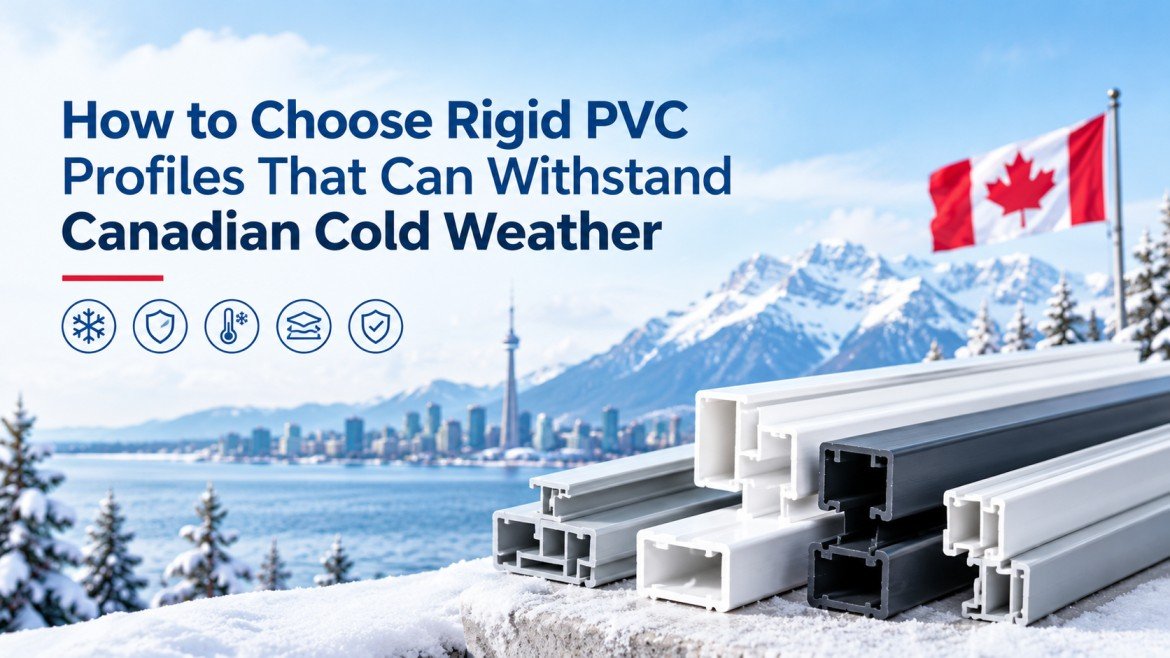
Canadian weather can place extra demands on PVC profiles used outdoors. Freezing temperatures, snowfall, moisture, and changes between hot and cold conditions may affect how a profile performs.
Low temperatures can make PVC more brittle, which may raise the risk of cracks when a profile faces sudden impact. Repeated temperature changes can also cause the material to expand and contract, which may affect its fit.
Before choosing a profile for use in Canada, check the following:
- Low-temperature impact strength: Ask how well the profile can withstand sudden force in cold conditions.
- Temperature range: Confirm that the material suits the lowest and highest temperatures expected in the application.
- Moisture exposure: Check whether the profile suits areas exposed to rain, snow, or damp conditions.
- Sunlight exposure: For outdoor use, review whether the material can handle prolonged exposure to sunlight.
- Installation conditions: Consider whether the profile will face direct weather exposure or remain within a protected area.
Do not assume that every rigid PVC profile performs the same way in freezing weather. Ask for test data that supports claims about low-temperature performance.
The profile’s design also matters. Its shape, thickness, and installation method must suit the demands of the application. Checking these details before production can help reduce the risk of cracks, poor fit, and early damage.
4. Match the Profile to Its Industrial Application
Custom PVC extrusion profiles serve different purposes across Canadian industries. For example, profiles that will be used in construction may need to withstand outdoor conditions, while those used in furniture or industrial equipment may need specific shapes and dimensions to fit the parts they connect with. Make sure you clearly define the intended use of the profile before placing an order. This helps the manufacturer select a suitable design and material while meeting the required fit, strength, and finish.
Common applications include:
- Construction: PVC profiles for trims, frames, and other building components.
- Electrical Systems: Profiles used for cable management and other electrical applications.
- Furniture: Edge trims and other parts that need a set shape and finish.
- Industrial Equipment: Custom profiles used as guides, covers, guards, or other components.
- Product Assembly: Profiles designed to fit, hold, or protect parts within a finished product.
Before ordering, explain how the profile will be used and whether it will face weight, pressure, impact, or regular movement. Share details about the parts it needs to fit and any size limits that the design must meet.
By sharing clear details about the intended application, you can help the manufacturer produce a custom PVC extrusion profile that fits your product and meets its design needs.
5. Review Samples and Production Quality
Another major factor to consider when choosing custom PVC extrusion profiles is the manufacturer’s production quality. Consistent quality checks help ensure that each profile meets the agreed specifications throughout bulk production.
Review these points when assessing production quality:
- Dimensional Accuracy: Check whether profiles maintain the specified width, height, and wall thickness.
- Material Consistency: Confirm that the material properties remain consistent across production batches.
- Shape and Finish: Check for surface defects, uneven edges, or changes in the profile’s shape.
- Production Checks: Ask how the manufacturer inspects profiles during production to identify defects.
- Batch Consistency: Confirm that profiles from different batches meet the same specifications.
Before placing a bulk order, ask the manufacturer about its quality control process and available inspection reports. Clear quality standards and regular inspections help maintain consistent profile quality during production.
Get Custom PVC Extrusion Profiles from M3 Extrusion
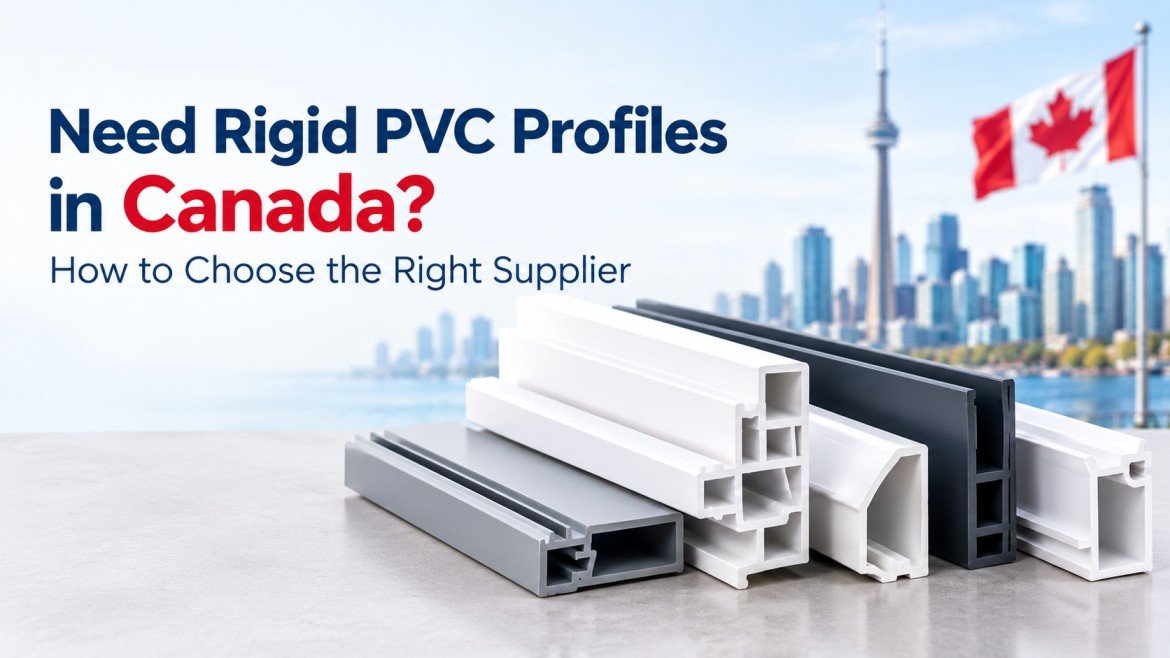
M3 Extrusion manufactures custom PVC extrusion profiles in India for buyers in Canada and other international markets. The company works with customer drawings, samples, dimensions, and material requirements to produce profiles suited to different industrial applications.
Custom PVC Profile Manufacturing
M3 Extrusion produces custom PVC profiles in different shapes, sizes, colours, and cutting lengths. Buyers can share technical drawings or physical samples to explain their design requirements. Samples are available before bulk production, allowing buyers to check the profile’s dimensions, shape, and finish before confirming a larger order.
Bulk Order Support
With 14+ extrusion lines, M3 Extrusion supports bulk orders for custom PVC extrusion profiles and repeat production requirements. The standard minimum order quantity starts at 1,000 kg. Production takes around 45 days after order confirmation, depending on the profile design and order quantity.
Export and Shipping Support
M3 Extrusion supplies custom PVC extrusion profiles to international markets and offers FOB and CIF shipping terms. Air freight can also be arranged for urgent orders. Export documents, including a Certificate of Origin, are available when required, helping Canadian buyers manage their import requirements.
Conclusion
Choosing custom PVC extrusion profiles for Canadian industries starts with a clear understanding of the required shape, material, and end use. Buyers also need to check weather exposure, sample quality, and production needs before placing a bulk order. Reviewing these details helps ensure that the profile matches the design and performs as required.
Are you looking for custom PVC extrusion profiles for your Canadian business? M3 Extrusion offers a broad range of custom PVC extrusion profiles for Canadian industries at affordable rates. Contact us today to discuss your requirements.
Frequently Asked Questions
Which industries use custom PVC extrusion profiles in Canada?
Construction, electrical systems, furniture, and industrial equipment are among the industries that use custom PVC extrusion profiles. The required shape, material, and size depend on the product and its intended use.
What details are needed to order custom PVC extrusion profiles?
Buyers should share technical drawings or samples, profile dimensions, wall thickness, material needs, colour, and intended use. Order quantity and delivery needs also help the manufacturer plan production.
Can custom PVC extrusion profiles be made for cold Canadian weather?
Yes, manufacturers can produce profiles based on the needs of cold-weather applications. Buyers should check low-temperature impact strength, material properties, and design requirements before approving a profile for outdoor use.
Can buyers review samples before placing a bulk order?
Yes, sample checks help buyers confirm the profile’s shape, dimensions, wall thickness, colour, and fit. This allows them to review the design before moving to bulk production.