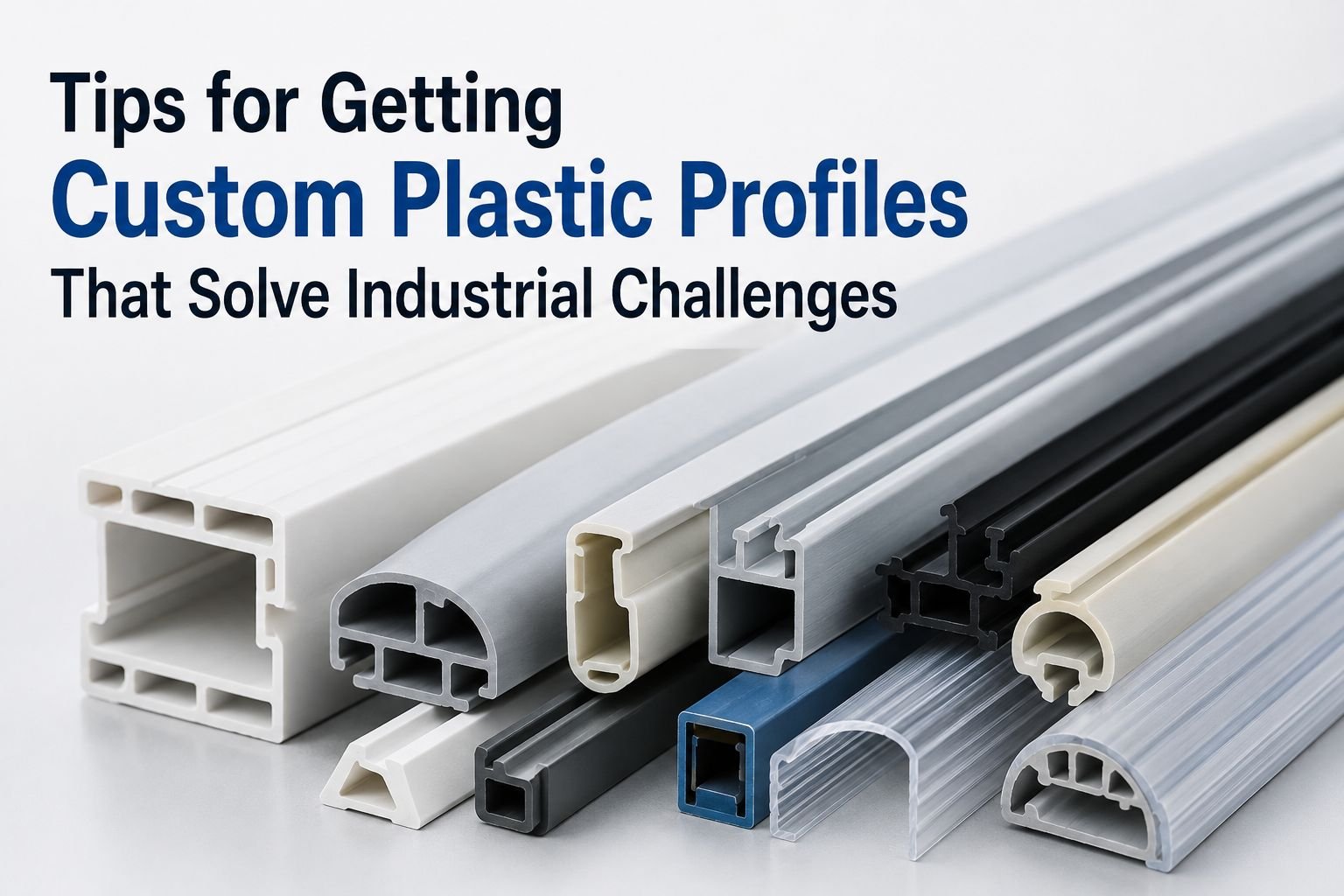
Let’s face it, finding the right plastic profile for industrial products and equipment can come with its fair share of challenges, from poor fit and weak materials to limited size and shape options. These issues can affect how parts fit together, how a product performs, and how long it lasts.
These challenges can be solved with custom plastic profiles made to match the needs of a specific application. They can be produced in the required size, shape, thickness, and material to help meet different industrial needs.
With that said, while you can find a plethora of companies offering custom plastic extrusion profiles for Indonesian businesses, choosing the right custom plastic profile can be a daunting task. Since different profiles can vary in material, design, size, thickness, and performance, it is important to compare your options before placing an order.
Nonetheless, by understanding your requirements and keeping a few key factors in mind, you can easily find a custom plastic profile that fits your application and helps address your industrial challenges.
5 Tips for Getting Custom Plastic Profiles That Solve Industrial Challenges
Getting a custom plastic profile is not just about asking for a certain shape or size. The profile needs to suit the application and work as required once it is part of the final product or system. Making the right choice at the start can help you avoid issues during production, assembly, and use.
Here are five tips to help you get custom plastic profiles that meet your requirements and address your industrial challenges.
Identify the Industrial Challenge First
Before ordering custom plastic profiles, make sure you identify the problem you need them to solve. This gives the supplier a clear idea of what the profiles need to do and where they will be used.
For example, a plastic profile may need to seal a gap, protect an edge, cover wires, hold another part in place, or fit into a larger assembly. Each use can call for a different profile shape and material.
The working conditions also matter. A profile used in a refrigeration system may face moisture and low temperatures. A profile used in lighting may need a certain shape, finish, or level of light transfer. A profile used for wall protection may need to handle regular contact and impact.
To define the challenge clearly, consider:
- Application: Identify where the profile will be used.
- Main Issue: Describe the problem the profile needs to address.
- Cause: Consider what is causing the current issue.
- Required Function: Explain what the profile needs to do to solve it.
- Use Conditions: Note the conditions the profile will face during use.
Having this information ready can help avoid a design that looks right on paper but does not work well in the actual application.
It can also help the supplier suggest a suitable material and profile design. When the purpose of the profile is clear from the start, it becomes easier to get a profile that meets your needs.
Choose the Right Plastic Material
The plastic used for a profile can affect how it performs. Different materials have different levels of strength, flexibility, impact resistance, chemical resistance, and other properties.
This means the same material may not be right for every industrial application. A profile that works well for a simple trim may not be suitable for an application that faces heat, moisture, impact, or chemical contact.
Common materials used for custom plastic profiles include PVC, ABS, HDPE, polycarbonate, PMMA, PET, and PETG. While you can find numerous custom plastic profile manufacturers, including OEM PVC profile manufacturers, choosing the right material will help ensure that the profile can handle the conditions of its intended use.
When choosing the material, consider:
- Strength: Check whether the material can handle the expected load or use.
- Flexibility: Decide whether the profile needs to bend or remain rigid.
- Temperature: Consider the temperatures the profile will face.
- Moisture: Check whether the profile will be exposed to water or humidity.
- Chemical Contact: Consider oils, cleaners, or other chemicals that may come into contact with it.
- Appearance: Check if colour, clarity, or surface finish is important.
You should also explain the application to the supplier rather than choosing a material based only on its name. A supplier with experience in plastic extrusion can review the use and help match the material to the profile requirements.
By choosing the right material at the start, you can help ensure that the profile performs as required.
Provide Clear Profile Specifications
A custom profile needs clear specifications. Small changes in width, height, thickness, or shape can affect how the profile fits and works with other parts.
For this reason, provide as much useful information as possible before production begins. A technical drawing can help show the profile shape and dimensions.
The information should include:
- Profile Dimensions: Share the required width, height, length, and thickness.
- Cross-Section: Show the shape of the profile from the required view.
- Tolerances: State how much variation is acceptable in key dimensions.
- Cutting Length: Provide the required length for each piece.
- Colour: Share the required colour or colour standard.
- Material: State the preferred material if it has already been selected.
- Application: Explain where the profile will be used.
Clear drawings and samples can help the supplier understand the design before production.
It is also useful to explain which dimensions are most important. For example, if one section needs to fit tightly into another component, tell the supplier. This can help the production team pay closer attention to that part of the profile.
Clear specifications can reduce mistakes and make it easier to ensure the profile matches the required design.
Check Samples and Repeat Production
A sample can give you a chance to check the profile before ordering a large quantity. This is useful for custom profiles because a small change in the design can affect how the profile fits or performs.
Before approving the sample, check the areas that matter most to your application.
Look at:
- Size: Check the main dimensions against the drawing.
- Shape: Make sure the profile matches the approved design.
- Fit: Test it with the part or system it will be used with.
- Thickness: Check key wall sections and other important areas.
- Surface: Look for an even finish without visible defects.
- Material: Confirm that the profile uses the agreed material.
You should also think about future orders. A custom profile may not be needed only once. You may need the same profile again for ongoing production or new projects.
In such cases, the supplier needs to reproduce the same profile with the same key specifications. Changes in size, shape, thickness, or material between batches can create problems during assembly or production.
Ask the supplier how repeat orders are managed. Make sure the approved drawing, material, and other key details can be used for future production.
Checking the first sample and planning for repeat production can help keep the profile consistent from one order to the next.
Check Production Capacity and Lead Times
A custom profile may work well for your application, but the supplier also needs to produce the quantity you need. This becomes more important when you need bulk orders or regular supply.
Start by discussing your expected order quantity. If you need a large number of profiles each month or each year, the supplier needs enough production capacity to support that demand.
You should also think about future orders. Your demand may increase after a new product launch, project, or customer order. A supplier that can support higher quantities can make it easier to continue using the same profile.
Before placing an order, check:
- Order Quantity: Confirm that the supplier can produce the required volume.
- Production Capacity: Ask whether the supplier can handle bulk and repeat orders.
- Repeat Orders: Check if the supplier can produce the same profile again when needed.
- Future Demand: Discuss whether higher quantities can be supported later.
- Production Schedule: Ask how your order will be planned and when it can be completed.
A supplier with enough production capacity can help you maintain a steady supply as your requirements change. It is also useful to discuss your expected order volumes in advance so the supplier can plan for your needs.
Get Custom Plastic Profiles From M3 Extrusion
M3 Extrusion manufactures custom plastic extrusion profiles for industrial and commercial applications. The company has been producing customised profiles since 2011 and supplies profiles to customers in India and international markets.
Custom Profile Manufacturing
M3 Extrusion can manufacture profiles based on customer drawings, samples, dimensions, material needs, and other technical requirements. Profiles can be made in different shapes, colours, sizes, and cutting lengths.
Range of Materials
The company works with materials such as PVC, UPVC, PMMA, polycarbonate, HDPE, ABS, PET, and PETG. This range allows customers to discuss material options based on the needs of their application.
Sample and Bulk Production Support
Samples are available before bulk production so customers can review the profile design and material. M3 Extrusion also supports bulk production and repeat manufacturing for ongoing industrial needs.
Export Supply
M3 Extrusion supplies custom plastic profiles to international markets. The company supports export orders with FOB and CIF shipping terms and can arrange air freight for urgent requirements.
Conclusion
Getting a custom plastic profile that solves an industrial problem involves more than choosing a shape or size. You need to define the problem, choose a suitable material, provide clear profile details, review samples, and check the supplier’s production capacity and lead times.
Taking these steps before production can help reduce fit issues, material problems, delays, and changes during bulk production. It can also make repeat orders easier when the same profile is needed again.
Are you looking for custom plastic profiles that meet your industrial requirements? M3 Extrusion offers custom plastic extrusion profiles based on customer drawings, specifications, materials, and production needs. Contact us today to discuss your custom profile requirements.
Frequently Asked Questions
What Are Custom Plastic Profiles Used For?
Custom plastic profiles are used for sealing, protection, framing, covering, insulation, and other industrial and commercial needs. They can be made for applications in construction, lighting, refrigeration, automotive, furniture, packaging, and water systems.
How to Choose the Right Material for a Custom Plastic Profile?
Consider where and how the profile will be used. Check factors such as strength, flexibility, temperature, moisture, chemical contact, impact, and appearance before choosing a material.
What Information Should Be Provided to a Supplier Before Ordering Custom Plastic Profiles?
Provide the profile drawing, dimensions, material, colour, cutting length, order quantity, and application details. You can also provide a sample if an existing profile needs to be matched.
How Long Does It Take to Make Custom Plastic Profiles?
The time depends on the profile design, material, order quantity, and production needs. Discuss the expected production time with the supplier before placing your order.