PVC profiles play an important role in many industries across the UK, including construction, lighting, refrigeration, furniture, packaging, and manufacturing. Be it a small business or a large manufacturer, companies use PVC profiles for different applications based on their product needs. From simple components to complex designs, these profiles help create products that require strength, durability, and accurate dimensions.
However, when it comes to importing PVC profiles, many UK businesses fall into common pitfalls that can affect product quality, delivery timelines, and overall costs. What they fail to realise is the fact that importing PVC profiles involves more than simply choosing a supplier and placing an order. It requires careful attention to product quality, specifications, shipping details, and supplier reliability to avoid issues during the process.
Since international imports involve multiple steps, businesses need to review each detail before making a decision. Small mistakes in the early stages can lead to delays, extra expenses, or products that do not meet their requirements.
Nonetheless, by being aware of these common pitfalls and taking the right steps before importing PVC extrusion profiles for UK businesses, companies can make better decisions and ensure a smoother supply process.
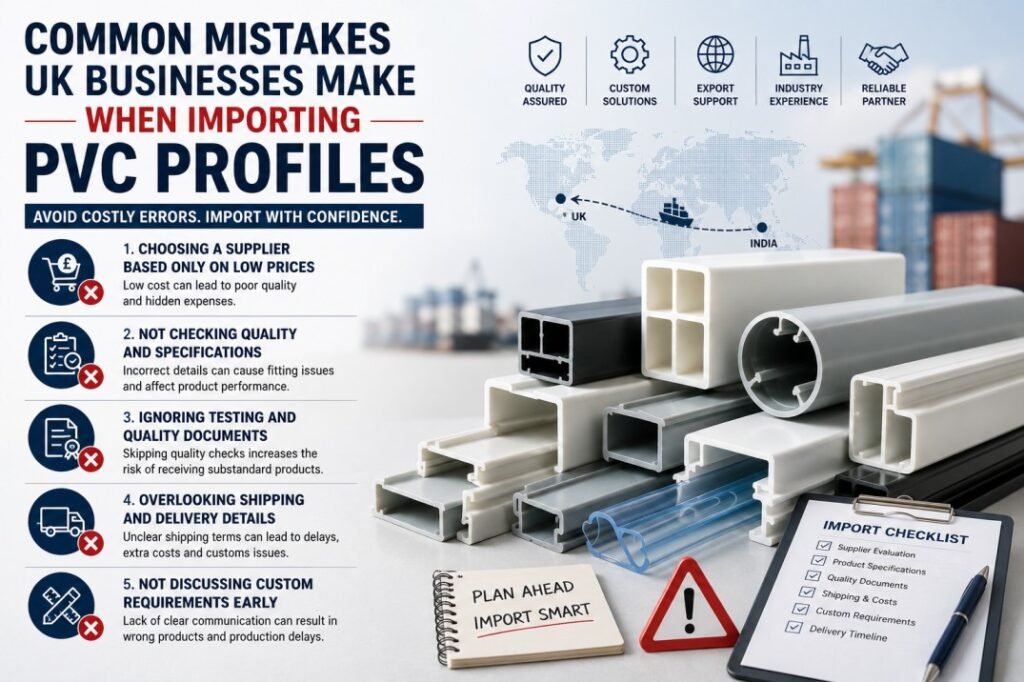
Here are five common mistakes to avoid when importing PVC profiles.
Choosing a Supplier Based Only on Low Prices
While cost may be high on your priority list when importing PVC profiles, make sure your decision is not entirely based on that alone. Choosing a supplier only because they offer the lowest price can create problems later.
Some low-cost suppliers may use poor-quality materials or may not follow proper production checks. This can affect the strength, finish, and performance of the PVC profiles. When the final product does not meet expectations, businesses may face extra costs due to replacements or production delays.
Before choosing a supplier, UK businesses should review factors beyond pricing. Supplier experience, manufacturing ability, product quality, and customer support all play an important role in making the right decision.
Not Checking PVC Profile Quality and Specifications
One of the common mistakes UK businesses make when importing PVC profiles is not checking the product quality and specifications before placing an order. Different projects require PVC profiles with specific features, making it important to choose the right specifications before importing.
A profile used for construction may need different features compared to one used for lighting, furniture, or refrigeration. Even a small difference in size, shape, or material can affect how well the profile performs in the final product.
Before importing PVC profiles, businesses should review important details such as:
- Material type
- Profile dimensions
- Shape and design
- Strength requirements
- Surface finish
- Colour options
Using profiles with incorrect specifications can create fitting issues, affect product performance, and slow down production. Clear communication with the supplier before manufacturing begins helps avoid these problems. Sharing drawings, measurements, and product requirements early allows manufacturers to create profiles that match the expected use.
Ignoring Testing and Quality Documents
Quality checks are an important part of importing PVC profiles. However, some businesses focus only on placing an order and overlook the quality checks performed on the products before shipment.
Testing reports and quality documents help businesses understand the performance and reliability of the PVC profiles before purchase. These documents provide information about the materials used and the checks completed during production.
Businesses should review important details such as:
Document or Check | Purpose |
Test Reports | Shows product performance and quality checks |
Material Details | Confirms the type of material used in production |
Product Specifications | Ensures profiles match project needs |
Quality Records | Provides details about manufacturing checks |
Checking these details before importing helps businesses reduce risks. It also makes it easier to compare suppliers and select products that match their requirements.
A supplier that can provide clear quality information shows better preparation and helps build trust with international customers.
Overlooking Shipping and Delivery Details
Shipping is another area where businesses can face problems when importing PVC profiles. Even when the products are manufactured correctly, poor planning around delivery can affect the entire supply chain.
Some businesses do not confirm shipping details early enough. This can lead to unexpected costs, longer waiting times, or confusion during the delivery process.
Before placing an order, businesses should discuss:
- Shipping method
- Export terms
- Delivery timeline
- Customs requirements
- Packaging details
Understanding these details helps businesses plan their inventory and production schedules better.
For international orders, clear communication between the supplier and buyer is important. Both sides should have a clear understanding of when the products will be ready, how they will be shipped, and what steps are needed after dispatch.
A supplier with export experience can help businesses understand the shipping process and prepare the required documents.
Not Discussing Custom Requirements Early
Another common mistake many businesses make when importing PVC profiles is that they do not discuss their custom requirements early in the process. This can make it difficult for manufacturers to understand the exact needs of the project and may lead to delays or changes during production.
Since different applications require different profile sizes, shapes, colours, and material options, businesses should share all important details before manufacturing begins. Failing to provide the right information at the start can result in profiles that do not match the required purpose.
Businesses should share their requirements early, including:
- Required profile dimensions
- Product drawings or designs
- Material preferences
- Colour requirements
- Quantity needs
Providing these details in advance helps manufacturers plan production better and create profiles that match the expected specifications. Clear communication from the beginning also helps reduce changes and makes the overall import process smoother.
How M3 Extrusion Simplifies the Process of Importing PVC Profiles
Offering reliable PVC extrusion profiles for UK businesses, M3 Extrusion helps companies simplify the import process with quality products, custom solutions, and export support. With experience in international PVC profile supply, M3 Extrusion helps businesses overcome common import challenges and manage the ordering process more easily. By focusing on quality checks, clear communication, and customer requirements, M3 Extrusion supports businesses in finding suitable PVC profile solutions.
- Export Support: M3 Extrusion supports UK businesses with export orders, shipping assistance, and clear communication to help make the PVC profile import process easier and more organised.
- Custom Solutions: The PVC profile manufacturer creates customised profiles based on specific sizes, designs, materials, and application requirements to help UK businesses get suitable solutions.
- Quality Checks: M3 Extrusion follows quality checks during production and provides support with test reports to help businesses maintain product standards before importing PVC profiles.
- Industry Experience: With experience serving industries such as construction, lighting, refrigeration, automotive, furniture, packaging, and water systems, M3 Extrusion understands different profile requirements and application needs.
Frequently Asked Questions
How can businesses ensure imported PVC profiles meet quality requirements?
Businesses can review test reports, product specifications, and quality documents provided by the supplier before importing PVC profiles.
What can cause delays when importing PVC profiles?
Delays can happen due to unclear production timelines, shipping issues, customs requirements, or changes in product requirements after manufacturing begins.
How can businesses reduce risks when working with overseas PVC profile suppliers?
Businesses can reduce risks by checking the supplier’s experience, reviewing product details, discussing requirements clearly, and confirming delivery terms before placing an order.
Why is choosing the right PVC profile supplier important?
The right supplier helps businesses receive consistent quality products, maintain clear communication, and manage regular orders more effectively.
Conclusion
Importing PVC profiles involves several important steps, and overlooking even small details can create challenges for UK businesses. Mistakes related to supplier selection, product specifications, quality checks, and shipping details can lead to delays, extra costs, and products that do not meet expectations.
By reviewing each stage of the import process and working with a reliable manufacturer, businesses can reduce risks and make better decisions when sourcing PVC profiles. Clear communication and proper planning also help ensure that the final products match their specific requirements.
Are you planning to import PVC profiles and looking for a reliable manufacturer for your UK business? M3 Extrusion offers high-quality PVC rigid profiles with custom solutions, quality testing support, and export assistance to help you meet your project needs. Contact us today to discuss your requirements and find the right PVC profile solution for your business.