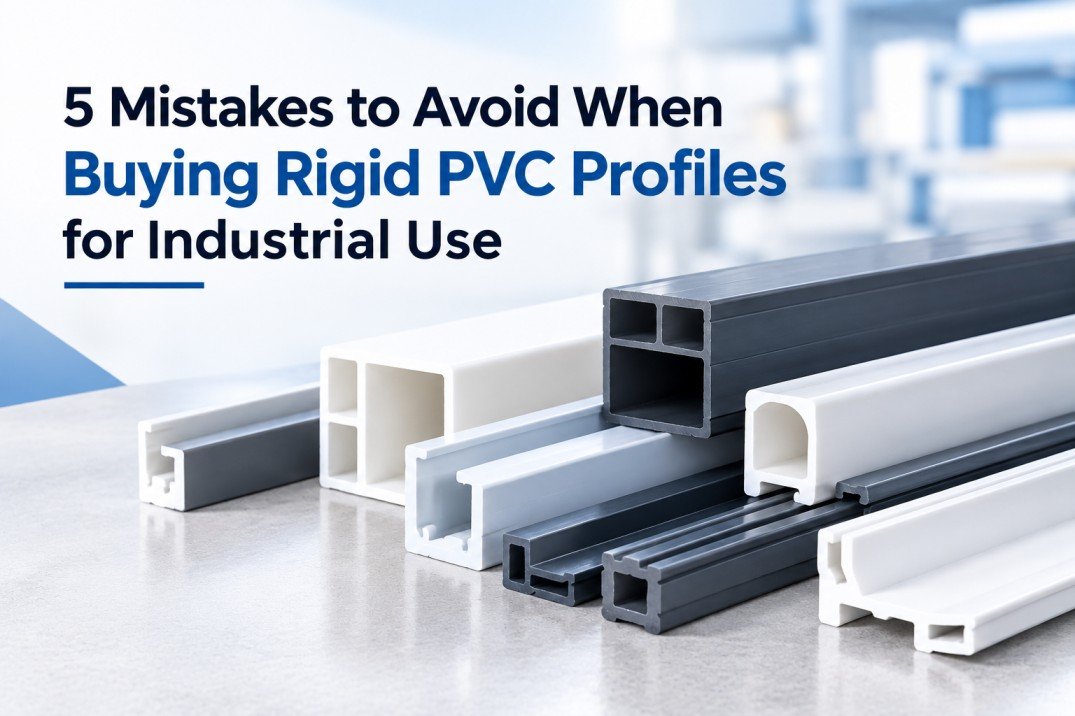
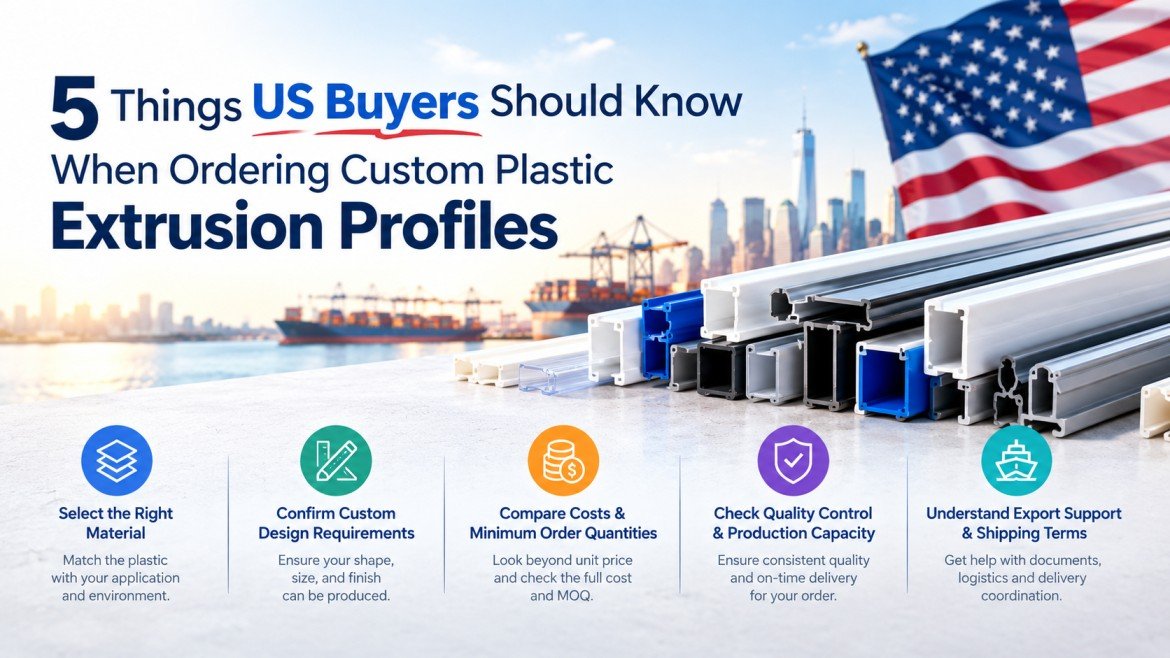
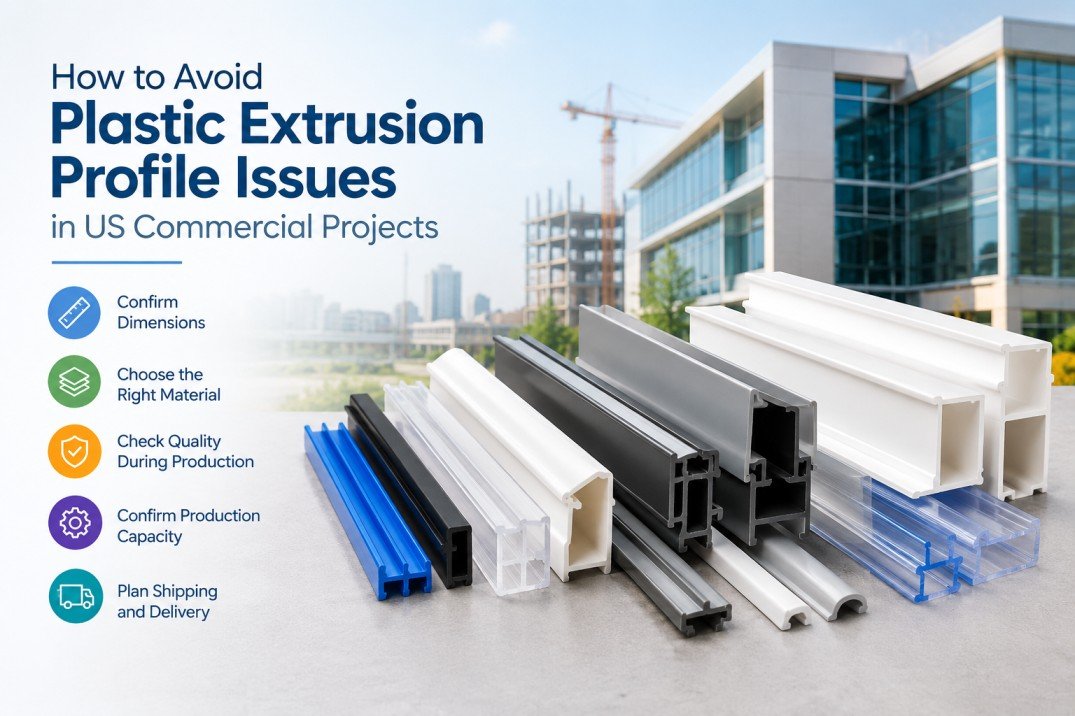
Whether you need rigid PVC profiles for electrical equipment, lighting systems, construction parts, or other industrial applications, choosing the right profiles is vital. Even a small mistake in material quality, dimensions, or design can lead to poor fit, performance issues, material waste, and higher costs.
Different applications require different profile designs, material grades, and dimensions, making it important to review these details before ordering. Not only do you need to ensure that the profiles meet your design and quality needs, but you also need to choose the right type of PVC profile for its intended use. While you can find many manufacturers offering custom rigid PVC profiles for US industrial applications, you still need to ensure that the selected profiles meet the required design, fit, and performance standards.
Nonetheless, by doing some research and keeping in mind a few common pitfalls, you can find suitable rigid PVC profiles and avoid costly sourcing problems.
5 Common Pitfalls to Avoid When Buying Rigid PVC Profiles for Industrial Use
Buying rigid PVC profiles requires more than comparing prices. Buyers need to review product details, production capacity, and shipping terms to make sure the order meets their needs. While careful custom plastic profile supplier selection is important, buyers must also check material quality, design specifications, and other key details before placing an order.
Here are five common pitfalls to avoid when buying rigid PVC profiles for industrial use:
1. Overlooking Material Quality and Grade
The quality of rigid PVC profiles depends on the raw materials used and the manufacturer’s production process. Poor material quality can affect the strength, shape, and surface finish of the profiles. It may also lead to cracks, warping, or early wear during use.
These issues can cause problems during assembly and affect the quality of the finished product. If a bulk order contains profiles that fail to meet the required standards, the buyer may face material waste, production delays, and extra costs.
Before placing an order, buyers should ask about the PVC material grade and the manufacturer’s quality checks. They can also request samples to assess the profile’s shape, finish, and overall quality.
Check whether the supplier can provide relevant test reports or material details. Buyers should also agree on quality standards before production begins. Clear requirements help both parties understand what the finished profiles must meet.
2. Ignoring Profile Dimensions and Design Details
Rigid PVC profiles must match the size and shape needed for their intended use. Even small differences in dimensions or wall thickness can affect how a profile fits into an assembly. The wrong shape, colour, or finish can also make it unsuitable for the final product.
Some buyers order standard profiles without checking whether they meet their design needs. Others share incomplete drawings or measurements, which can lead to errors during production.
To avoid these issues, buyers should provide clear product specifications before confirming an order. Important details include:
- Dimensions: Confirm the required length, width, height, and wall thickness.
- Shape and design: Share technical drawings or a physical sample where possible.
- Material grade: State the required PVC grade and any relevant performance needs.
- Colour and finish: Confirm the required colour and surface appearance.
- Application: Explain how the profile will be used in the finished product.
Review the final specifications with the manufacturer before production begins. For custom profiles, ask whether special tooling is needed and confirm the design before approving the order.
3. Choosing a Supplier Based Only on Price
A low price may seem like a good deal, but it does not always mean lower overall costs. Some quotes may exclude tooling fees, packaging, freight, or other charges. Not to mention, low-cost rigid PVC profiles may also fail to meet the required quality standards, leading to waste and extra spending.
To manage costs, ask suppliers for a detailed quotation. It should include the unit price, tooling costs, MOQ, payment terms, and expected production time. Buyers importing profiles should also confirm freight charges, insurance, and other shipping costs.
Make sure you compare the total expected cost instead of looking at the unit price alone. By reviewing all costs upfront, you can avoid unexpected expenses and make a more informed buying decision.
4. Failing to Check Production Capacity
Not every manufacturer can handle every order size or custom design. A supplier may produce standard rigid PVC profiles but lack the equipment or experience needed for complex shapes. Limited production capacity can also make it difficult to handle large orders or meet the needs of businesses with high-volume requirements.
Before placing an order, ask about the manufacturer’s extrusion lines, available production capacity, and experience with similar profile designs. Share the required order quantity and specifications early in the discussion to help confirm whether the manufacturer can handle the order.
It is also important to consider future demand when choosing a manufacturer. Overall, checking production capacity helps you choose a manufacturer that can handle your order quantity and support your ongoing supply needs.
5. Not Reviewing Shipping Terms Before Ordering
Shipping problems can affect an order even when the profiles meet all product requirements. Poor packaging may cause scratches, bends, or other damage during transit. Unclear shipping terms can also lead to confusion about freight costs, insurance, and responsibility for the goods at different stages of delivery.
Import documents are another point to check. Missing or incorrect paperwork can delay customs clearance and lead to extra charges.
Before confirming an order, discuss how the profiles will be packed and protected during transit. Confirm the shipping method, expected dispatch date, and estimated delivery time. Buyers should also review shipping terms such as Free on Board (FOB) or Cost, Insurance and Freight (CIF) to understand which costs and responsibilities fall to each party.
Ask the supplier which export documents it will provide, such as a commercial invoice, packing list, or Certificate of Origin where required. Check the current import rules with the relevant customs authority or a qualified customs agent. Allow enough time for production, shipping, and customs clearance when planning stock. By confirming shipping terms and documentation in advance, you can reduce the risk of delivery delays, unexpected charges, and damaged goods.
Get Custom Rigid PVC Profiles from M3 Extrusion
M3 Extrusion manufactures custom plastic extrusion profiles in India for domestic and international buyers. The company works with customer drawings, samples, dimensions, and material needs to produce profiles for different applications.
Custom Rigid PVC Profile Manufacturing
M3 Extrusion manufactures rigid PVC profiles in different shapes, sizes, colours, and cutting lengths. Buyers can share technical drawings or samples to discuss their design needs. Samples are available before bulk production so buyers can review the profiles before confirming a large order.
Bulk Order Support
With more than 14 extrusion lines, M3 Extrusion supports bulk production and repeat orders. Its standard minimum order quantity starts at 1,000 kg. Production takes around 45 days after order confirmation, depending on the profile design and order quantity.
Export and Shipping Support
M3 Extrusion supports international orders with FOB and CIF shipping terms. Air freight can also be arranged for urgent shipments. The company provides export documents, including a Certificate of Origin when required.
Frequently Asked Questions
How can buyers check the quality of rigid PVC profiles?
Buyers can request samples, check dimensions and surface finish, and ask for material details and relevant test reports. They should also discuss the manufacturer’s quality checks and agree on product standards before bulk production begins.
What documents should buyers request when importing rigid PVC profiles?
Common documents include a commercial invoice, packing list, and shipping documents. A Certificate of Origin may also be needed. Buyers should confirm the exact requirements with their customs agent or the relevant authorities in the importing country.
What details should buyers share when requesting a quote for rigid PVC profiles?
Buyers should share the required dimensions, wall thickness, shape, material grade, colour, finish, intended use, and order quantity. Technical drawings or samples can help explain custom design needs. It is also important to discuss tooling costs, MOQ, and production time.
When should buyers choose custom rigid PVC profiles over standard profiles?
Custom profiles are useful when standard options do not match the required shape, dimensions, or fit. They allow manufacturers to produce profiles based on a specific design. Buyers should review tooling costs, order quantity, and production time before choosing a custom profile.
Conclusion
Buying rigid PVC profiles requires careful checks at each stage of the sourcing process, from material quality and design details to pricing, production capacity, and shipping terms. Reviewing these points before placing an order can help businesses reduce waste, control costs, and avoid delays.
Are you looking for custom rigid PVC profiles for your business? M3 Extrusion offers rigid PVC profiles in different shapes, sizes, and designs, along with bulk order and export support. Contact the team to discuss your product needs and order requirements.