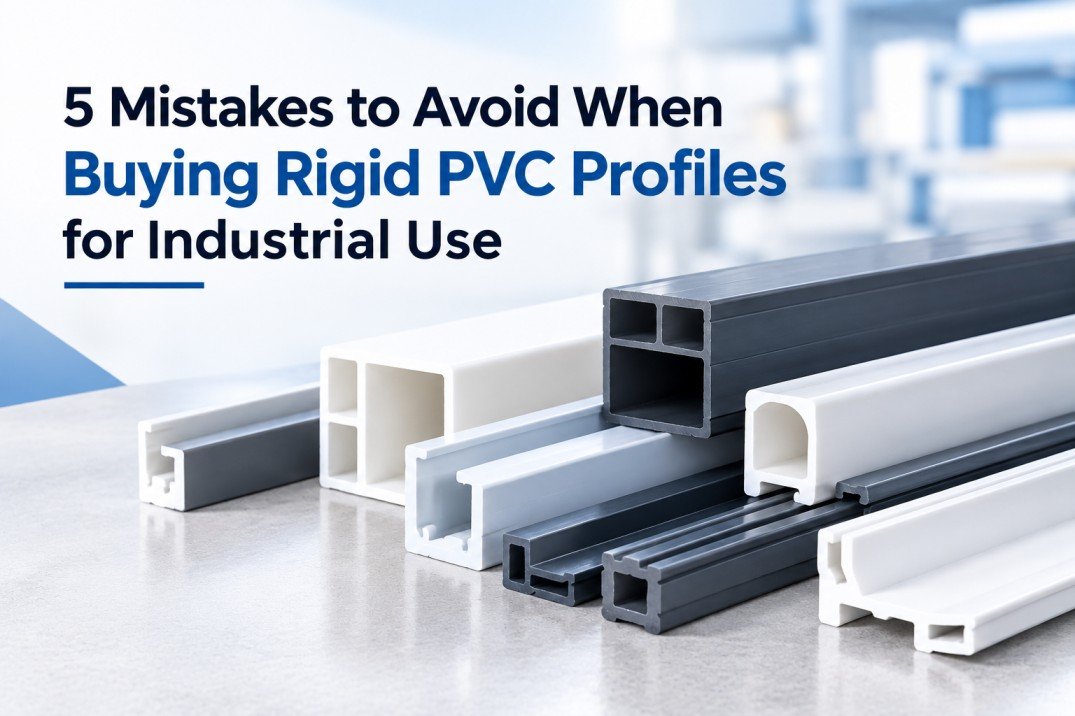
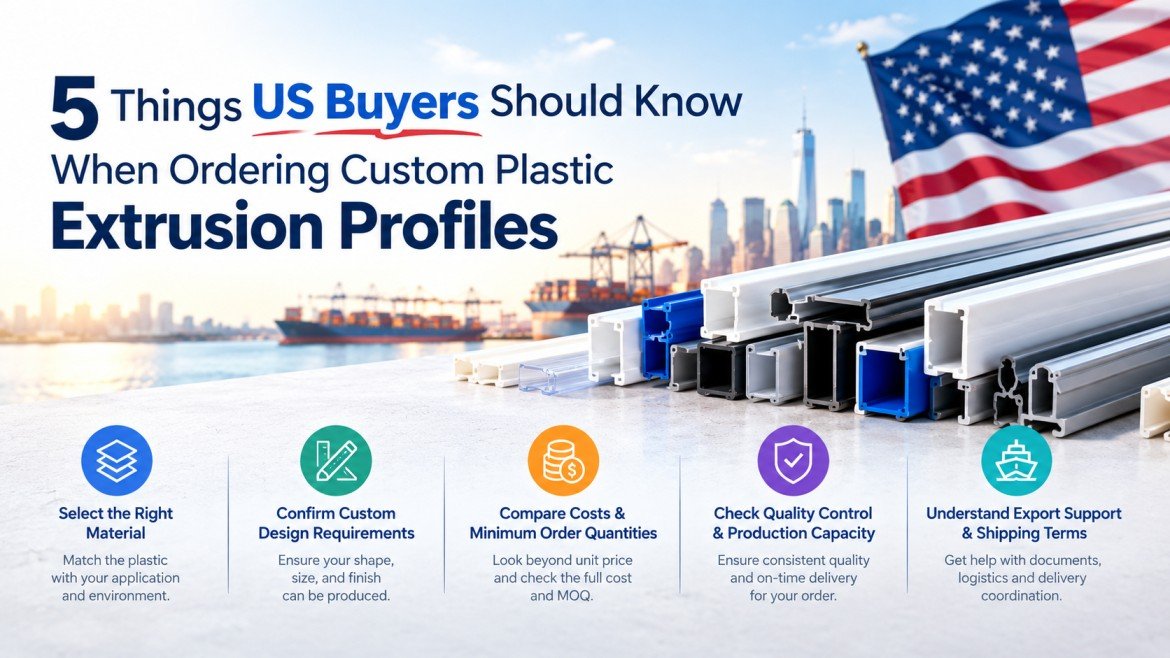
When it comes to buying plastic extrusion profiles for US commercial projects, many businesses make the mistake of choosing profiles based mainly on their shape, size, and price. However, what they fail to realise is the fact that an incorrect profile can cause poor fitting, weak joints, gaps, surface issues, or problems when it is used in the final application.
Since different suppliers offer different materials, profile designs, quality standards, production capacities, and customisation options, you need to check the right details before placing an order. While you can find a plethora of companies offering custom plastic extrusion profiles in the USA, you would still need to compare their capabilities and make sure they can meet your project requirements.
Nonetheless, by doing some research and keeping your project requirements in mind, you can avoid many common plastic extrusion profile issues and find profiles that meet your needs.
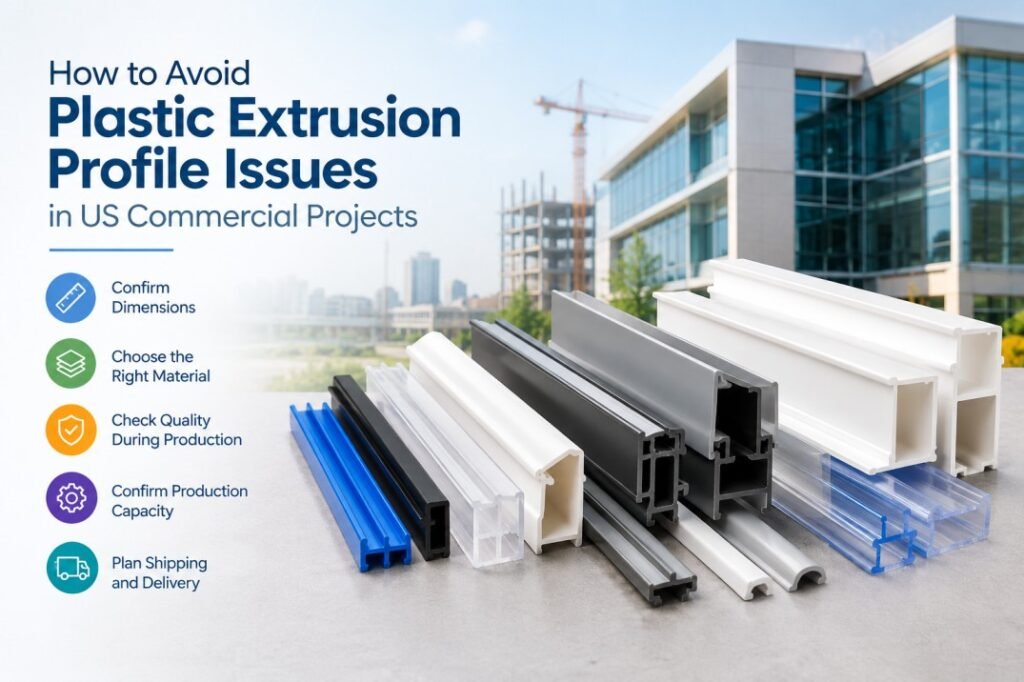
5 Tips to Avoid Common Plastic Extrusion Profile Issues in US Commercial Projects
For US commercial projects, plastic extrusion profiles need to meet the required dimensions, material specifications, quality standards, order volume, and delivery schedule. Overlooking any of these factors can result in profile defects, supply delays, or problems with the final application.
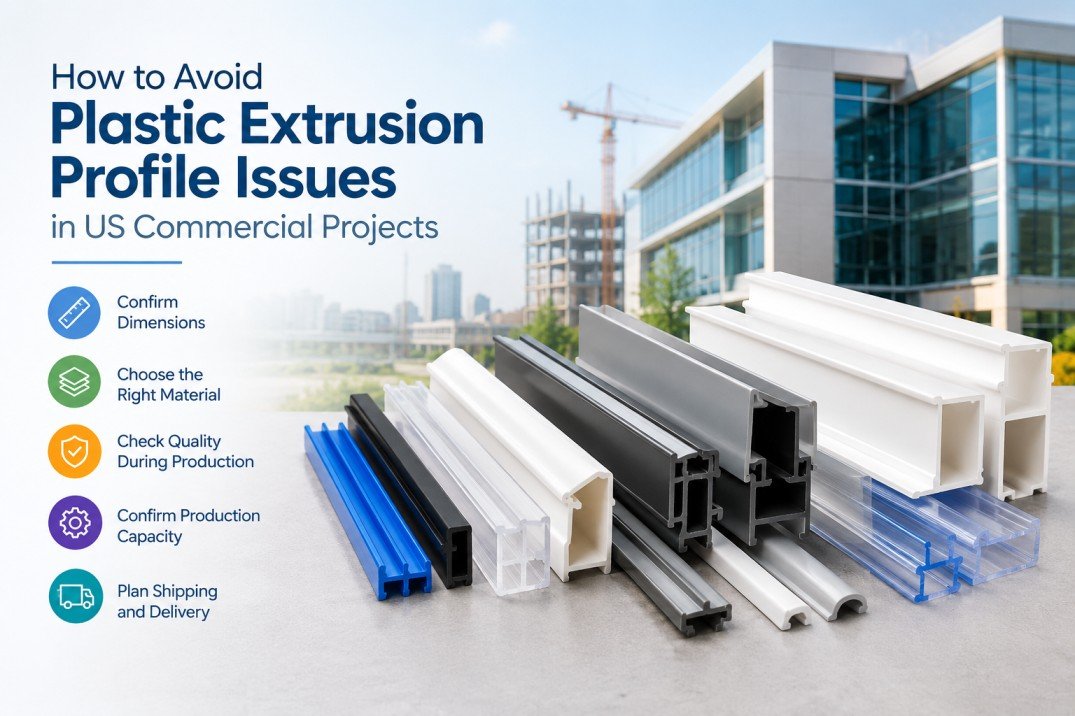
The following five tips can help prevent these issues before they affect the project.
Prevent Poor Fit by Confirming Profile Dimensions
One of the common mistakes businesses make when ordering plastic extrusion profiles is overlooking small differences in profile dimensions. Incorrect width, height, or wall thickness can cause gaps, poor alignment, or fitting problems during installation.
Make sure you provide the supplier with clear technical drawings, samples, or measurements. Confirm the required width, height, wall thickness, profile shape, and cutting length before production begins.
Also, check the required colour and surface finish as well. If the profile needs to fit with another part, share the relevant dimensions and specifications for that part.
Review a sample before the full order is made. Comparing it with the approved drawing and specifications can help identify design or size issues before bulk production begins.
Avoid Material Problems by Choosing the Right Plastic
Using the wrong plastic can affect the strength, flexibility, and service life of an extrusion profile. A material that works well for one application may not be suitable for another.
Start by matching the plastic type to the way the profile will be used. Rigid PVC may suit applications that need a firm profile, while flexible PVC may be better for profiles that need to bend or provide a seal.
You should also consider the conditions the profile will face. Check the need for strength, flexibility, heat resistance, moisture resistance, impact resistance, or chemical resistance.
Tell the supplier where and how the profile will be used. This gives them the information needed to review the material requirements before production.
For projects that call for materials other than PVC, discuss the available options based on the profile’s design and use. Plastic extrusion manufacturers may produce profiles from materials such as ABS, HDPE, polycarbonate, PMMA, PET, and PETG.
Reduce Quality Defects by Checking Profiles During Production
Even if the profile’s dimensions and material are correct, poor production quality can still affect its fit, appearance, and performance.
Consider how the supplier checks the profile’s dimensions, shape, wall thickness, colour, surface finish, and overall quality during production. These are important custom PVC profile quality factors to review when ordering profiles for commercial projects.
Also, confirm what quality checks take place before shipment. Pre-shipment inspection and test reports can provide useful information about the finished profiles when required.
For repeat orders, check how the supplier maintains the same profile size and quality from one production batch to the next. This is important when the same profiles are used across several commercial projects.
By checking the quality of the plastic extrusion profiles during production, you can ensure they meet the agreed specifications and quality requirements.
Avoid Supply Delays by Confirming Production Capacity
A supplier may produce the required profile but have limited production capacity for your project. If the supplier does not have enough equipment, production lines, or available capacity, it may not be able to produce the profiles as planned.
Confirm the supplier’s production capacity before placing an order. Ask about the number of extrusion lines, available equipment, and the type of profiles they regularly produce.
For repeat orders, check whether the supplier can continue producing the same profiles as required. This can help avoid problems when profiles are needed for several stages of a commercial project.
You should also discuss the supplier’s ability to handle changes in production requirements. If the required quantity increases or the project schedule changes, knowing the supplier’s available capacity can help you plan ahead.
Checking the supplier’s production capacity in advance can help you avoid supply issues and ensure the required profiles can be produced as planned.
Prevent Shipping Damage by Confirming Packaging and Delivery
Another common mistake US businesses make when ordering custom plastic profiles is overlooking packaging and shipping requirements. Long, thin, or specially shaped profiles may need careful packaging to prevent damage during handling and transport. Poor packaging or unclear shipping plans can also lead to delivery delays.
Ask how the profiles will be packed for international transport. The packaging should protect the profiles from damage while they are being handled and shipped.
Confirm the shipping terms before production starts. Ask about available freight methods, export documents, and the expected delivery schedule.
For international orders, also check whether FOB or CIF shipping terms are available. If the project has a tight deadline, ask about air freight as an option.
Planning these details before production helps avoid confusion when the profiles are ready to leave the factory.
Get Custom Plastic Extrusion Profiles for US Commercial Projects
M3 Extrusion manufactures custom plastic extrusion profiles based on customer drawings, samples, dimensions, and technical specifications. The company produces profiles in different materials, shapes, sizes, colours, and finishes for commercial and industrial applications.
Custom Profile Manufacturing
M3 Extrusion develops custom plastic extrusion profiles based on the required design and specifications. The company can work from technical drawings, samples, and measurements to produce profiles that match the required dimensions and application.
Export and Shipping Support
The company supports international orders with FOB and CIF shipping terms. Air freight can also be arranged for urgent orders.
Bulk Production
M3 Extrusion has 14+ extrusion lines and supports bulk and repeat production for commercial and industrial applications. Its standard MOQ starts at 1000 kg, depending on the profile and production requirements.
Conclusion
Avoiding plastic extrusion profile issues starts with clear planning. Confirming the profile dimensions, choosing the right material, checking quality, reviewing production capacity, and planning shipping can help reduce problems before the profiles reach the project site.
These checks also make it easier to keep custom profiles consistent across bulk and repeat orders.
Are you looking for custom plastic extrusion profiles for a US commercial project? M3 Extrusion offers high-quality custom plastic extrusion profiles in different materials, shapes, sizes, and finishes. Contact us to discuss your profile requirements.
Frequently Asked Questions
What Are the Most Common Problems With Plastic Extrusion Profiles?
Common issues include incorrect dimensions, uneven wall thickness, warping, surface defects, colour differences, and poor fit. Material problems, production delays, and shipping damage can also affect the final profile.
How Long Does It Take to Produce Custom Plastic Extrusion Profiles?
Production time depends on the profile design and order quantity. M3 Extrusion states that its standard production lead time is approximately 45 days after order confirmation.
How Can Profile Dimensions Be Checked Before Bulk Production?
Review the technical drawing, measurements, profile shape, wall thickness, cutting length, colour, and finish. Requesting a sample before bulk production also allows the profile to be checked against the approved specifications.
How Can Quality Issues Be Reduced When Ordering Plastic Extrusion Profiles?
Confirm the material and profile specifications before production, approve a sample, and ask about quality checks during production. You can also check whether pre-shipment inspection and test reports are available when needed.