Over the years, HDPE profiles have become immensely popular. They are now commonly used in factories and plants to protect cables, hold pipes in place, and reduce wear in moving systems. They are used in many different industrial applications where strength, protection, and long-term stability are needed in daily operations. This is why industries often rely on an HDPE profile supplier in India to get consistent quality for different industrial applications.
Beyond basic support roles, they help reduce damage caused by friction, vibration, and constant movement in machines and systems. These profiles handle pressure, moisture, and chemical exposure without losing shape or strength. Many industries now use them instead of metal or wood because they last longer and need less upkeep.
Their simple build and steady performance make them useful in areas like cable systems, pipe networks, machines, and storage setups where smooth and reliable operation is important.
What Are HDPE Profiles?
HDPE profiles are plastic parts made from high-density polyethene used in many industrial systems. They come in different shapes, such as strips, channels, and guides. Each shape is designed for a specific use in industrial setups where support, protection, and smooth movement are needed.
HDPE is known for being tough and stable. It holds its shape even under stress. It does not absorb water, which helps it stay stable in wet conditions. It also resists many chemicals used in factories and plants.
These profiles are also resistant to wear. When parts move against each other, friction can damage surfaces. HDPE reduces this wear and helps systems run smoothly for a longer time. It is also lightweight, which makes installation easier compared to heavy metal parts.
Because of these qualities, HDPE profiles are used in many industries where equipment runs continuously and needs reliable support parts.
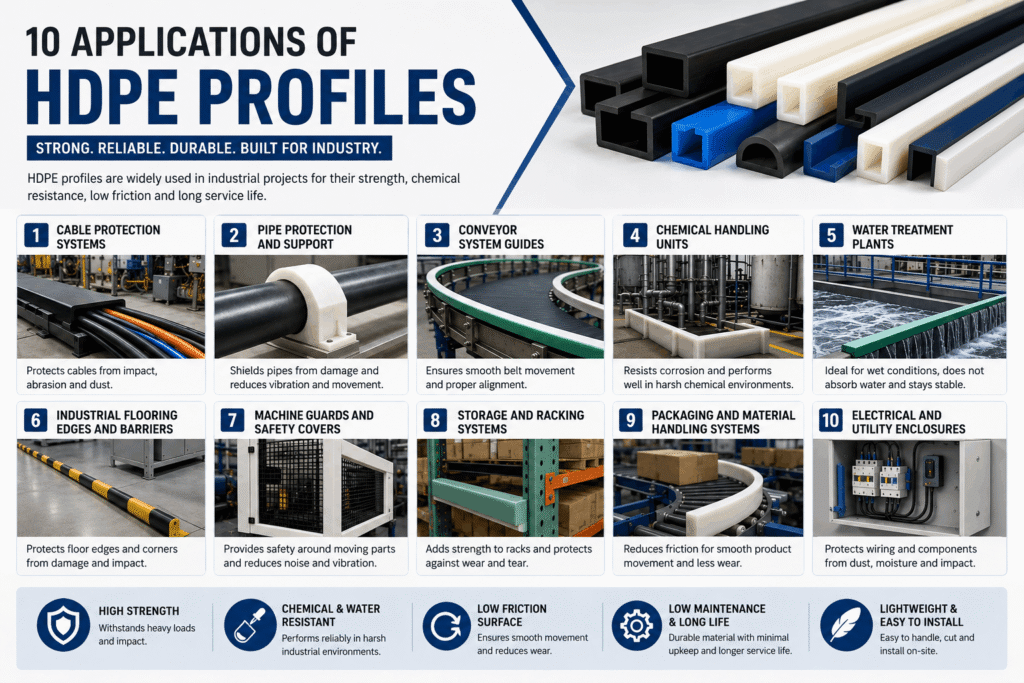
Top 10 Applications of HDPE Profiles in Industrial Projects
HDPE profiles are used in many areas across industrial units. Their role is not limited to one function. Instead, they support different systems where protection, movement, and stability are needed.
1. Cable Protection Systems
Cables are the backbone of machines and equipment in factories. They carry power and control signals between different units and keep operations running without interruption. These cables often run through busy areas where they are exposed to heat, dust, and constant movement.
HDPE profiles are used to protect these cables. They create a safe path that keeps cables organised and covered. This reduces the chance of damage from pressure or accidental impact.
They also help prevent dust build-up on exposed wiring. When cables stay protected, operations face fewer faults and interruptions. This improves overall safety and reduces repair work.
2. Pipe Protection and Support
For keeping pipes secure in industrial plants, HDPE profiles are used as protective layers around pipes. Pipes carry liquids, gases, and chemicals, and they often face pressure, vibration and contact with hard surfaces during operation.
HDPE profiles reduce direct impact and help prevent scratches or surface damage. They also support pipe alignment and reduce unwanted movement during use.
Since HDPE does not rust or react with moisture, it performs well in wet and chemical-heavy areas. This adds long-term stability to piping systems.
3. Conveyor System Guides
Conveyor systems are widely used in factories for moving goods. These belts must stay aligned to work properly. Even small misalignment can slow down production or damage goods.
HDPE profiles are used to help conveyor belts move in a straight and steady way. This reduces friction and keeps the motion smooth.
Unlike metal parts, HDPE does not wear out quickly. It also reduces noise during operation. This helps machines run quietly and steadily for longer periods.
4. Chemical Handling Units
Industries that handle chemicals need materials that can resist corrosion. This is important for tanks, pipes, and support parts that come in direct contact with strong chemicals. Many metals break down when exposed to these chemicals over time.
HDPE profiles work well in these conditions. They do not react with most industrial chemicals. This makes them safe for use in tanks, trays, and support systems inside chemical plants.
They help keep tanks and pipes strong and stable during chemical exposure. This reduces the chance of leaks and damage.
5. Water Treatment Plants
Water treatment plants operate in constant wet conditions. Parts stay exposed to water, minerals, and sometimes cleaning agents.
HDPE profiles are used in these systems because they do not absorb water. They stay stable even after long exposure. This prevents swelling, cracking, or deformation.
They are often used in channels, tanks, and support frames. Their smooth surface also reduces the build-up of waste materials, which helps maintain clean flow paths.
6. Industrial Flooring Edges and Barriers
In industrial plants and factories, HDPE profiles are used to protect floor edges and corners. Factory floors face heavy movement every day. Machines, carts, and tools often pass over the same areas. This creates wear on floor edges and corners.
HDPE profiles act as barriers that absorb impact and reduce damage. This helps extend the life of flooring structures.
They also help define safe movement zones in busy areas. This improves safety and reduces maintenance needs.
7. Machine Guards and Safety Covers
It goes without saying that machines with moving parts can be risky if not properly covered. Contact with moving parts can cause damage or injury.
HDPE profiles are used to create protective guards around these parts. They block access while still allowing smooth machine operation. These profiles are strong enough to handle impact but light enough for easy handling. They also reduce vibration and noise in machine areas.
8. Storage and Racking Systems
Storage systems in warehouses carry heavy loads. These systems need support that can handle weight and frequent use.
HDPE profiles are used in racks and storage frames to provide added strength. They reduce wear at contact points where goods are placed or moved.
This helps protect both the storage structure and the stored goods. It also improves system life and reduces maintenance needs.
9. Packaging and Material Handling Systems
Industrial packaging lines require the smooth movement of goods. Any rough surface or blockage can slow down the process.
For smooth movement in packaging and material handling systems, HDPE profiles are used to help products move easily along production lines without sticking or getting blocked.
Their low-friction surface reduces wear and keeps movement steady. This improves speed and reduces damage during handling.
10. Electrical and Utility Enclosures
For electrical and utility enclosures, HDPE profiles are used to protect wiring and control systems from dust, moisture, and external contact. Electrical systems need protection from dust, moisture, and external contact. Even small exposure can cause faults.
HDPE profiles are used in enclosures that protect wiring and control systems. They help keep internal components safe and organised.
This improves the system’s safety and reduces the risk of breakdowns. It also supports clean and stable wiring layouts.
Conclusion
HDPE profiles play an important role in many industrial systems. Their strength, resistance to water and chemicals, and long service life make them a reliable choice for tough environments. They help reduce damage, lower maintenance needs, and support steady operation in industrial setups.
Are you looking for high-quality HDPE profiles for industrial use? M3 Extrusion offers durable and precision-engineered HDPE profiles designed to perform in demanding conditions while supporting long-term efficiency in industrial use.
Frequently Asked Questions
1. Where are HDPE profiles commonly used in industries?
HDPE profiles are used in cable systems, conveyor lines, pipes, storage units, water treatment plants, and packaging systems.
2. Can HDPE profiles handle harsh chemicals?
Yes, HDPE profiles resist many strong chemicals and do not corrode easily.
3. Are HDPE profiles suitable for outdoor use?
Yes, they perform well in sunlight, rain, and coastal environments.
4. Do HDPE profiles need regular maintenance?
No, they require very little maintenance and offer long service life.
5. Why are HDPE profiles preferred over metal in some applications?
They are lighter, do not rust, and perform better in wet and chemical-heavy environments.