Over the years, rigid PVC profiles have become immensely popular due to their ability to provide strength, structure, and long-lasting support in windows, doors, panels, trims, and industrial fittings. Not only do they help create stable and durable systems, but they also resist moisture, rust, and daily wear with ease. However, even with these advantages, the final performance of rigid PVC profiles depends on how well the profile is chosen for the job.
While you can find a plethora of rigid PVC extrusion profiles for infrastructure systems, you would still need to select the right one based on load, size, design, and use conditions. A poor choice can affect fit, strength, and overall durability over time.
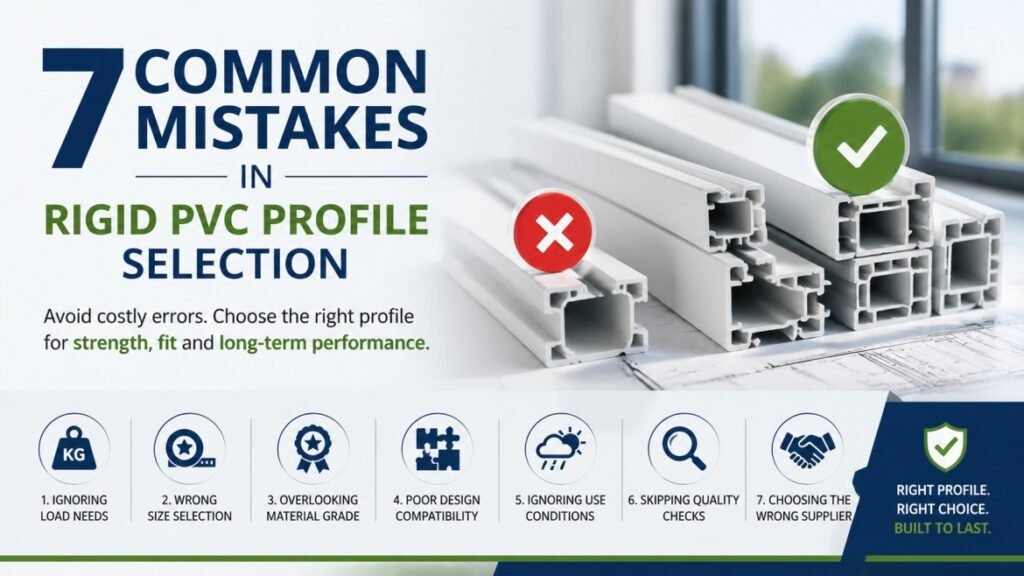
Common Mistakes in Rigid PVC Profile Selection
Selecting the right rigid PVC profile may seem simple, but it often involves details that are easy to overlook. This is a key concern when working with PVC extrusion profiles for infrastructure systems. Small errors in load, size, material grade or design fit can affect how well the profile performs in real use. These issues may not be visible at first, but they can lead to weak support, poor fitting, and early wear over time.
Here are seven common mistakes people make during rigid PVC profile selection.
Ignoring Load Needs
One of the common mistakes people make when choosing rigid PVC profiles is not considering the load they need to carry. When the profile is not matched to the required weight and pressure, it can lose shape and fail under stress during real use.
- Check Load Rating: The selected rigid PVC profile should be able to handle the full weight and pressure it will face in daily use. This helps prevent stress damage and improves long-term stability.
- Plan for Real Use Conditions: Do not judge profiles only by size or shape. It is important to consider how rigid PVC profiles will perform when installed in doors, frames, or other working systems under regular load.
- Choose a Safety Margin: Pick a rigid PVC profile with slightly higher load capacity than the expected requirement. This helps the system stay stable under extra pressure and reduces the risk of bending or failure during use.
Rigid PVC profiles perform better when load needs are properly matched before use.
Wrong Size Selection
Failing to choose the correct size often leads to issues when using rigid PVC profiles in final applications. Besides, even a small mismatch can affect alignment and lead to gaps or weak joints in the final setup.
- Measure with Care: Accurate measurements of the installation area help ensure that the rigid PVC profile fits without forcing or leaving unwanted space.
- Match Design Requirements: Profile dimensions should always be compared with technical drawings or system layouts to ensure proper alignment during installation.
- Review Available Sizes: Look at all rigid PVC profile sizes before choosing one. This helps you pick the right fit and avoid changes during installation.
By checking measurements carefully and matching them with design requirements, you can easily select the right rigid PVC profile that fits correctly and installs without issues.
Overlooking Weather Use
Environmental conditions can directly impact how long rigid PVC profiles last. Ignoring this often leads to early wear or surface damage.
- Identify Exposure Conditions: It is important to check whether the PVC profile will be used indoors or outdoors, since both environments need different material properties.
- Choose UV-Resistant Options: Rigid PVC profiles for outdoor use should resist sunlight exposure without fading, cracking, or losing strength over time.
- Consider Moisture and Temperature: Profiles should be able to handle rain, humidity, and temperature changes without warping or surface damage.
Proper environmental matching helps rigid PVC profiles maintain strength and appearance for longer periods.
Poor Material Grade Choice
The quality of material used in rigid PVC profiles plays a big role in their strength and durability. Low-grade material can reduce strength and lead to early wear in use.
- Verify Material’s Strength: Check the strength of the material used in the rigid PVC profile to ensure it is suitable for the required load and daily use conditions.
- Look at Surface Consistency: A smooth and even finish often indicates better material quality in rigid PVC profiles and stable production control.
- Review Product Details: Specifications should always be checked before purchase to ensure the material grade matches the required application.
Good material quality helps ensure long-lasting and reliable performance.
Skipping Design Fit
Choosing a rigid PVC profile without checking how it fits the final application often leads to issues. The profile may not align properly with the required shape or function, which can affect installation and performance in real use.
- Match Shape Properly: The profile should fit into the structure without forcing, gaps or stress points that may weaken the assembly.
- Check Finish Compatibility: Surface finish should meet both functional and visual needs of the final product.
- Test Fit When Possible: Samples should be checked with other components before placing bulk orders to avoid mismatch issues.
Proper design matching improves both function and final appearance of rigid PVC systems.
Focusing Only on Price
Price alone should not decide the choice of rigid PVC profiles, as lower cost often affects quality and durability.
- Compare Overall Value: It is better to evaluate how long the PVC profile will last under real working conditions instead of focusing only on cost.
- Think Long Term: A higher quality profile may cost more initially, but it reduces replacement and repair needs over time.
- Focus on Total Value: Consider how often the rigid PVC profile may need repair or replacement over time instead of focusing only on the initial price.
By making balanced decisions, you can improve both performance and cost efficiency in rigid PVC profile selection.
Not Choosing a Reliable Supplier
Without a doubt, a common mistake people make when selecting rigid PVC profiles is choosing suppliers without checking their consistency and production standards. This often results in inconsistent rigid PVC profiles from one batch to another.
- Check Production Standards: The supplier should follow proper manufacturing processes and quality control during the production of the rigid PVC profiles.
- Review Past Work: Previous supply records should be checked to understand consistency and reliability before placing large orders.
- Request Samples First: A sample should be tested to confirm quality, finish and fit before bulk purchase.
Reliable suppliers ensure steady quality and reduce the risk of defects.
Checklist for Choosing Rigid PVC Profiles
Rigid PVC profiles must match the job they are used for. A wrong choice can affect strength, fit, and life. It is important to check a few key points before final selection.
The table below shows the main factors to check while choosing rigid PVC profiles.
Key Factor | What to Check |
Load Capacity | Ensure the profile can handle full working weight and pressure without risk |
Size Accuracy | Confirm exact measurements match design requirements and installation needs |
Weather Use | Check if the rigid PVC profile suits indoor or outdoor environmental conditions |
Design Fit | Ensure proper shape match with the system without gaps or stress points |
Surface Quality | Look for smooth finish with no defects or uneven areas |
Supplier’s Reliability | Ensure the supplier’s production standards are consistent and reliable for rigid PVC profiles. |
Frequently Asked Questions
What are rigid PVC profiles used for?
Rigid PVC profiles are used in windows, doors, trims, panels, cable channels, and industrial systems where strong and stable support is needed.
Can rigid PVC profiles be used outdoors?
Yes, but only if the PVC profiles are designed for outdoor use with UV and weather resistance to handle sun, rain, and temperature changes.
Are custom PVC profiles better than standard ones?
Custom profiles work better when standard options do not match the required shape or size, offering a better fit and improved function.
Conclusion
Choosing the right rigid PVC profile not only ensures that the profiles can handle the required load, but it also improves fit accuracy and overall stability in use. By avoiding common mistakes during selection, you can improve performance and reduce issues in real applications.
Are you looking for high-quality rigid PVC profiles? M3 Extrusion offers durable and custom rigid PVC profiles designed for different industrial needs.