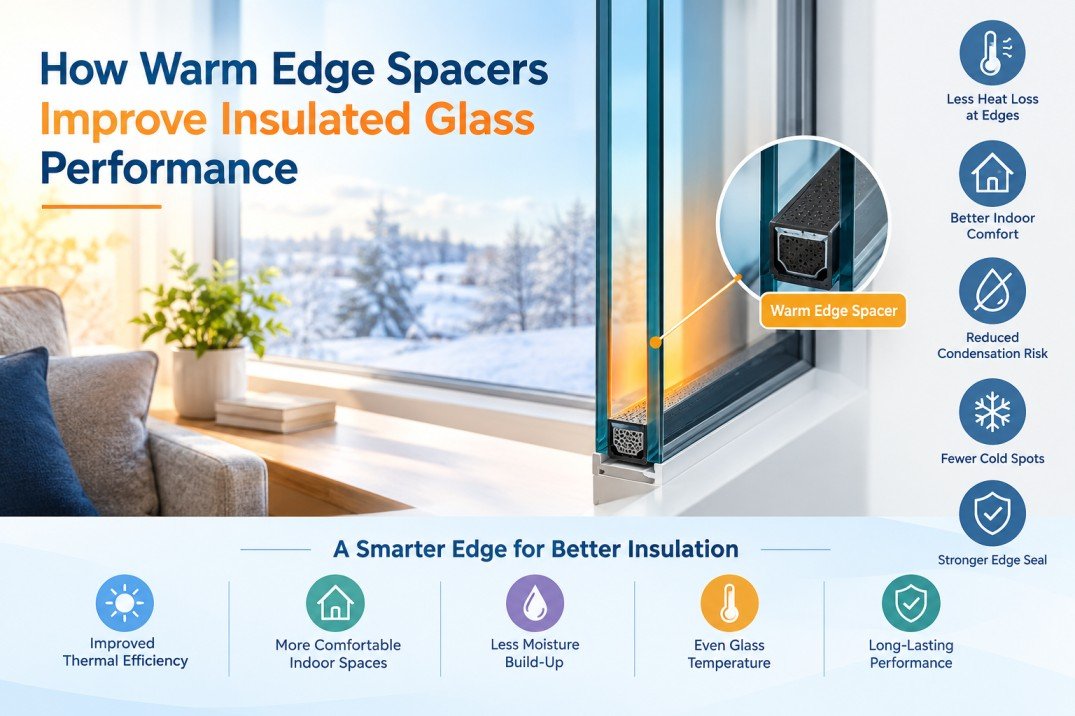
While insulated glass windows help reduce heat transfer and improve indoor comfort, they are still susceptible to heat loss around the glass edges. This is because the edge area can transfer heat faster than the centre of the glass. When the glass edge becomes colder, the temperature across the window becomes uneven. This can also increase the risk of condensation during cold weather.
This is where warm edge spacers can help. Not only do custom warm edge spacer profiles from India reduce heat transfer at the edges, but they also help keep the glass temperature more even. By keeping the edge area warmer and supporting the sealed gap between the glass panes, warm edge spacers can improve insulation, reduce cold spots, and lower the risk of condensation.
What Are Warm Edge Spacers?
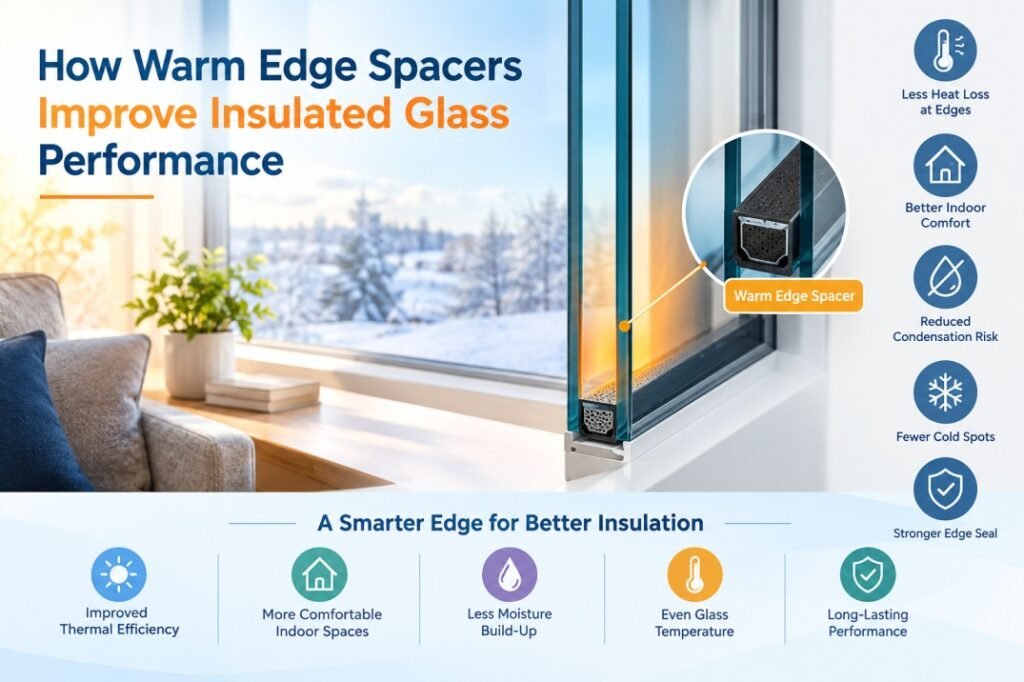
A warm edge spacer is a narrow strip placed between the glass panes of an insulated glass unit. It keeps the panes at a fixed distance and helps maintain the sealed space between them.
The space between the panes is filled with air or gas that slows heat transfer. The spacer helps protect this space by keeping the glass panes properly aligned. It also supports the seal around the edge of the unit. Warm edge spacers and window thermal efficiency go hand in hand since warm edge spacers help reduce heat transfer through the edge of an insulated glass unit, which is often more prone to heat loss than the central glass area.
Unlike metal spacers, warm edge spacers are made from materials that transfer less heat, such as PVC. This helps reduce heat movement through the edge of the glass.
Since the edges are often the coldest part of an insulated glass unit, controlling heat transfer in this area can improve the overall performance of the window.
How Warm Edge Spacers Improve Insulated Glass Performance
Warm edge spacers do more than hold the glass panes apart. They also help control heat movement, surface temperature, and moisture around the edges.
Here are five ways warm edge spacers improve insulated glass performance.
Reduce Heat Loss at Glass Edges
One of the major benefits of warm edge spacers is that they reduce heat loss through the edges of insulated glass windows.
Heat does not move through every part of a window at the same rate. The centre of the glass is usually better insulated, while the edge can lose heat faster.
Warm edge spacers slow this heat movement by using materials with lower heat transfer. This helps keep the edge area warmer and reduces the temperature difference between the centre and edges of the glass.
They help in several ways:
- Reduce the speed of heat loss through the glass edge.
- Limit sharp temperature drops during cold weather.
- Keep the edge temperature closer to the indoor temperature.
This creates a more balanced temperature across the glass and helps the window retain indoor heat more effectively.
Improve Indoor Comfort
Since warm edge spacers help keep the glass surface temperature more stable, they can also improve comfort near insulated glass windows.
When the glass edges become very cold, the area near the window can feel cooler than the rest of the room. This can be more noticeable during cold weather, even when the room itself is warm.
By helping keep the glass temperature more even, warm edge spacers can reduce this difference between the window and the indoor space. This helps create a more consistent level of comfort near insulated glass windows.
This can be useful in homes, offices, and other buildings where large glass windows are used.
Reduce Condensation Risk
Condensation forms when warm, moist air comes into contact with a cold surface. In insulated glass windows, the edges can become cold before the centre.
When the glass edge reaches a low enough temperature, moisture from indoor air can collect on the surface. This can lead to water droplets, fogging, or damp areas around the edge.
Warm edge spacers reduce condensation by limiting heat loss at the glass edge and helping keep the surface warmer. This helps keep the glass edge warm enough to reduce moisture buildup.
The table below shows how warm edge spacers can affect the conditions linked to condensation:
Factor | Without Warm Edge Spacers | With Warm Edge Spacers |
Edge temperature | Drops faster | Stays more stable |
Heat transfer | Higher at the edges | Lower at the edges |
Cold spots | More likely to form | Less likely to form |
Moisture buildup | Higher risk | Lower risk |
Glass surface | Can become damp | Stays clearer and drier |
By keeping the edge area warmer, warm edge spacers help create better conditions for reducing condensation.
Reduce Cold Spots
Cold spots are areas of the glass that become colder than the rest of the surface. They often appear near the edges because heat escapes faster from these areas.
When the difference between the centre and edge temperature becomes large, the glass surface becomes less even. This can affect comfort near the window and increase the chance of condensation.
Warm edge spacers help reduce this temperature difference. They slow heat transfer through the edge and help keep the glass surface more balanced.
This can provide:
- Fewer cold areas around the glass edges.
- A more even glass surface temperature.
- Lower risk of moisture forming on cold spots.
Overall, warm edge spacers help keep the glass surface more even by reducing temperature differences between the centre and edges.
Support the Edge Seal
The spacer also plays an important role in supporting the seal around an insulated glass unit.
The seal helps keep the glass panes together and protects the space between them from outside air and moisture. The spacer helps maintain the correct distance between the panes, which supports the seal along the glass edge.
Warm edge spacers support the seal in several ways:
- Keep the glass panes properly aligned.
- Maintain a consistent gap between the panes.
- Support the edge seal during temperature changes.
- Help protect the sealed space between the glass panes.
With warm edge spacers, the edge seal can stay supported and the glass unit can maintain its structure.
Get Custom Warm Edge Spacer Profiles from M3 Extrusion
M3 Extrusion manufactures custom warm edge spacer profiles for insulated glass applications. The company can develop profiles based on customer drawings, samples, measurements, and specifications.
Its manufacturing setup includes 14+ extrusion lines and more than 13 years of experience in plastic extrusion. It also supplies custom profiles to buyers in international markets.
Custom Profile Manufacturing
M3 Extrusion can produce warm edge spacer profiles based on the required design and dimensions. Buyers can provide drawings, samples, measurements, or other profile details to explain their requirements.
Profiles can be made with different sizes, wall thicknesses, colours, and cutting lengths based on the agreed specifications. This allows buyers to source profiles that match their insulated glass systems.
Samples Before Bulk Production
The company provides samples before production. Buyers can review the sample and check its size, shape, and other details against their requirements before placing the order.
Bulk Production for International Buyers
M3 Extrusion supports bulk orders for buyers who need larger quantities of custom warm edge spacer profiles. Its standard MOQ is 1000 kg, while the usual lead time is around 45 days after order confirmation, depending on the design and order quantity.
Frequently Asked Questions
Do warm edge spacers reduce condensation?
Yes. Warm edge spacers reduce heat loss at the glass edges and help keep the edge temperature warmer. This can lower the risk of condensation forming on cold areas of the glass.
Can warm edge spacers be used in triple-glazed windows?
Yes. Warm edge spacers can be used in triple-glazed insulated glass units. They help maintain the gap between the panes and reduce heat transfer through the edge areas.
How long do warm edge spacers last?
Warm edge spacers are designed to remain inside the sealed glass unit for the service life of the window. Their actual lifespan depends on the spacer material, seal quality, glass unit design, and installation.
Do warm edge spacers help reduce heat transfer in winter?
Yes. They reduce heat transfer through the glass edges, which can help limit heat loss from indoor spaces during cold weather.
Conclusion
By reducing heat loss at the glass edges, warm edge spacers help improve the insulation performance of insulated glass windows. They also help keep glass temperatures more even and reduce the risk of cold spots and condensation.
Not only do warm edge spacers support better temperature control, but they also help maintain the gap between glass panes and support the edge seal. This helps the insulated glass unit maintain steady performance over time.
Are you looking for custom warm edge spacer profiles for insulated glass systems? M3 Extrusion manufactures custom warm edge spacer profiles based on customer drawings, samples, measurements, and specifications, with bulk production and international shipping support.