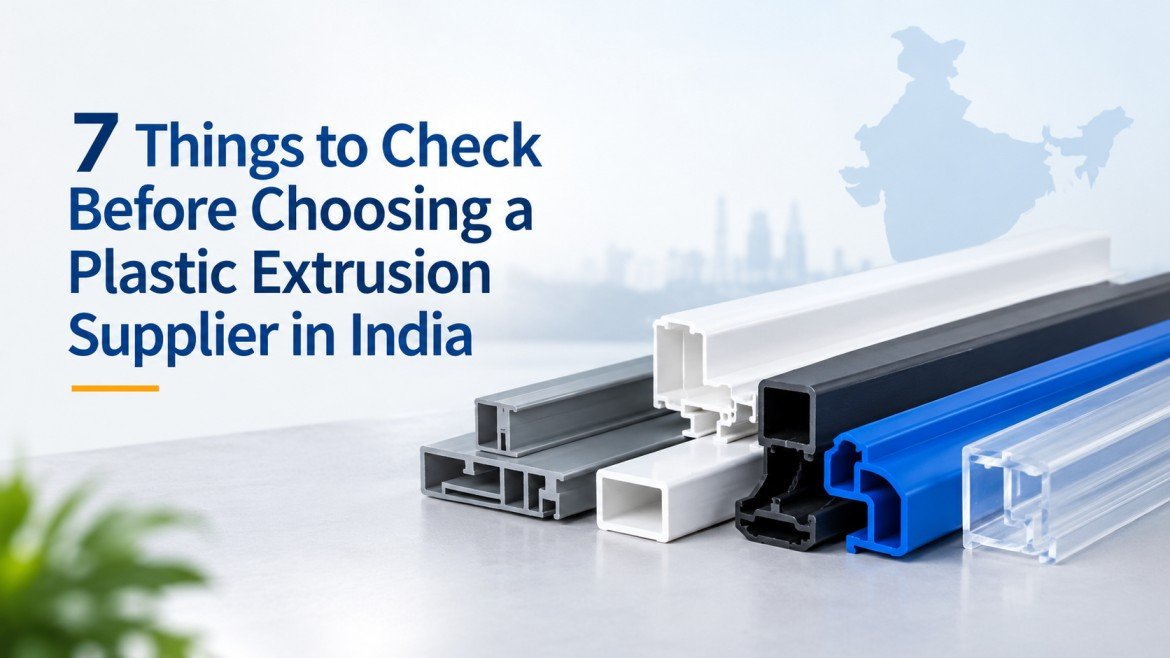
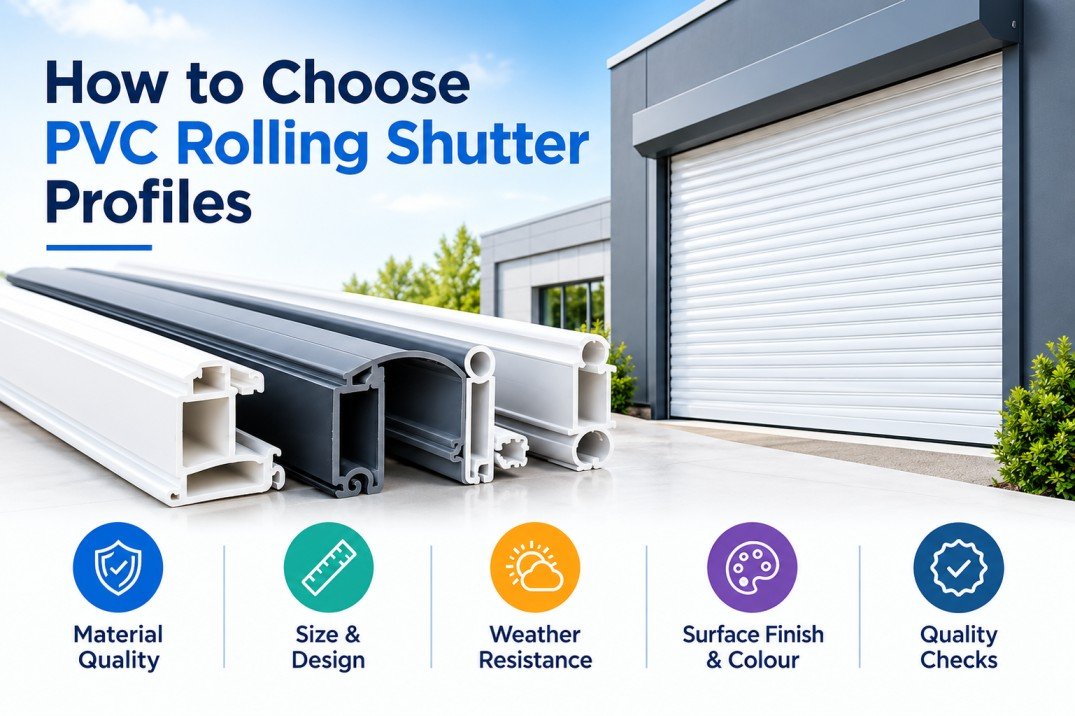
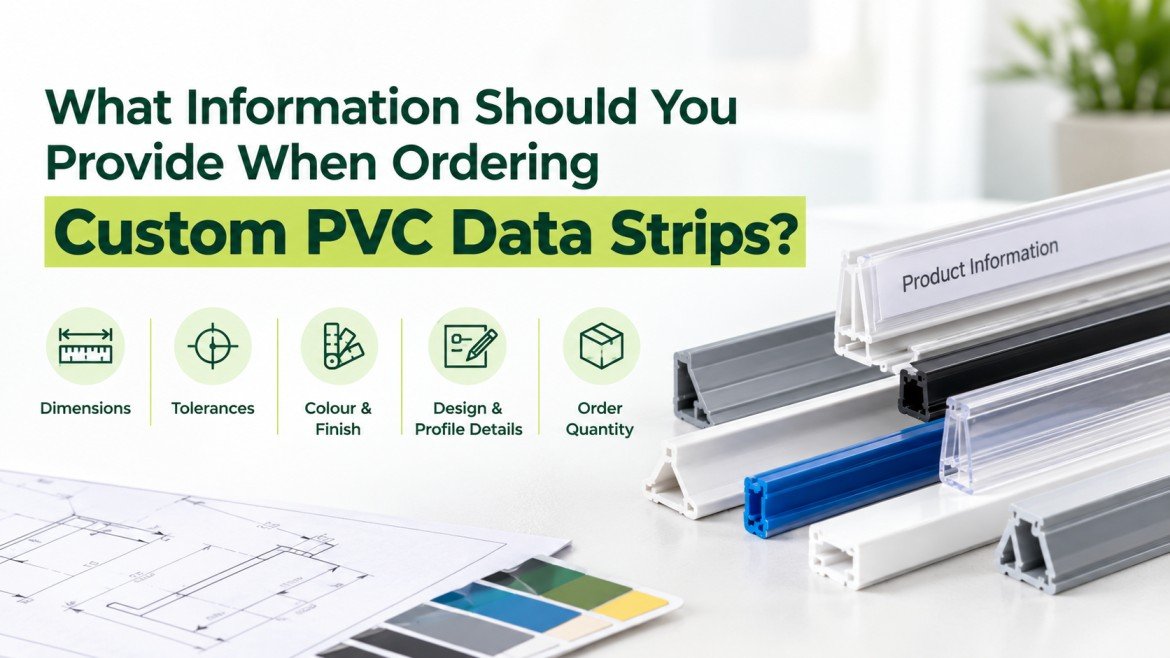
Widely known for its plastic manufacturing capabilities and large production capacity, India has become a popular destination for sourcing plastic extrusion profiles. Not only can Indian manufacturers produce custom PVC profiles in different shapes, sizes, colours, and finishes, but many also support bulk orders and international shipments.
However, even though there are many companies offering custom plastic extrusion manufacturing in India, choosing the right plastic extrusion supplier takes some research. Suppliers differ in material quality, custom design skills, production capacity, quality checks, prices, and shipping terms. A supplier that meets one buyer’s needs may not be the right fit for another.
Since these factors can affect product quality, order costs, and delivery time, it is important to check them before placing an order.
7 Things to Check Before Choosing a Plastic Extrusion Supplier in India
Choosing a plastic extrusion supplier is not just about finding a company that offers the profiles you need. You also need to check whether the supplier can meet your design needs, maintain quality, and handle your order within the required time.
Here are seven key factors to consider before making a choice:
1. Check the Supplier’s Experience
When it comes to choosing a plastic extrusion supplier in India, make sure you check the manufacturer’s experience before placing an order. A manufacturer with years of experience may have a better grasp of material selection, profile design, and production needs.
Ask whether the supplier has made profiles for uses similar to yours. If you need profiles for electrical equipment, construction, furniture, or industrial machines, check whether they have handled similar orders.
It is also useful to ask about their export experience if you plan to import profiles from India. A supplier familiar with overseas orders may be better prepared to handle export papers, packaging, and shipping needs.
Checking a supplier’s experience with different profiles and customer requirements can help you find the right PVC extrusion manufacturing partner.
2. Check the Types and Quality of Plastic Materials
The plastic material used to make a profile affects its strength, flexibility, heat resistance, and service life. So, check whether the supplier works with materials that suit your application.
Plastic extrusion profiles can be made from several materials, including PVC, ABS, HDPE, PETG, PP, PMMA, and PC. Each has different properties and uses.
Before placing an order, ask the supplier about:
- Material grade: Check whether the grade meets your product needs.
- Raw material quality: Ask how the supplier checks materials before production.
- Performance: Confirm whether the material can handle heat, moisture, impact, or chemicals as needed.
- Test reports: Ask whether material or product test reports are available.
The right material can help the finished profile meet the required quality and performance standards.
3. Review Custom Profile Capabilities
One of the major factors that you need to take into account when choosing a plastic extrusion supplier in India is their ability to make custom profiles. Check whether the supplier can make profiles in the required shape, size, wall thickness, colour, and surface finish.
Ask whether the manufacturer can work from technical drawings, samples, measurements, or other design details. You should also check whether they can develop the required extrusion die for your profile.
Before bulk production, ask if the supplier can provide samples for review. This gives you a chance to check the profile’s size, shape, fit, and finish before approving the full order.
A supplier with custom extrusion skills can help you get profiles that match your design and application needs.
4. Check Production Capacity
A supplier may be able to make the profile you need but may not have the capacity to handle your full order. Check the manufacturer’s production setup before placing a bulk order.
Ask how many extrusion lines they operate and whether their facility can handle your required order quantity. You should also confirm their minimum order quantity (MOQ), as this can vary from one supplier to another.
If you expect to place repeat orders, ask whether the manufacturer can maintain a steady supply. Consistent production capacity can help reduce delays when you need more profiles later.
It is also important to confirm the expected lead time. Custom tooling, profile design, sample approval, material availability, and order size can all affect production time.
Clear details about capacity and lead time can help you plan your orders and avoid supply gaps.
5. Review the Quality Control Process
Quality checks help ensure that plastic extrusion profiles meet the agreed specifications. Before choosing a plastic extrusion supplier in India, ask how they check raw materials, inspect profiles during production, and review finished products.
The checks may cover:
- Dimensions: Profile length, width, height, and other measurements.
- Wall thickness: Whether the profile meets the required thickness.
- Surface finish: Whether there are marks, defects, or other visible issues.
- Colour and shape: Whether the profiles match the approved design.
- Material quality: Whether the material meets the required specifications.
For large or repeat orders, ask how the manufacturer keeps quality consistent across production batches. You can also ask whether inspection reports, test reports, or third-party inspection reports are available before dispatch.
Reviewing these checks can help lower the risk of receiving profiles that do not match your requirements.
6. Compare Prices and Order Terms
Price is an important factor when choosing a plastic extrusion supplier in India. However, the lowest quote may not be the best choice if it leaves out key costs or does not meet your quality needs.
Ask each supplier for a clear quote that covers the main order details, such as:
- Tooling or extrusion die costs
- Price per unit or kilogram
- Minimum order quantity
- Sample costs, if any
- Packaging charges
- Production lead time
For imported profiles, also include freight, insurance, customs duties, taxes, and other import charges when working out the total cost.
Check the payment terms and ask whether the quoted price covers all agreed requirements. Comparing full quotes can help you understand the actual cost of each offer and avoid unexpected charges.
7. Check Shipping and Export Support
If you plan to import plastic extrusion profiles from India, check whether the supplier can meet your shipping and export needs.
Ask which shipping terms they offer. For example, FOB and CIF define different responsibilities for the buyer and seller in the shipping process. Make sure you understand what each quote covers before placing an order.
You should also confirm the expected dispatch time, packaging method, and export documents. Depending on the destination and order, you may need a commercial invoice, packing list, shipping documents, or a Certificate of Origin.
Check whether the supplier has experience shipping to your country and can help prepare the required papers. Good planning can help reduce delays and make the import process easier to manage.
Get High-Quality Custom Plastic Extrusion Profiles From M3 Extrusion
M3 Extrusion manufactures custom plastic extrusion profiles in India and supplies them to buyers in international markets. The company can make profiles based on customer drawings, samples, dimensions, material choices, and other specifications.
Custom Profile Manufacturing
M3 Extrusion produces plastic extrusion profiles in different materials, shapes, sizes, colours, and cutting lengths. Its facility has more than 14 extrusion lines and supports sample production before bulk manufacturing. Buyers can discuss their design needs and review samples before moving ahead with a larger order.
Bulk Order Support
M3 Extrusion handles bulk and repeat orders for businesses that need a steady supply of plastic extrusion profiles. Its standard minimum order quantity starts at 1,000 kg. The production lead time depends on the profile design and order size, so buyers can discuss these details before confirming an order.
Export Support
M3 Extrusion supplies plastic extrusion profiles to international buyers and offers FOB and CIF shipping terms. The company can provide export documents as needed, including a Certificate of Origin. Buyers can confirm the shipping terms, packaging, and document needs before dispatch.
Conclusion
Choosing a plastic extrusion supplier in India requires more than comparing prices. Buyers need to check the supplier’s experience, material range, custom design skills, production capacity, quality checks, order terms, and export support. Reviewing these factors before placing an order can help reduce quality issues, delays, and extra costs.
Are you looking to buy high-quality custom plastic extrusion profiles from India? M3 Extrusion offers custom plastic extrusion profiles in a range of materials, shapes, sizes, and colours. Contact us today to discuss your requirements.
Frequently Asked Questions
How can buyers check the quality of plastic extrusion profiles before placing an order?
Buyers can request samples, review material details, and check profile dimensions, wall thickness, colour, and surface finish. They can also ask for available test reports or inspection reports before approving bulk production.
What factors affect the cost of plastic extrusion profiles in India?
The cost depends on the material, profile design, tooling, order quantity, and production needs. Custom packaging, freight, insurance, customs duties, and taxes may add to the total cost for imported profiles.
How long does it take to manufacture custom plastic extrusion profiles?
Production time depends on the profile design, tooling needs, material, sample approval, and order quantity. Buyers should confirm the expected lead time with the supplier before placing an order.
What documents should buyers ask for when importing plastic extrusion profiles from India?
Buyers may need a commercial invoice, packing list, shipping documents, and a Certificate of Origin. Material test reports and inspection reports may also be useful, depending on the product and import requirements.