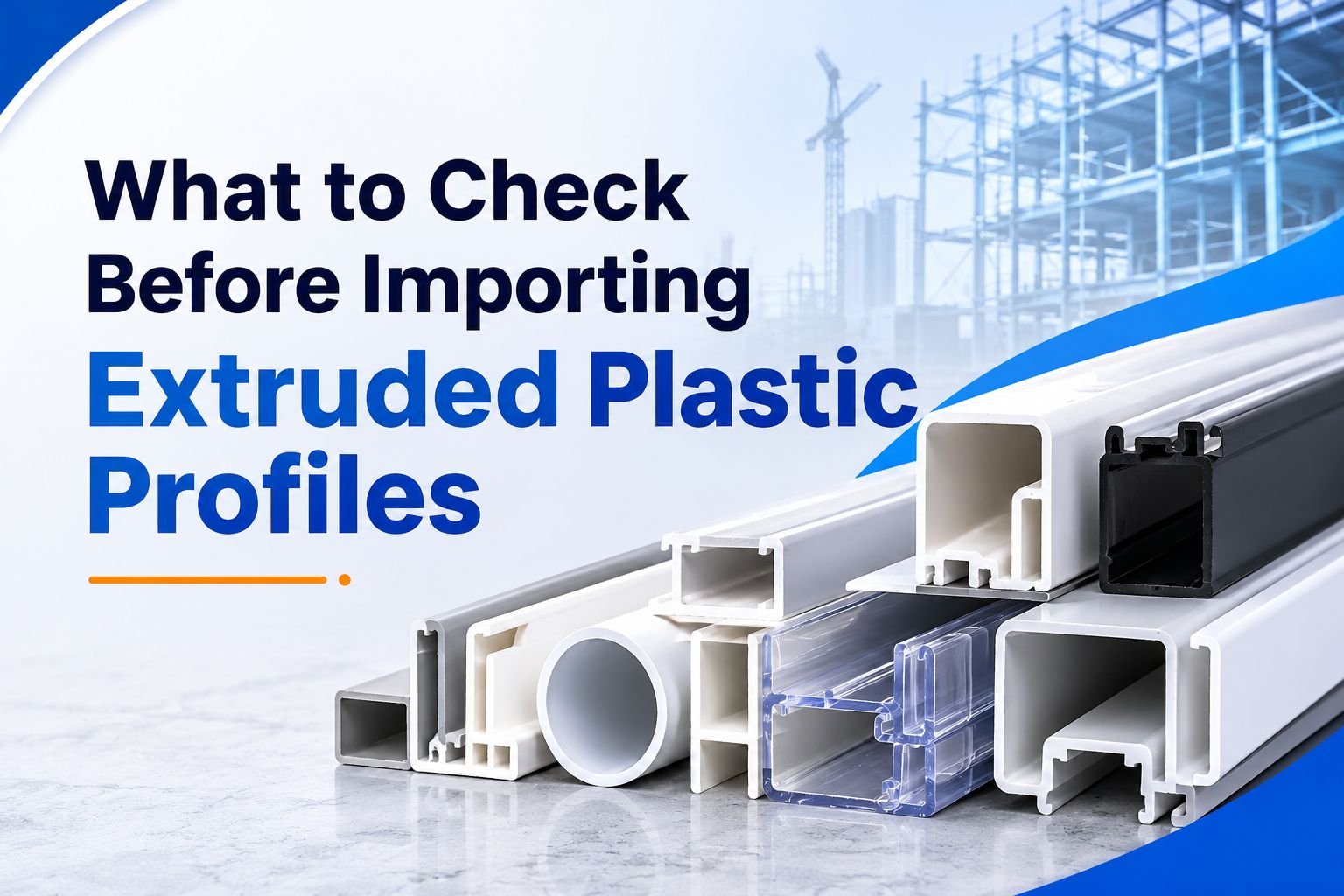
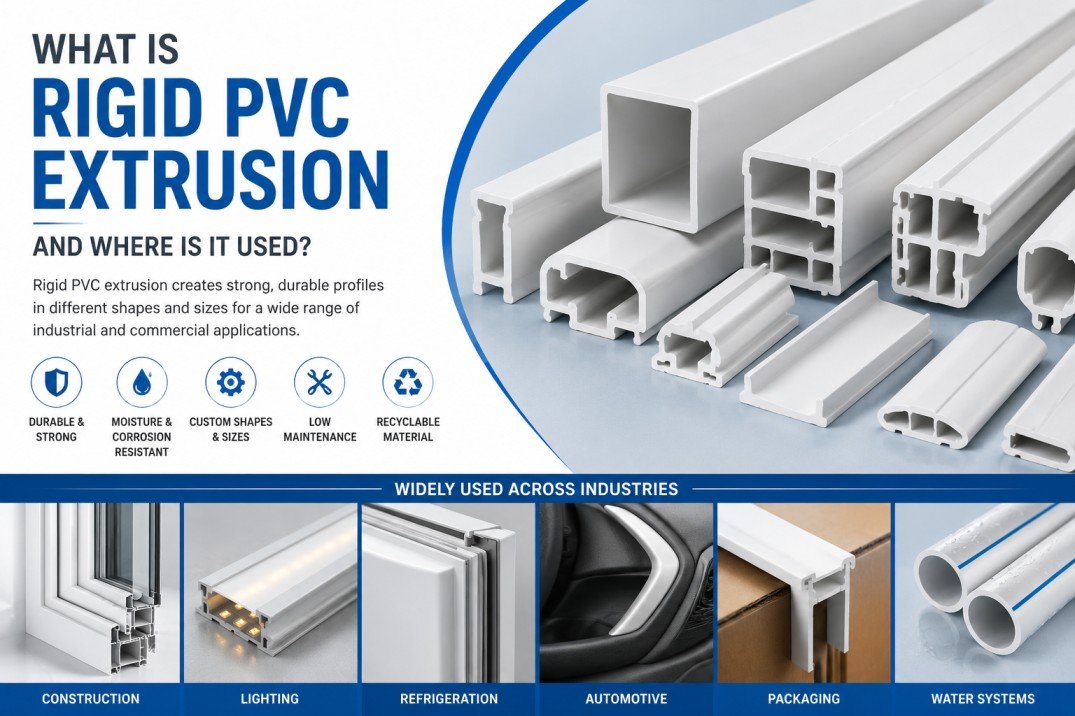
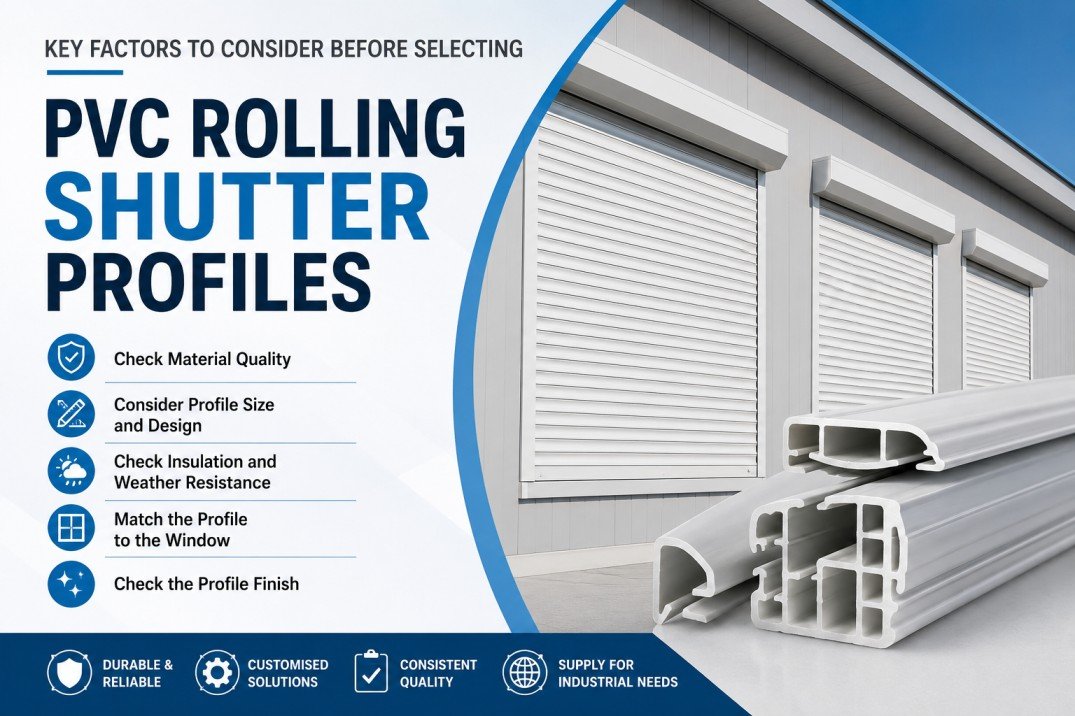
Widely renowned for their strength, flexibility, and precise shape, extruded plastic profiles have become immensely popular over the years and are widely used in many commercial applications. Not only do they provide support in holding and guiding components within systems, such as wires in electrical panels, cables in control units, and small parts in machine assemblies, but they also help protect wires, edges, and internal parts in electrical and industrial setups.
With the rise in demand for precise and application-specific parts, custom plastic profile manufacturing in India has also increased to meet varied industrial needs. Made from materials like PVC, polycarbonate and polyethene, these profiles are designed to suit different working conditions where durability and consistency matter.
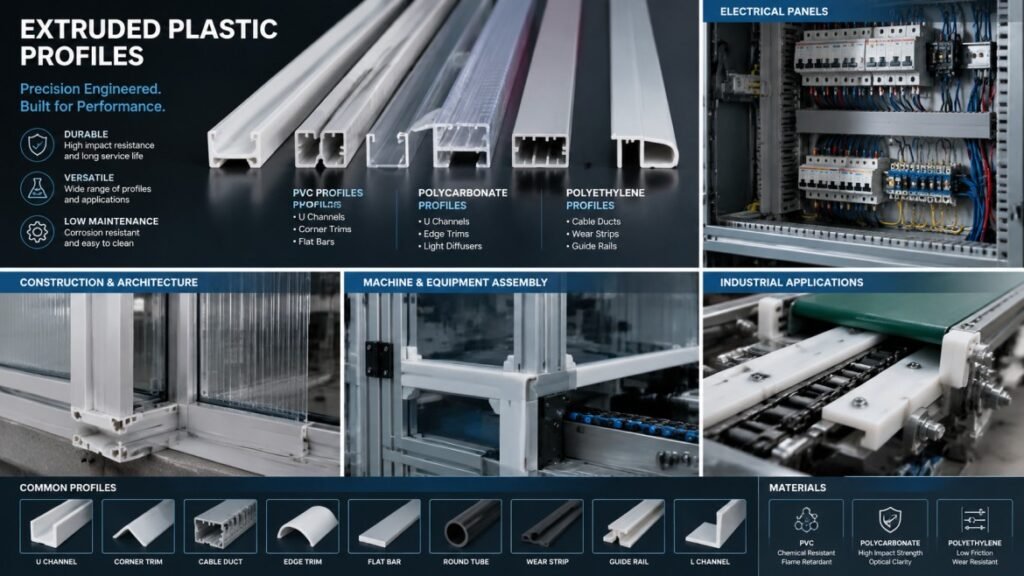
By using a controlled extrusion process, plastic is shaped into long, uniform profiles that can be easily cut and fitted into various setups. This makes them suitable for electrical panels, construction fittings, display systems and industrial equipment where steady performance and simple installation are important for daily use.
What Are Extruded Plastic Profiles?
Extruded plastic profiles are shaped plastic parts made through a process called extrusion. In this process, raw plastic is first heated until it becomes soft and flexible. The soft material is then pushed through a shaped opening called a die. This die gives the plastic its final form. Once shaped, the profile is cooled and cut into required lengths.
This method allows continuous production of long, uniform shapes. It ensures that every piece has the same size and structure. This consistency is important in commercial use where proper fitting and alignment are needed. At the same time, custom extrusion design solutions make it possible to create profiles with specific shapes, sizes, and functional requirements for different applications.
These profiles are made using materials like PVC, polycarbonate, and polyethene. Each material is selected based on its use. PVC is used for general strength as well as stability.
Polycarbonate is chosen when more impact strength is needed. Polyethene is used where flexibility is important.
This method of production is used because it supports mass manufacturing with steady quality. It also helps reduce waste and allows easy shaping of plastic into useful forms for different industries.
Top 5 Benefits of Using Extruded Plastic Profiles in Commercial Applications
Extruded plastic profiles are widely used in commercial applications because they offer a mix of strength, light weight and long service life. Their uniform shape helps in easy installation, while their resistance to water and chemicals ensures stable performance in different environments.
Here are five major benefits of using extruded plastic profiles in commercial applications.
Strong and long-lasting use
Extruded plastic profiles are built to handle regular use in commercial environments. They stay stable even in places where there is constant movement, pressure or handling. Their structure helps them maintain shape over time without cracking or breaking easily. This makes them suitable for long-term use in systems that run daily and need reliable parts.
Lightweight structure
In addition to being strong and long-lasting, these profiles are light in weight, which makes them easy to handle during transport as well as installation. Workers can install them without heavy tools or extra effort. This reduces installation time and simplifies setup work. Their low weight also helps reduce load on supporting structures, which adds to overall system safety and ease of use.
Precise Dimensions and Uniform Fit
Due to the fact that extruded plastic profiles are produced through a controlled extrusion process, they offer consistent shape and size in every piece. The extrusion process ensures that each profile has a fixed and uniform shape. This accuracy helps during installation because parts fit properly without adjustments. It also reduces gaps and misalignment in systems.
The table below shows how this dimensional accuracy supports better performance in commercial use.
Aspect | Benefit in Commercial Use |
Shape consistency | Ensures every profile matches exact design standards |
System appearance | Supports clean and well-organised layouts |
Installation fit | Allows smooth fitting without extra cutting or adjustment |
Alignment accuracy | Reduces gaps and keeps systems properly aligned |
This level of accuracy makes extruded plastic profiles highly reliable for applications where proper fit and steady performance are required.
Resistant to water and chemicals
Extruded plastic profiles do not get damaged easily when exposed to water or mild chemicals. They do not rust or corrode like metal parts, which makes them useful in damp or cleaning-heavy environments. This resistance helps them maintain their structure as well as performance over time, even in challenging working conditions.
Low maintenance needs
When compared to metal profiles and wood-based fittings used in commercial installations, these extruded plastic profiles require very little maintenance after installation. Furthermore, they do not need frequent repairs or replacements. Simple cleaning is enough to keep them in good condition. This reduces ongoing effort and helps save time in daily operations.
Frequently Asked Questions
What are extruded plastic profiles used for?
Extruded plastic profiles are used to support, protect and organise components in different systems. They are commonly used in electrical panels, construction frameworks, industrial machines, and display units where shaped plastic parts are required.
Are extruded plastic profiles strong enough for commercial use?
Yes, these profiles are designed for commercial environments. They can handle daily use, regular handling and continuous operation without losing strength or shape, making them reliable for long-term applications.
Which industries use extruded plastic profiles the most?
They are widely used in electrical systems, construction work, retail display setups and industrial equipment.
Do extruded plastic profiles need regular maintenance?
No, they do not need regular maintenance. Basic cleaning is enough to keep them in working condition. Their strong build reduces the need for frequent repairs or replacements.
Why are plastic profiles preferred over metal in some applications?
Plastic profiles are preferred because they are lighter, easier to install and resistant to water and chemicals. They also avoid rust and corrosion, which makes them suitable for environments where metal parts may not last long.
Conclusion
Extruded plastic profiles are a dependable choice for a wide range of commercial applications because they combine strength, light weight and long service life in a single solution. By offering uniform shape and consistent quality, they ensure easy installation and proper fit in different systems. Not to mention, their resistance to water as well as chemicals helps maintain stable performance even in demanding conditions.
Are you looking for durable and reliable extruded plastic profiles for commercial use? M3 Extrusion offers high-quality extruded plastic profiles designed for strength, precision and long-lasting performance across a wide range of applications.