If you have worked on product design or manufacturing, you already know this. Most problems do not come from big mistakes. They come from small design gaps that keep repeating. A loose fit, a weak edge, or a part that does not align properly can slow down the whole system.
This is where working with a custom extruded plastic profiles supplier changes things. Instead of adjusting your design to match standard parts, you create custom extrusion profiles that actually fit your requirement.
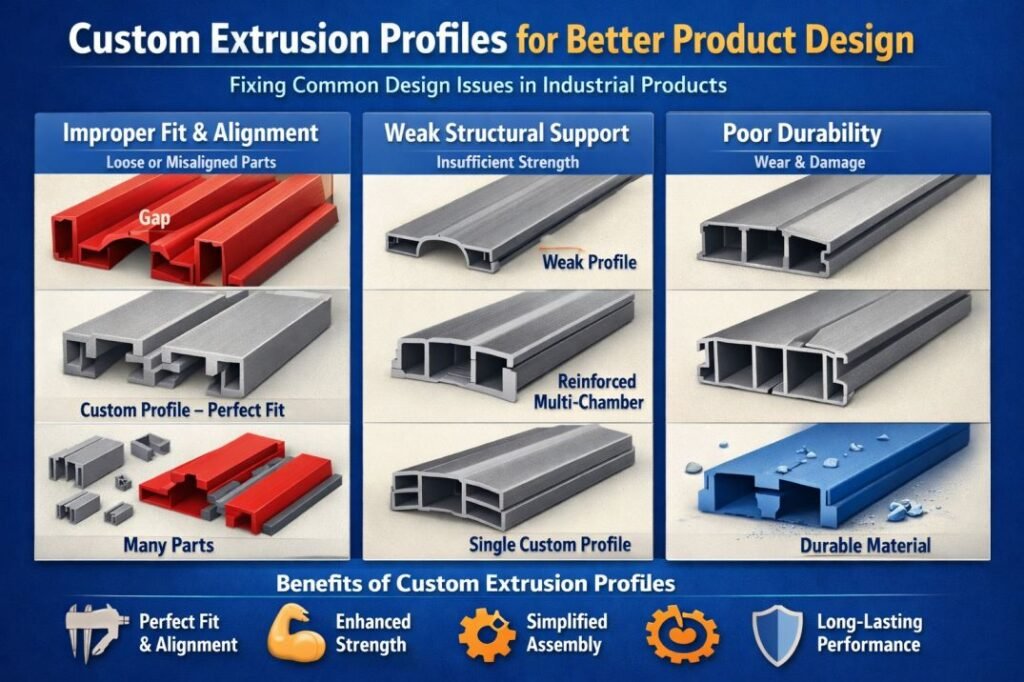
From what I have seen in real projects, once the profile is designed correctly, many ongoing issues simply stop.
What Are Custom Extrusion Profiles?
Custom extrusion profiles are plastic components made through extrusion, but designed specifically for a particular application.
Unlike standard shapes, these profiles are created based on:
- Technical drawings
- Application needs
- Functional requirements
They are widely used as:
- PVC extrusion profiles
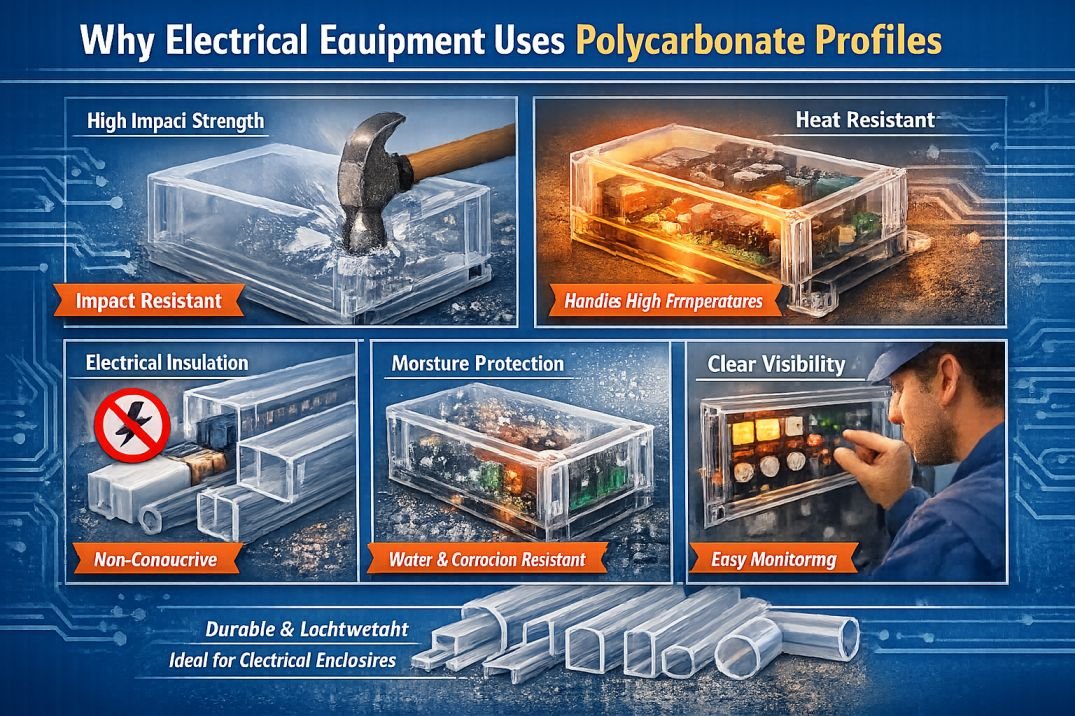
- Polycarbonate extrusion profiles
- Industrial plastic profiles
- Plastic profiles for industrial use
In simple terms, they are built to solve a problem, not just fill a space.
Why Standard Profiles Often Fail
Standard profiles work only when your design is basic. But in most industrial applications, requirements are not that simple.
Common issues I have seen:
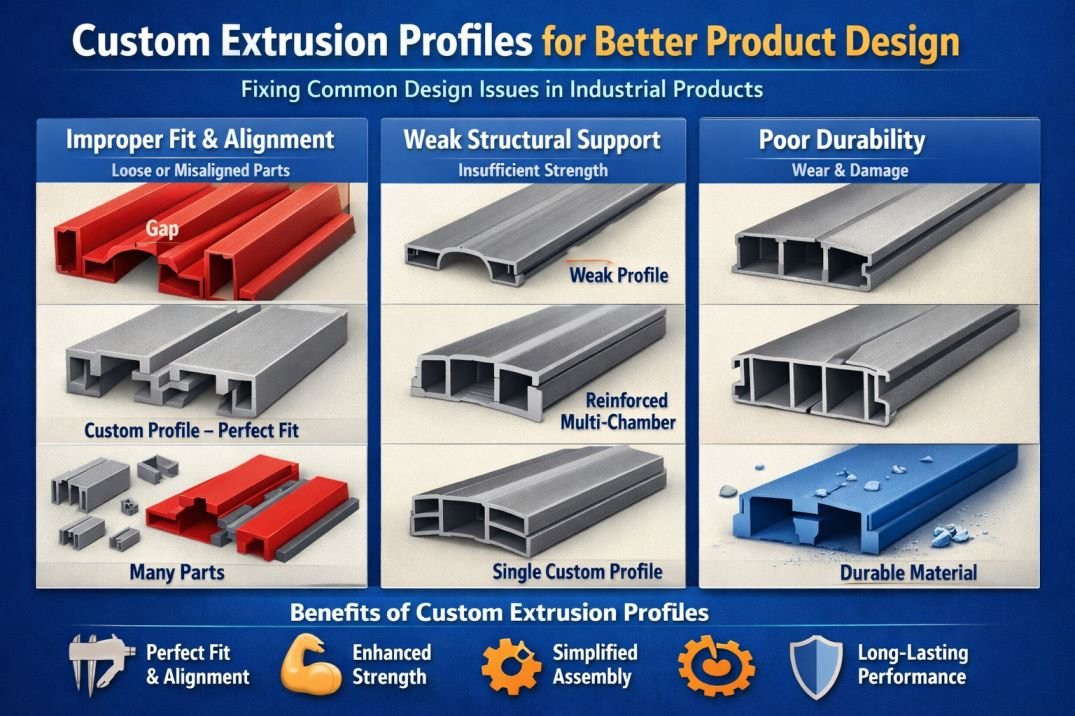
- Poor fitting between components
- Weak structural support
- Complicated assembly
- Extra parts added just to fix gaps
These problems increase cost and reduce efficiency. This is where plastic extrusion profiles designed specifically for the job make a real difference.
Common Design Issues Solved by Custom Extruded Plastic Profiles
1. Improper Fit and Alignment
One of the biggest problems in assemblies is misalignment.
With custom extrusion profiles, you can design:
- Exact dimensions
- Proper channels and grooves
- Tight fitting structures
This removes the need for adjustments during assembly.
2. Weak Structural Support
Standard plastic parts may not handle load properly.
Using industrial plastic profiles, you can:
- Add thickness where required
- Create multi-chamber designs
- Improve load distribution
From experience, even a small design change in the profile can improve strength significantly.
3. Complex Assembly Process
Too many parts make assembly slow and error-prone.
With proper extrusion profile design, multiple functions can be combined into a single profile.
This helps:
- Reduce number of components
- Simplify installation
- Improve production speed
4. Poor Durability in Daily Use
Some materials wear out quickly under stress.
By selecting the right material like:
- PVC extrusion profiles
- Polycarbonate extrusion profiles
you can improve resistance to:
- Impact
- Moisture
- Temperature changes
This increases product life.
5. Limited Design Flexibility
Standard parts restrict design possibilities.
This is why many manufacturers now focus on custom plastic profiles in modern manufacturing, where flexibility allows better product design without compromise.
With custom profiles, you can create:
- Unique cross sections
- Functional edges
- Integrated locking systems
Real-World Example
In one project, a manufacturer was using multiple small components to hold panels in place. The system worked, but assembly time was high and alignment issues were common.
After switching to a single custom extrusion profile:
- Assembly time reduced
- Alignment improved
- Product quality became consistent
This is something I have seen again and again. Simpler design often works better.
Types of Materials Used in Custom Profiles
Material | Use Case |
PVC | Cost-effective and durable |
Polycarbonate | High strength and heat resistance |
ABS | Impact resistance |
Acrylic | High clarity applications |
Material choice depends on application and performance needs.
How to Approach Custom Profile Design
Here is a practical approach that works:
1. Identify the Problem Clearly
Do not start with the profile. Start with the issue you want to solve.
2. Define Functional Requirements
Support, sealing, alignment, or protection.
3. Choose the Right Material
Match material with environment and usage.
4. Work on Profile Geometry
Focus on strength, fit, and usability.
5. Test Before Final Production
Small trials help avoid big mistakes.
Practical Insight: What Works and What Fails
Let me keep it honest.
What works:
- Designing profiles based on real usage
- Keeping the design simple but functional
- Choosing the right material
What often fails:
- Copying existing designs without testing
- Ignoring assembly challenges
- Overcomplicating the profile
In many cases, simpler designs perform better in the long run.
Key Takeaways
- Custom extrusion profiles solve real design and assembly problems
- They improve fit, strength, and durability
- They reduce component count and simplify production
- They offer flexibility for modern product design
- They support long-term performance in industrial use
Conclusion
Design problems are not always visible at the start. They appear during production, assembly, or usage. Fixing them later is always more expensive.
From practical experience, using the right custom extrusion profiles at the design stage solves many of these issues early.
M3 Extrusion works with manufacturers to develop plastic extrusion profiles that match exact requirements, helping improve product quality and production efficiency without unnecessary complexity.
FAQs
1. What are custom extrusion profiles used for?
Custom extrusion profiles are used to create plastic components designed for specific applications. They help improve fit, strength, and functionality in industrial and commercial products.
2. Why are custom plastic profiles better than standard ones?
Custom profiles are designed according to exact requirements, which improves alignment, durability, and overall performance. Standard profiles may not always meet specific design needs.
3. What materials are used in plastic extrusion profiles?
Common materials include PVC, polycarbonate, ABS, and acrylic. Each material is selected based on strength, flexibility, and application requirements.
4. How do custom extrusion profiles reduce assembly time?
They combine multiple functions into a single component, reducing the number of parts required. This simplifies the assembly process and improves production efficiency.
5. Are custom extrusion profiles cost-effective?
Yes, they can reduce long-term costs by improving durability, reducing waste, and simplifying production. Initial design may take effort, but it saves cost later.
6. Can extrusion profiles be used in industrial applications?
Yes, they are widely used in industrial systems for structural support, sealing, and protection. They are designed to handle different environmental conditions.
7. How is extrusion profile design done?
It starts with understanding the application, followed by selecting the right material and designing the profile shape. Testing is done before final production to ensure performance.