Over the years, non-heat shrink tubing and sleeves have become immensely popular and are widely used for protecting and insulating wires in electrical and industrial work. Not only do they help keep wiring safe from dust, moisture, and physical damage, but they also support neat and stable installations across different systems.
However, while you can find a plethora of non-heat-shrink tubing and sleeve manufacturers in India, choosing the right product can still be confusing since many options may look similar but differ in material quality, size accuracy, and performance. Since these small differences can directly affect safety and durability, careful selection becomes important.
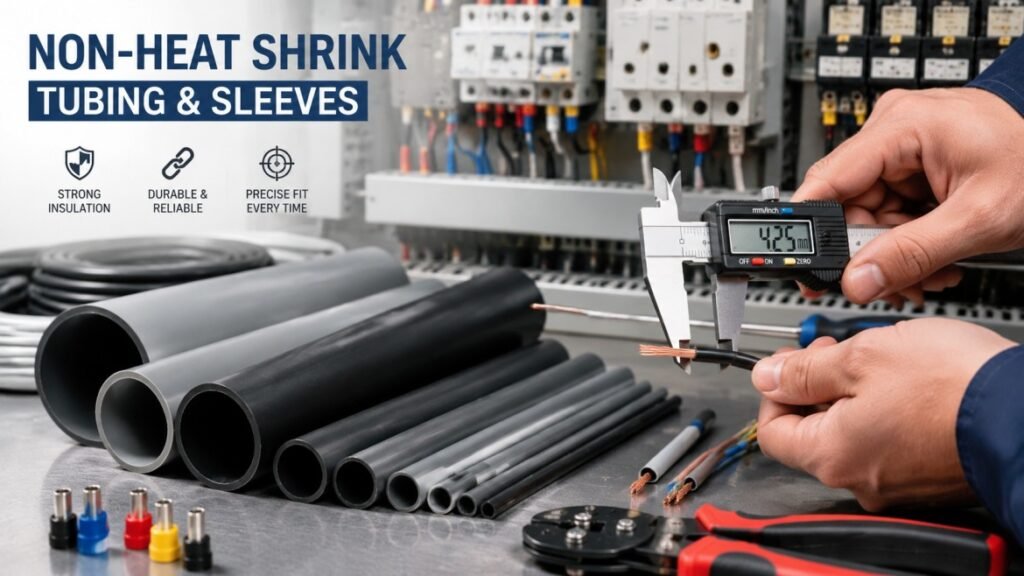
Nonetheless, by paying attention to important product aspects during selection, it becomes easier to choose tubing and sleeves that ensure better fit, strong insulation, and long-lasting use.
5 Factors to Consider Before Buying Non-Heat-Shrink Tubing and Sleeves
When it comes to buying non-heat-shrink tubing and sleeves, choosing the first option may not be the right step, since different products can vary in quality, fit, and performance. Small differences in material or size can affect how well the tubing works in real use. These factors can also impact safety and long-term durability.
Here are five factors to consider before buying non-heat-shrink tubing and sleeves.
Material Quality
One of the major factors that you need to take into account before buying non-heat-shrink tubing and sleeves is checking material quality, as it decides how well it performs in real use.
- Check firm base strength: Ensure the non-heat shrink tubing and sleeves are made from strong PVC or similar material that does not bend out of shape easily and can hold structure during use.
- Inspect surface finish: Look for a smooth and even surface that shows proper production quality and reduces the risk of cracks or weak spots.
- Confirm material stability: Make sure the non-heat-shrink tubing and sleeves do not feel soft or weak, as stable material helps it last longer under working pressure.
Good material quality ensures the tubing stays strong, safe, and reliable during installation and long-term use.
Size and Fit Accuracy
In addition to checking the material quality, make sure you also check the size and fit accuracy, as it directly affects how well non-heat-shrink tubing and sleeves perform in real use.
- Measure wire size correctly: Match the non-heat shrink tubing and sleeves with the wire or component diameter to provide proper coverage without gaps or strain.
- Check tight but easy fit: Make sure the non-heat-shrink tubing and sleeves fit firmly on the wire without being too tight, which could damage the wire or make installation difficult.
- Avoid loose-fitting issues: Ensure the non-heat-shrink tubing and sleeves do not slide or move after installation, as a loose fit can reduce protection and stability.
Proper size and fit accuracy help ensure smooth installation and strong wire protection.
Electrical Insulation Strength
Before buying non-heat-shrink tubing and sleeves, make sure you check insulation strength. If the insulation is weak, it can affect electrical safety and lead to wiring issues.
- Ensure strong insulation layer: Choose non-heat-shrink tubing and sleeves that provide a stable protective layer to prevent direct contact with live wires.
- Check protection from leakage: Make sure the non-heat shrink tubing and sleeves reduce the risk of current leakage or accidental short circuits in wiring systems.
- Confirm safe usage levels: Ensure the non-heat-shrink tubing and sleeves can handle normal electrical load conditions without breaking down or weakening.
Strong insulation helps maintain safe and stable electrical performance in different setups.
Heat and Weather Resistance
Without a doubt, a crucial factor that you need to take into consideration when buying non-heat-shrink tubing and sleeves is heat and weather resistance. Without proper resistance, performance can drop in real working conditions.
- Check heat stability: Ensure the non-heat-shrink tubing and sleeves do not soften or lose shape when exposed to high temperatures during operation or installation.
- Confirm moisture protection: Make sure the non-heat shrink tubing and sleeves resist water and humidity, which can weaken low-quality material over time.
- Test outdoor suitability: Verify that the non-heat-shrink tubing and sleeves can handle outdoor conditions like sunlight, rain, and temperature changes without damage.
Good resistance ensures the tubing performs well in both indoor and outdoor environments.
Flexibility and Ease of Use
A smooth installation process depends a lot on how flexible and easy the tubing is to use. Make sure the non-heat-shrink tubing and sleeves you select offer the right balance of flexibility and handling ease during application.
- Check bending ability: Ensure the non-heat-shrink tubing and sleeves bend easily without cracking, folding or losing their shape during application.
- Ensure smooth installation: Confirm that it slides easily over wires without needing force or causing damage.
- Balance strength and flexibility: Make sure it is flexible enough for use but still strong enough to stay stable after installation.
Good flexibility makes installation easier and improves overall handling on site.
Frequently Asked Questions
How do non-heat-shrink tubing and sleeves improve electrical safety?
Non-heat-shrink tubing and sleeves improve electrical safety by forming a protective layer around wires that helps prevent short circuits, exposure and external damage.
Where is non-heat-shrink tubing commonly used?
Non-heat-shrink tubing is used in electrical wiring, control panels and industrial setups. It is also used in equipment where wires need protection from dust, moisture, and physical contact.
Why is PVC used in non-heat-shrink tubing?
PVC is used because it offers strength, flexibility, and good insulation. It also resists moisture and heat, which helps maintain performance in different working conditions.
What problems can occur if the size of non-heat-shrink tubing and sleeves is incorrect?
An incorrect size of non-heat-shrink tubing and sleeves can cause loose-fitting or tight-fitting issues. Loose non-heat-shrink tubing and sleeves may slip off wires, while tight non-heat-shrink tubing and sleeves can damage the wire or make installation difficult.
Conclusion
By offering strong insulation and steady protection, non-heat-shrink tubing and sleeves help improve wiring safety and support stable performance in electrical as well as industrial setups. They reduce the risk of short circuits, moisture exposure and physical damage to wires. This makes wiring systems more stable and reliable over time. Careful selection of the right product ensures a better fit, longer service life and fewer issues during use.
Are you looking for reliable non-heat-shrink tubing and sleeves for your project? M3 Extrusion offers high-quality non-heat-shrink tubing and sleeves designed for strong insulation, accurate fit and consistent performance in electrical and industrial applications.