Whether it’s a factory, warehouse, or workshop, clear and even lighting is essential for safety and efficiency. Workers need to see details on production floors, loading docks, and storage areas without strain. Uneven light can create glare, shadows and bright spots that make it harder to work. It can also lead to mistakes, accidents, and slower operations. Using LED diffuser profiles is a simple and effective way to solve these issues. They help LED strips spread light evenly, protect the strips, and make maintenance easier.
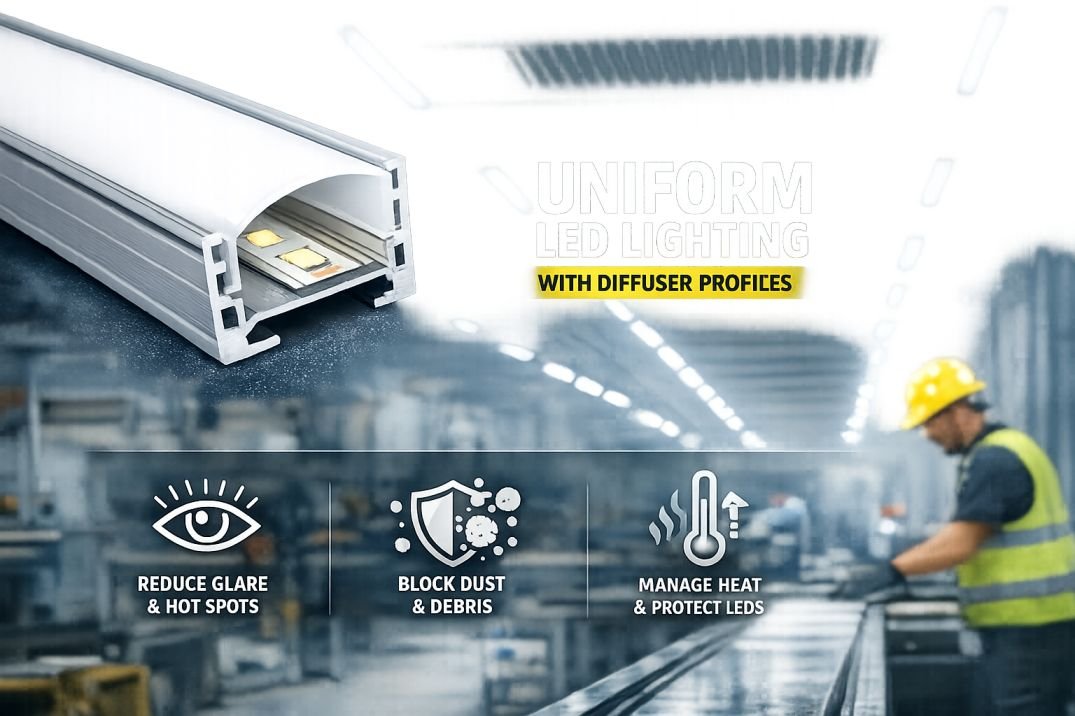
LED diffuser profiles cover LED strips with a protective layer. They stop dust, moisture, and accidental contact from damaging the diodes or wiring. Using extruded LED diffuser profiles for lighting products also softens the light. Instead of seeing sharp dots or bright patches, the light spreads in a uniform band. This improves visibility across large areas and reduces eye fatigue for workers.
Bare LED strips may shine intensely in spots and appear dim in others. This happens because LEDs emit light in a narrow direction. Without a diffuser, the light is uneven and can create glare. For industries that run long shifts or operate machinery, uneven lighting is more than a nuisance. It can affect safety and efficiency. LED diffuser profiles make a visible difference by spreading light smoothly across benches, racks and aisles.
Why Uniform Light Matters in Industrial Settings
In factories, warehouses and workshops, lighting is more than decoration. It supports safety, accuracy and productivity. Uneven lighting creates pockets of shadow as well as bright spots that strain eyes. Workers may misread gauges, miss small defects or move more slowly to avoid accidents.
Uniform light also helps cameras and sensors work properly. Many modern industrial systems use cameras for quality checks, counting items or guiding automated machines. Sharp shadows or bright spots can interfere with these systems. Using LED diffuser profiles and managing LED brightness differences ensures that light is smooth and predictable. This helps both people and machines perform better.
Even lighting also improves the overall look of a workspace. While aesthetics are not the main concern in industrial areas, neat and consistent lighting signals a well-managed space. It can also make inspections and cleaning easier because areas are clearly visible.
How LED Diffuser Profiles Work
LED diffuser profiles work by covering LED strips and shaping the light they emit. Typically made from polycarbonate materials, some profiles also include an aluminium base to draw heat away from the LED strip. The profile acts as both a protective cover and a lens, spreading light evenly while keeping the LEDs safe.
The diffuser does three main things:
- Protects the LED strip: Dust, moisture, and tools can damage LED strips. The profile shields the LEDs and wiring from accidental contact.
- Spreads the light: It converts the point-like light from each LED into a smooth, continuous glow. This removes harsh spots and glare.
- Supports the strip: Long LED runs can bend or sag. The profile keeps the strip straight and flat, maintaining a clean light line.
By combining these functions, diffuser profiles improve both the performance and durability of LED lighting in industrial spaces.
7 Ways LED Lighting Systems Can Achieve Smooth and Uniform Light Distribution with Diffusers
1. Reduce Glare and Hot Spots
Glare makes work uncomfortable and can cause eye strain. Hot spots from bright LED points make some areas too bright and others too dim. LED diffuser profiles soften the light. They spread it evenly across surfaces.
- Even coverage: Light flows across a wide area instead of appearing in dots.
- Less eye strain: Workers can focus on tasks without squinting.
- Improved safety: Clearer vision lowers mistakes and accidents.
Smooth lighting helps staff see small details, reduces errors, and keeps work moving efficiently.
2. Block Dust and Debris
Industrial spaces often have dust, fibers, or small particles in the air. These can settle on LED strips and affect performance. Diffuser profiles act as a shield.
- Protects LEDs: Dust does not reach the diodes or solder joints.
- Prevents faults: Keeps electrical contacts clean, reducing shorts or corrosion.
- Reduces maintenance: Cleaning is easier because dust stays on the profile surface instead of the LED strip.
By blocking debris, diffuser profiles help LEDs stay clear and stable for long-term use.
3. Maintain Consistent Light Output
Without a diffuser, bare LED strips may appear brighter in some spots and dimmer in others. Profiles help maintain uniform light.
- Smooth brightness: Light spreads evenly across benches, racks and floors.
- Stable output: LEDs maintain brightness longer because they run cooler and cleaner.
- Reliable performance: Industrial areas remain well-lit over long shifts.
Consistent light improves visibility, reduces errors and supports high-quality work.
4. Keep LED Strips Straight and Secure
LED strips can bend, sag or twist during installation or long-term use. Diffuser profiles hold strips flat and steady.
- Prevents twisting: LEDs face the same direction, keeping light uniform.
- Supports long runs: Profiles keep lines level across ceilings and walls.
- Neat appearance: Lighting lines stay orderly and professional.
Holding the strip in place ensures even illumination and reduces repair needs.
5. Protect Wiring and Solder Points
Wires and solder points are vulnerable to dust, moisture, and accidental contact. Profiles cover these areas without blocking inspection.
- Reduce shorts and corrosion: Keeps connections dry and clean.
- Easy checks: Joints are visible and accessible for quick inspections.
- Prevent damage: Tools or hands cannot accidentally disrupt connections.
This reduces emergency repairs and helps lighting run reliably.
6. Simplify Cleaning and Inspections
Maintenance in industrial areas can be disruptive. Diffuser profiles make cleaning and checks easier.
- Smooth surface: Dust gathers on the profile, not the LEDs.
- Easy maintenance: The profile’s surface can be cleaned without removing or handling the LED strip.
- Faster inspections: Faults are easy to spot, so repairs are quicker.
By simplifying these tasks, diffuser profiles reduce downtime and keep lights running longer between maintenance.
7. Manage Heat and Extend Lifespan
LEDs produce heat during operation. High temperatures can reduce brightness and shorten life. Some diffuser profiles include aluminium bases that act as heat sinks.
- Draw heat away: Keeps strips cooler for long-term operation.
- Prevent early wear: Slower ageing preserves output and colour quality.
- Stable brightness: LEDs stay consistent without dimming or colour shifts.
Cooling improves LED longevity and reduces the frequency of replacements, which lowers costs.
Additional Benefits for Industrial Spaces
Beyond light distribution and protection, diffuser profiles provide other advantages for industries:
- Energy efficiency: By spreading light evenly, fewer fixtures are needed for the same brightness.
- Improved workflow: Consistent lighting supports accuracy in assembly lines and storage areas.
- Lower maintenance costs: Less cleaning, fewer repairs and fewer replacements save time and money.
- Durability: Profiles withstand daily wear, cleaning and long operating hours.
These benefits make diffuser profiles a practical investment for industrial lighting systems.
Choosing the Right LED Diffuser Profile
Selecting the right profile depends on your needs:
- Material: Acrylic or polycarbonate profiles offer strength and clear light transmission.
- Size and shape: Profiles must fit the LED strip and installation area.
- Heat management: Aluminium-backed profiles are ideal for long runs or high-power LEDs.
- Light effect: Select an LED diffuser profile that spreads light to the level needed for workspaces.
Choosing the right LED diffuser profile ensures even light and lasting performance.
Installation Considerations
Installing LED diffuser profiles is straightforward but requires care:
- Secure mounting: LED diffuser profiles should be fixed firmly to prevent sagging.
- Check strip alignment: Ensure LEDs sit flat inside the profile.
- Allow airflow: Some heat needs to escape, so profiles should not be completely sealed.
- Access for maintenance: Profiles should be easy to remove for inspections or repairs.
Following these steps keeps the lighting system efficient and low-maintenance.
Conclusion
LED diffuser profiles play a key role in helping industrial LED lighting systems deliver smooth and uniform light. They reduce glare, block dust, keep strips straight, protect wiring, manage heat, and make maintenance easier.
Beyond improving visibility, they enhance efficiency, lower long-term costs, and extend the lifespan of LED strips. For industries looking to maintain safe, well-lit and reliable workspaces, investing in quality extruded LED diffuser profiles for lighting products is a practical choice.
Are you looking for high-quality LED diffuser profiles? M3 Extrusion offers a wide range of durable and high-performance LED diffuser profiles designed to meet the demands of industrial lighting and ensure consistent, long-lasting results.
Frequently Asked Questions
Can LED diffuser profiles work in dusty or wet environments?
Yes. They act as a protective barrier that keeps dust, moisture, and debris away from LED strips, ensuring the lighting stays clean and safe in factories, warehouses and workshops.
Do LED diffuser profiles reduce brightness?
No. They soften the light without significantly lowering output. By removing harsh spots and glare, LED diffuser profiles improve visibility while maintaining sufficient brightness for industrial tasks.
Do LED diffuser profiles lower maintenance needs?
Yes. They protect LED strips from dust, scratches and heat, reducing the frequency of cleaning and repairs. This keeps industrial lighting systems reliable and long-lasting.
Can LED diffuser profiles protect LED strips from physical damage?
Yes. They provide a durable cover over the LED strips, shielding them from accidental knocks, impacts and handling during installation or daily operations, which helps maintain reliable lighting over time.