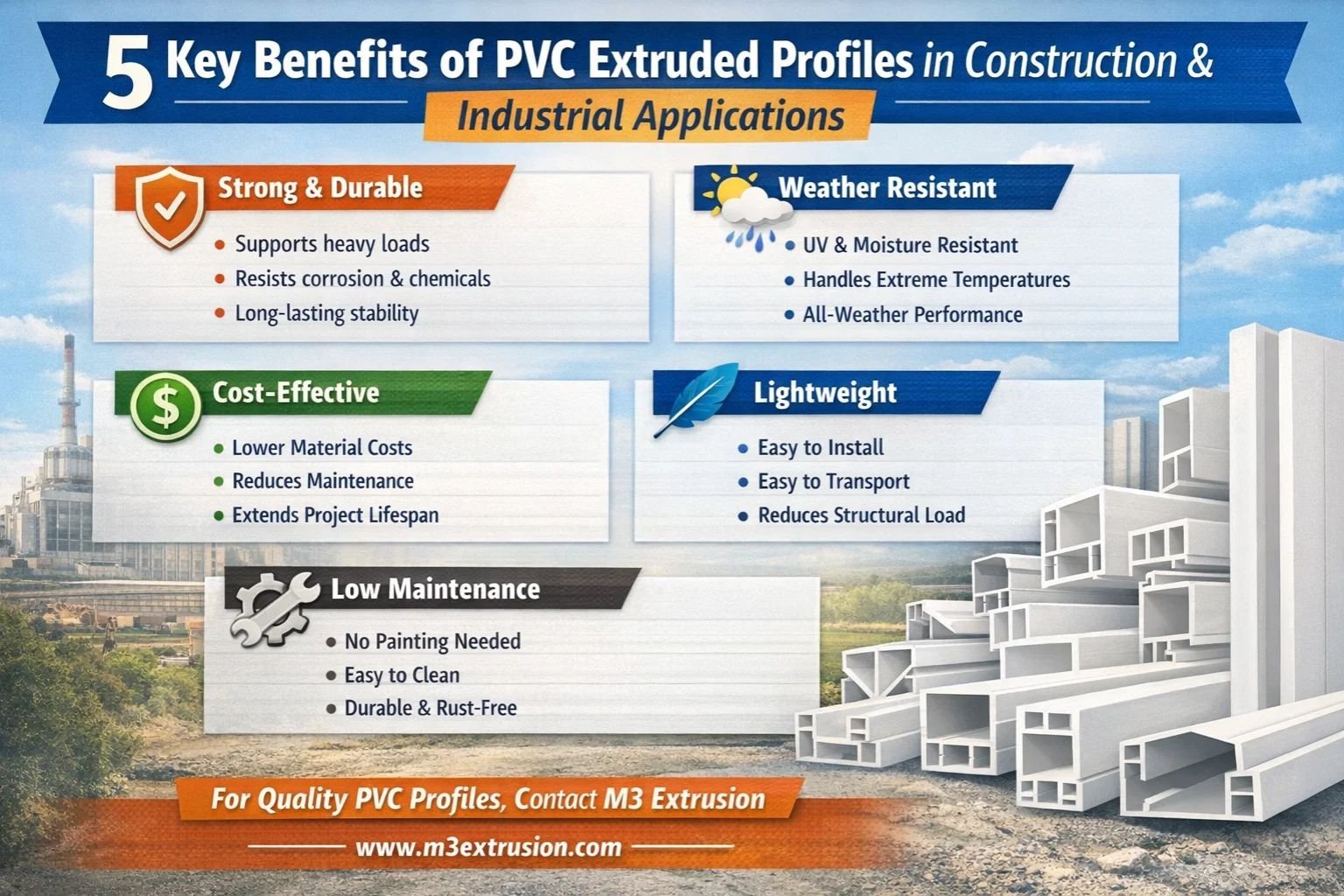
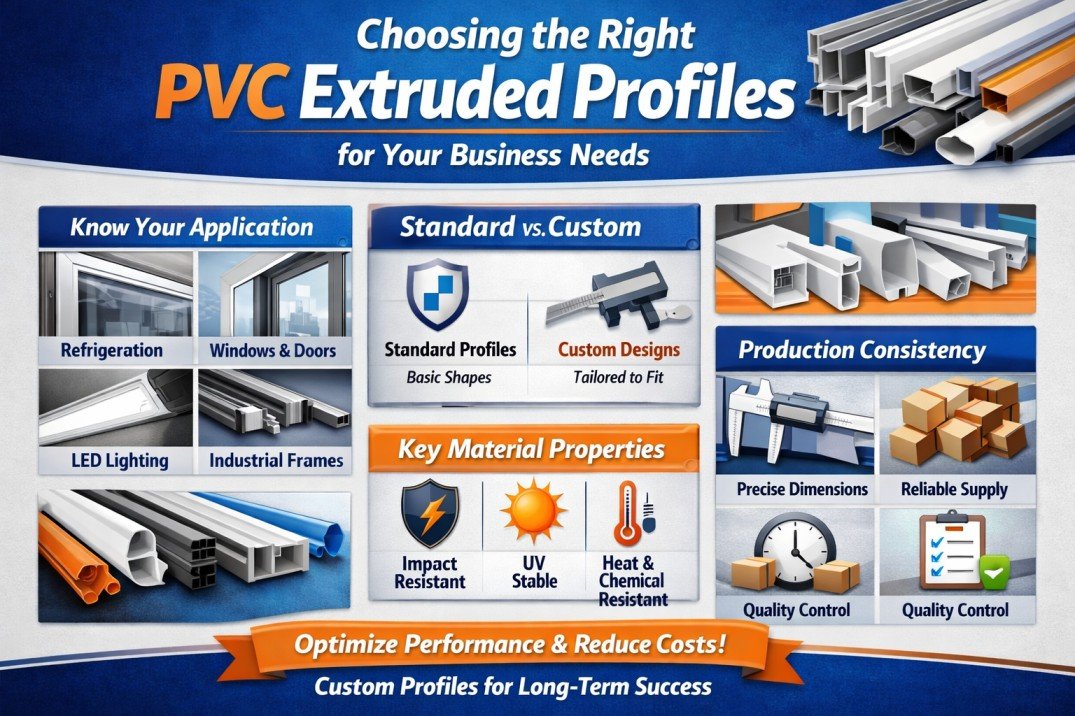
There’s no denying that PVC profiles have become a dependable choice across many industries. They are used in window and door systems, cable channels, pipe coverings, machine guards, storage units and other structural parts that need steady strength over long periods.
Because these PVC extrusion profiles in India support larger assemblies, even small faults can lead to fit issues, slowdowns on site or reduced performance. This makes consistency a top priority for every manufacturer.
To meet this need, manufacturers make sure quality stays consistent from beginning to end. They look at how each batch behaves, how well it holds its shape, and whether it meets the level of strength the job demands.
By keeping this control, manufacturers help industry buyers avoid failures and get products that last in today’s tough factory and construction settings.
5 Ways Manufacturers Maintain PVC Profile Quality and Strength
Manufacturers work hard to keep PVC profiles strong and reliable because these products often support larger units across many industries. Since quality cannot shift from batch to batch, they focus on broad habits that help them deliver steady results.
They keep their workflow organised, stay alert to signs of common issues, and make sure each stage moves forward with the same level of care.
Most plants build routines that guide day-to-day work without adding anything complex. These routines help them notice early changes that may affect how the profile will perform once it is in use. They also make it easier to stop weak or uneven pieces from reaching buyers.
This steady approach helps maintain strength, shape, and reliability across different batches.
Here are five ways manufacturers maintain PVC profile quality and strength:
Steady Routines
When it comes to making dependable PVC profiles, PVC profile manufacturers follow steady routines that guide each stage of work. Not only do these routines keep production organised, but they also prevent small shifts from affecting long-term quality.
- Standardise handling steps: Manufacturers set clear handling steps that state when and how profiles should be moved, packed, and stored so each team follows the same method.
- Define packing methods: They specify the exact packing materials and packing layout to protect edges and surfaces during storage and transit.
- Assign handling roles and tools: PVC profile manufacturers name who handles each task and require the right tools, such as trolleys, racks or clamps, so handlers work correctly and damage is avoided.
By maintaining steady routines, manufacturers keep PVC profiles uniform, stable, and dependable over long runs.
Careful Handling
In addition to steady routines, PVC profile manufacturers use careful handling to keep profiles safe during storage and movement. They treat each stage with care so the PVC profiles stay stable from the moment they are made to the point they are packed.
- Use protective packing: PVC profile manufacturers wrap and cushion profiles so edges and surfaces stay safe during storage and transit.
- Control stacking and placement: They place profiles with set spacing and support to stop bending or pressure points from forming.
- Train handlers and use the right tools: The manufacturers teach staff proper lifting and use trolleys, racks or clamps so profiles move without knocks or rough contact.
Thoughtful handling keeps profiles ready for fitting and long-term use, and PVC profile manufacturers rely on these careful steps to prevent hidden damage during storage and transport so each part stays reliable on the job.
Organised Tracking
For keeping production steady, PVC profile manufacturers use organised tracking to create a clear record of what happened, when it happened, and how each batch behaved. This gives them a clean timeline where no stage is missed and no change goes unseen, making it easier to spot trends, trace a part back to its origin and act fast when something shifts.
- Set fixed checkpoints: PVC profile manufacturers mark specific points on the line where teams must note shape, colour or feel, so any change is captured at the same stage every time.
- Keep clear batch logs: These manufacturers use simple records that show when a batch was made, who handled it and what the checks found, so the trail is easy to follow if an issue comes up.
- Link labels to records: Each bundle is matched with labels and tags that connect it to its notes, so mix-ups stay rare and tracking remains clear.
With tracking in place, PVC profile manufacturers can see how each batch moved through the line and use that record to keep quality steady across every run.
Impact Testing
Impact testing helps PVC profile manufacturers confirm how well a profile holds up when force is applied. It gives them a direct way to see whether the material can take hits, drops or pressure without losing shape or strength.
- Set force levels for testing: PVC profile manufacturers choose fixed force levels that match the expected load, so every test follows the same standard.
- Check for cracks and deformation: Manufacturers examine the profile after each strike to spot cracks, dents, or shape changes that point to weak areas.
- Compare results across batches: PVC profile manufacturers match current results with earlier batches to see whether the profile behaves as expected or needs closer review.
Regular impact checks give the manufacturers simple, direct proof that each batch keeps its strength throughout production.
Dimensional Checks
PVC profile manufacturers use dimensional checks to confirm that every profile matches the exact measurements required. These checks help keep sizing consistent so each part fits and performs as intended.
- Use precise measuring tools: PVC profile manufacturers rely on gauges, calipers and templates to measure width, height and wall thickness with accuracy.
- Monitor trends in dimensions: Manufacturers track measurements over time to spot slow shifts that could affect overall fit or compatibility.
- Validate critical tolerances: These manufacturers compare key dimensions against set tolerance limits to decide whether a batch is acceptable or needs closer review.
Regular dimensional checks give manufacturers steady control over sizing, so quality stays consistent across ongoing production.
While these were some of the ways manufacturers maintain PVC profile quality and strength, there are many others, such as heat stability tests, smooth surface control among many others. These added measures ensure the final profiles stay consistent, reliable, and ready for demanding use. Are you looking for a reliable PVC profile manufacturer in India that delivers consistent quality, strength, and accuracy in every batch? M3 Extrusion provides precision-made PVC profiles backed by strict testing, organised tracking, and stable production processes.
Frequently Asked Questions
How to choose the right manufacturer for PVC profiles?
Look for a company that delivers steady quality, follows clear routines and has a strong record in industrial supply. Check whether their profiles stay consistent across batches and perform well in real use.
Why do manufacturers pay attention to batch differences?
Even small changes can affect how a profile fits or performs. By watching for shifts early, manufacturers lower the risk of gaps, bends or strength loss during industrial use.
How do manufacturers reduce the chance of weak profiles?
They follow steady routines that highlight early signs of stress, uneven shape, or poor stability. These simple habits help them stop weak pieces long before they reach customers.
Why is high strength important in PVC profiles?
High-strength profiles help support frames, covers, channels, and guards that face daily pressure. They reduce fatigue, carry weight better, and stay in shape over long periods.