Whether you need PVC profiles for water systems, drainage, or supporting industrial systems, choosing the right profile is vital. Not only does the correct profile ensure smooth flow and proper support for pipes, drains, or industrial lines, but it also prevents leaks, cracks, and frequent repairs. By picking the right type, size, and material, your pipes, drains, or industrial lines can last longer and work more reliably.
However, with a plethora of companies offering different PVC profiles, choosing the right one can be a daunting task. Different grades, shapes, and sizes make the decision harder.
Nonetheless, by understanding the right type, size, and material needed for your PVC extrusion profiles for plumbing, drainage, or industrial applications, you can make an informed choice. Selecting the proper PVC profile ensures safety, durability, and reliable performance for any project.
Why Choosing the Right PVC Profile Is Crucial for Plumbing, Drainage, and Industrial Applications
Getting the right PVC profile can make or break your plumbing, drainage, or industrial project. The correct profile ensures water flows smoothly in pipes, waste moves efficiently through drains and industrial lines stay strong and secure. Using the wrong type, size, or material can lead to leaks, cracks, or system failures, causing costly repairs and downtime.
Each application has unique demands, from handling water pressure in plumbing, managing waste in drainage, to protecting liquids, gases, or cables in industrial setups. Choosing the right PVC profile keeps systems safe, reliable, and long-lasting.
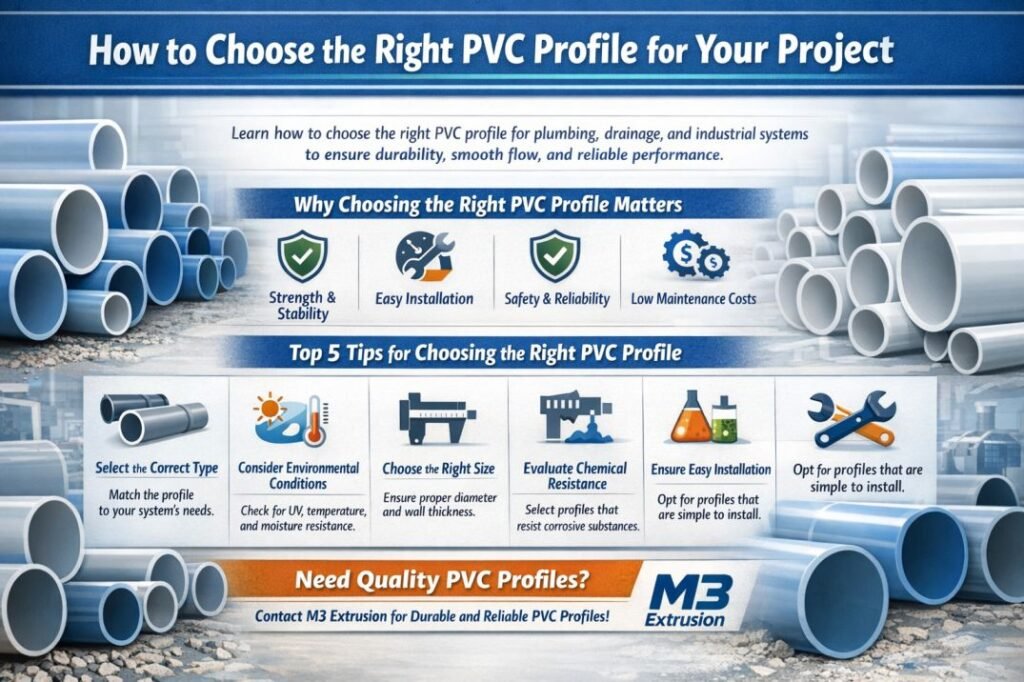
Here are four reasons why choosing the right PVC profile is crucial for plumbing, drainage and industrial applications.
Provides Strength and Stability
Choosing the correct PVC profile gives structural support for plumbing, drainage, and industrial systems. It resists bending, sagging, or stress, keeping pipes, drains, and industrial lines stable and reducing the risk of damage or failures.
Optimizes Installation Efficiency
The right PVC profile simplifies installation by fitting correctly and requiring fewer adjustments. This saves time, reduces labour effort, and ensures plumbing, drainage, and industrial systems are set up quickly and accurately.
Enhances Safety and Reliability
Using the right PVC profiles reduces the risk of leaks, cracks, or system failures. This protects users, equipment, and surrounding areas, keeping plumbing, drainage, and industrial systems safe and reliable in daily operation.
Minimizes Maintenance and Costs
By reducing wear and preventing leaks or cracks, the right PVC profile lowers the need for repairs. This saves time, effort, and money across all applications, keeping plumbing, drainage, and industrial systems reliable long-term.
Top 5 Tips to Choose the Right PVC Profile for Plumbing, Drainage, and Industrial Applications
When it comes to choosing the right PVC profile for plumbing, drainage, or industrial applications, the right choice can make a big difference in performance and durability. PVC profiles vary in type, size, shape, and material, and each factor affects how well a system works.
The correct profile ensures smooth flow, strong support, and long-lasting operation, while the wrong one can lead to leaks, cracks, or frequent maintenance. Plumbing, drainage, and industrial systems each have unique needs, so it’s important to consider all aspects before making a decision.
Listed below are five tips to choose the right PVC profile for plumbing, drainage and industrial applications.
Choose the Correct Type of PVC Profile
One of the major factors that you need to consider when selecting PVC profiles for plumbing, drainage, or industrial applications is choosing the correct type. The type determines how well the profile handles flow, pressure, and structural demands.
- Identify System Requirements: Assess the needs of plumbing, drainage, and industrial systems and select a PVC profile that matches the purpose. Ensure it can handle water, waste, or industrial fluids and withstand the operational pressure of the entire system.
- Match Installation Conditions: Examine the layout and environmental factors where the profile will be installed. Use flexible profiles for tight spaces, rigid profiles for structural support, or co-extruded profiles for harsh conditions.
- Check Durability: Review the profile’s strength and resistance to physical stress, pressure, and temperature changes. Choosing a PVC profile that can withstand operational and environmental forces ensures smooth operation and reduces maintenance for plumbing, drainage, and industrial systems.
Choosing the correct type of PVC profile guarantees a reliable, efficient system that lasts longer and performs safely in all applications.
Factor in Environmental Conditions
In addition to choosing the correct type of PVC profile, it is essential to consider the environmental conditions where the profile will be installed. Factors such as temperature, sunlight exposure, moisture and chemical contact can affect performance as well as durability.
Selecting profiles suited to these conditions ensures long-lasting operation across plumbing, drainage, and industrial systems.
Environmental Factor | Effect on PVC Profile | Tip for Selection |
Temperature Fluctuations | Can cause expansion, contraction | Choose profiles rated for temperature tolerance |
Sunlight / UV Exposure | May degrade material over time | Use UV-resistant profiles for outdoor applications |
Moisture / Humidity | Can weaken material integrity | Ensure profiles are suitable for wet conditions |
Chemical Exposure | May cause corrosion or swelling | Select chemical-resistant profiles when needed |
Considering environmental conditions ensures PVC profiles maintain strength, efficiency, and longevity, reducing maintenance and protecting plumbing, drainage and industrial systems.
Select the Right Size and Dimensions
Choosing the correct size and dimensions of a PVC profile is essential for smooth flow, structural stability and reliable operation. Proper diameter, wall thickness, and length ensure plumbing, drainage and industrial systems work efficiently and avoid leaks, blockages, or weak points.
- Measure System Requirements: Determine the flow capacity, pressure, and type of material the system will carry. Selecting a PVC profile with the right diameter and length ensures water, waste, or industrial fluids move efficiently without creating stress points.
- Match Wall Thickness to Pressure Needs: Choose a profile with sufficient wall thickness to handle operational and environmental pressure. Thicker walls provide stability for larger or high-pressure lines, while thinner walls suit low-pressure or flexible installations.
- Consider Space and Layout Constraints: Assess installation conditions such as tight spaces, bends, or height restrictions. Correctly sized profiles fit easily, reduce adjustments during installation, and prevent misalignment or structural weaknesses.
Selecting the right PVC profile size and dimensions ensures long-term stability, smooth operation and minimal maintenance for plumbing, drainage, and industrial systems.
Consider Ease of Installation
When selecting a PVC profile, consider how easy it will be to handle, cut, and fit during installation. Profiles that are simple to install save time and reduce the risk of errors, misalignment, or leaks. Flexible profiles work well in tight spaces, while rigid profiles provide stability for straight runs.
Ensuring the profile is compatible with standard fittings and joints also simplifies assembly. Choosing profiles that are easy to install makes plumbing, drainage, and industrial systems more efficient and reliable.
Evaluate Chemical Resistance
Assessing chemical resistance is essential when selecting PVC profiles for plumbing, drainage, or industrial applications. Profiles that cannot withstand chemical exposure may degrade, weaken, or fail, leading to leaks or system damage.
- Identify Potential Chemicals: Determine the types of chemicals or waste the system will carry. Whether it’s cleaning agents, industrial fluids, or sewage, knowing what the profile will encounter helps select a PVC material that resists corrosion or swelling.
- Choose Profiles with Resistant Material: Select PVC profiles designed to withstand exposure to acids, bases, or other corrosive substances. Using resistant materials ensures the profile maintains strength, integrity, and durability over time.
- Check for Long-Term Stability: Evaluate how the profile performs under continuous chemical exposure. Choosing a profile with proven stability prevents deterioration, reduces maintenance needs, and maintains safe operation in plumbing, drainage and industrial systems.
Selecting PVC profiles with proper chemical resistance ensures reliable, long-lasting performance and protects systems from damage caused by corrosive substances.
Conclusion
Choosing the right PVC profile plays a key role in the efficiency, safety, and longevity of plumbing, drainage and industrial systems. Careful selection helps avoid common problems such as leaks, blockages, or material failures.
A well-chosen profile ensures systems remain reliable under different conditions, reduces the need for frequent repairs and supports consistent performance over time. Choosing the right PVC profiles ensures plumbing, drainage, and industrial systems operate efficiently, stay reliable over time, and deliver durable solutions that minimize maintenance and prevent common issues like leaks or blockages.
Are you looking for high-quality PVC profiles for plumbing, drainage, or industrial applications? M3 Extrusion offers a wide range of durable and reliable PVC profiles, including rigid, flexible, and co-extruded options, designed to meet different system requirements and environmental conditions.
Frequently Asked Questions
Why is choosing the correct size of PVC profile important?
Profile size affects flow capacity and structural stability. Undersized or oversized profiles can cause blockages, reduced efficiency, or weak points. Proper sizing supports smooth operation across plumbing, drainage, and industrial systems.
How can proper PVC profile selection reduce maintenance costs?
Using the right PVC profile prevents leaks, cracks, and failures. Reliable profiles minimize repairs and replacements, saving time, effort, and money across plumbing, drainage, and industrial systems.
Can the wrong PVC profile cause system failures?
Yes, using a profile with incorrect type, size, or material can lead to leaks, cracks, blockages, or structural failure, affecting plumbing, drainage and industrial operations and increasing maintenance costs.
How can selecting the right PVC profile simplify installation?
The correct type, size and material reduce the need for adjustments, extra fittings, or reinforcements. Proper profiles make plumbing, drainage, and industrial installations faster, easier, and more reliable.