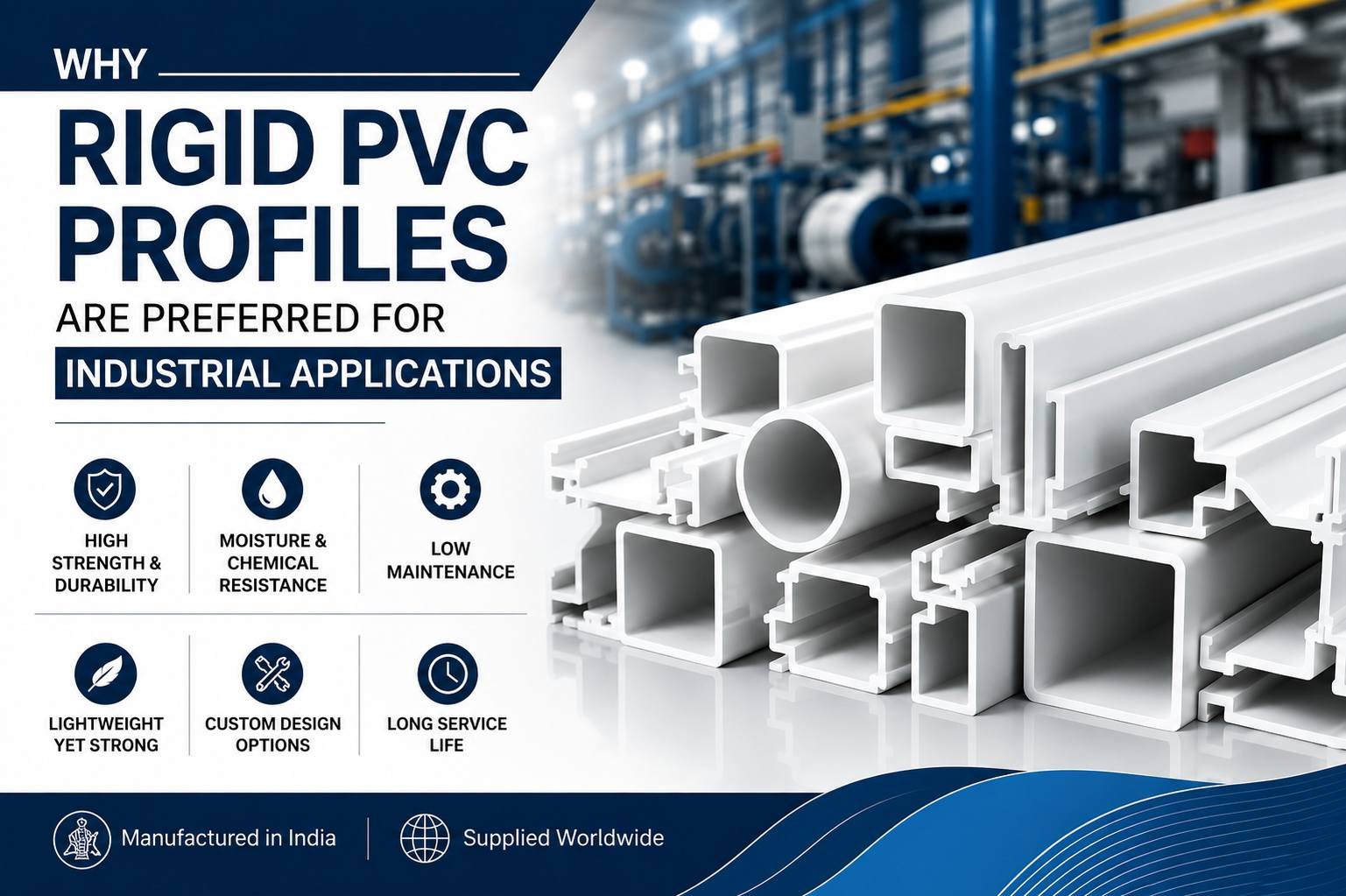
Over the years, PVC co-extrusion profiles have become immensely popular and are widely used in window systems, door frames, furniture edge bands, and industrial extrusion work to make strong, stable, and long-lasting parts.
Not only do they improve structural strength, but they also enhance surface finish and overall product performance. With a multi-layer design, these profiles combine different material properties in one product. This helps manufacturers achieve better durability, better finish, and more stable output during production.
However, while you can find a plethora of PVC co-extrusion profile solutions in India, choosing the right profile for your production line is not always simple. Many profiles offered by different manufacturers may look similar at first glance, but their material quality, machine fit, and output stability can differ a lot. Some profiles may slow down production, while others may lead to waste, defects, or uneven output.
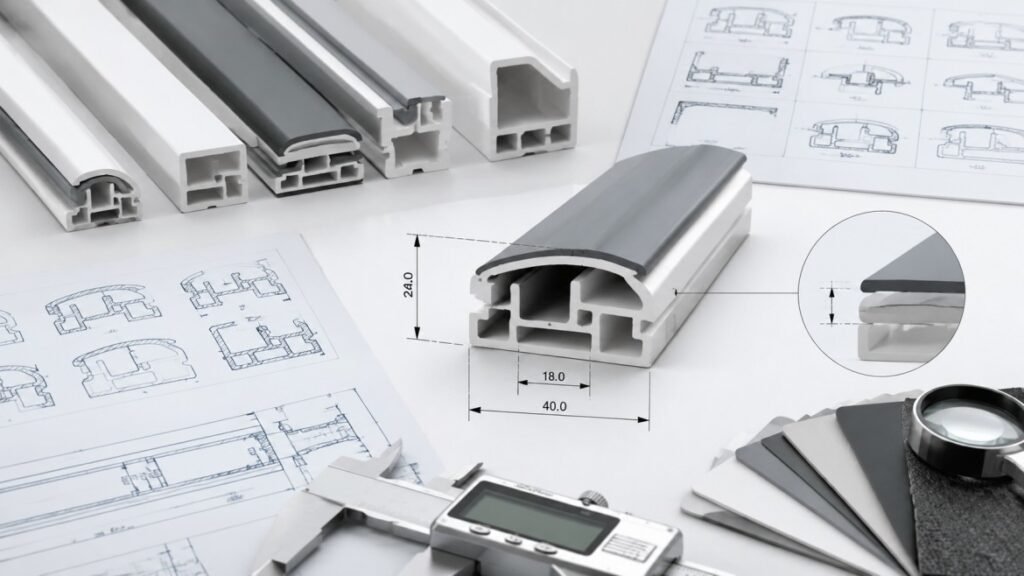
Because of these differences, selecting the right PVC co-extrusion profile becomes an important step in any manufacturing process. A wrong choice can lead to machine issues, poor-fitting parts, and higher production costs. A careful selection helps keep the production line smooth, stable, and efficient over time.
Here are the key factors to check before selecting a PVC co-extrusion profile for your production line.
Profile Design and Machine Fit
It goes without saying that smooth production depends on how well the profile matches the machine setup. A PVC co-extrusion profile must align properly with the die and mould system used in the production line. Even minor changes in shape or size can disturb material flow and lead to interruptions during extrusion.
Before selecting a profile, it is essential to check its fit with the machine setup in detail. This helps the material move smoothly through the system and keeps production pressure stable.
Points to consider:
- Correct size and shape for the production line
- Proper fit with the die and mold system
- Stable flow during the extrusion process
- No extra load on machine parts
A well-matched profile supports smooth production as well as reduces machine wear. It also helps maintain consistent output quality.
Material Strength and Layer Quality
One of the major factors that you need to take into account when selecting a PVC co-extrusion profile is checking the material strength and layer quality. This becomes even more important in PVC co-extrusion applications in industrial sectors, where profiles are expected to perform under continuous load and demanding conditions. If the material is weak, the final output will not perform well, no matter how good the machine is.
Each layer in a co-extrusion profile has a purpose. The base layer provides strength, while the outer layer adds protection as well as finish. If either layer is poor in quality, the full profile can fail under use.
Reliable profiles use stable PVC compounds that stay consistent during production. Because of this, defects are reduced and output stays uniform.
Key points:
- Resistance to heat and pressure
- Consistent raw mix quality
- Stable PVC base material
- Strong bonding between layers
Good material ensures strong profiles, stable production, and fewer rejects.
Dimensional Accuracy and Shape Stability
Dimensional accuracy is very important in production lines. If a profile is not accurate in size, it can affect the full assembly process later.
Profiles must maintain correct thickness, shape, and alignment throughout production. Any change in shape can cause fitting problems in final products.
Shape stability also matters during heat exposure. A good profile should not bend or deform during or after production.
Overall, precision in PVC co-extrusion profiles leads to stable production flow as well as fewer production issues.
Compatibility with Production Line Setup
When it comes to choosing a PVC co-extrusion profile, make sure you check its compatibility with the production line setup. It is often seen that production issues come not from machines, but from poor profile compatibility.
Every production line has a specific speed, pressure, and setup. The selected PVC co-extrusion profile must match these conditions. If it does not, the line may slow down or stop frequently.
Proper compatibility ensures that the profile moves smoothly through the machine without causing stress or blockage.
Points to review:
- Proper fit with the extrusion setup
- Smooth movement through the line
- No production interruptions
A compatible profile improves efficiency and keeps production stable.
Consistency in Output Quality
Even if a PVC co-extrusion profile performs well in one batch, the next batch must match the same quality to keep production stable. Any change in quality between batches can directly affect production flow and lead to instability on the line.
If one batch is strong and another is weak, the production line becomes unstable. This can lead to rejection and material loss.
A reliable profile supplier ensures strict control over production checks. This includes size checks, surface checks and strength tests before dispatch.
Key points:
- Uniform quality across batches
- Stable surface finish
- No variation in output
- Regular testing before supply
If the quality remains consistent across all batches, there won’t be any instability, rejection or production loss on the line.
Frequently Asked Questions
What is a PVC co-extrusion profile?
A PVC co-extrusion profile is made by combining two or more PVC layers in one process. Each layer adds strength, finish, or protection to the final product.
Where are PVC co-extrusion profiles used?
These profiles are used in window systems, door frames, and industrial components. They are common in products that need strength and shape stability.
What affects the quality of a PVC co-extrusion profile?
Material strength, layer bonding, dimensional accuracy, and production control all affect the final quality of the profile.
How does layer bonding affect the PVC co-extrusion profile’s performance?
Strong layer bonding ensures that all layers work together as a single unit. If the bonding is weak, layers can separate during use, which creates weak spots and reduces the overall life of the PVC co-extrusion profile’s performance.
Conclusion
Selecting the right PVC co-extrusion profile has a direct impact on production efficiency and product quality. A proper choice helps maintain smooth machine operation, reduces waste and ensures stable output. It also helps maintain uniform product quality from start to end of production.
Are you looking for reliable PVC co-extrusion profiles for your production line? M3 Extrusion offers PVC co-extrusion profiles designed for stable performance, accurate fit and consistent quality in industrial applications.