Over the years, co-extruded PVC has become immensely popular and is being widely used for pipes, conduits, and panels that require long-lasting protection against scratches, chemicals, and sunlight. Not only does co-extruded PVC in India handle high water pressure and heavy usage without cracking, but it also resists scratches, sunlight, and chemical damage, ensuring reliable performance over time.
The layered design of co-extruded PVC ensures that the inner core remains strong while the outer layer shields against external factors. However, choosing the right co-extruded PVC product can be challenging, as quality and safety vary between manufacturers.
With proper planning and by keeping key selection criteria in mind, it is possible to select co-extruded PVC that performs consistently, lasts longer, and meets all necessary safety and quality requirements.
How to Choose Co-Extruded PVC That Meets Quality and Safety Standards
When it comes to choosing co-extruded PVC, there are several factors that you need to consider to ensure it is strong, durable, and safe for long-term use. Not all co-extruded PVC is made the same, and differences in materials, manufacturing processes, and certifications can affect performance. Some types of co-extruded PVC are designed to meet the demands of custom design and large-scale projects, while others are meant for standard applications with basic requirements. Nonetheless, by focusing on key quality and safety criteria, you can select co-extruded PVC that performs reliably over time.
Here are four tips to choose co-extruded PVC that meets quality and safety standards.
Check Material Quality
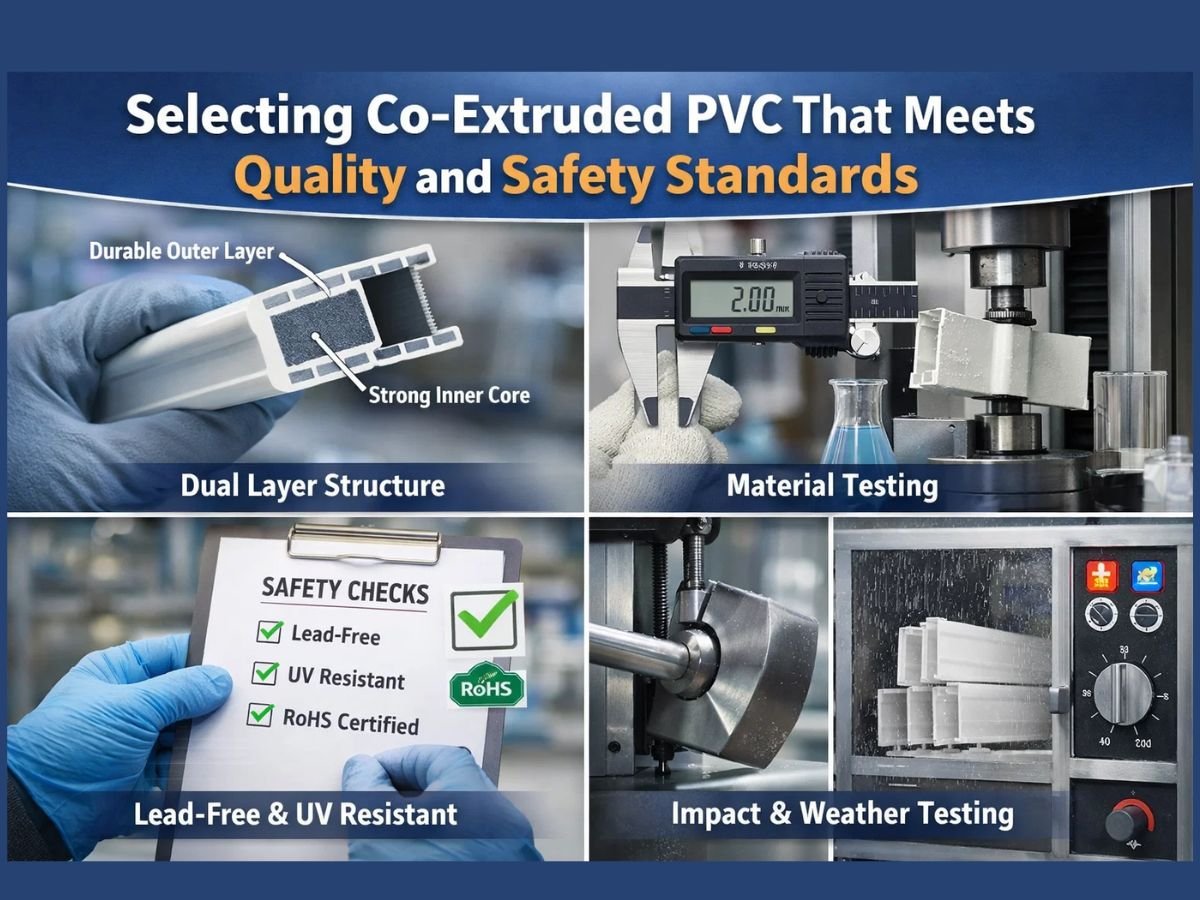
One of the major factors that you need to take into account when choosing co-extruded PVC is the quality of the materials used. High-quality PVC can handle pressure, everyday use, and environmental stress without cracking or losing strength. Low-quality or recycled material may weaken over time, shorten lifespan, and lead to damage.
Focusing on good-quality PVC helps ensure durability, safety, and consistent performance, making it suitable for long-term use in pipes, conduits, panels, and other areas that need lasting protection.
Review Durability and Performance
In addition to checking the material quality, make sure you also review the durability and overall performance of co-extruded PVC. Consider its rated lifespan, resistance to wear, and ability to handle pressure, temperature changes and environmental stress.
Co-extruded PVC that meets recognized standards generally performs consistently under different conditions, ensuring safety and reliability for long-term use, so make sure you keep an eye out for that. Evaluating these factors can help ensure that co-extruded PVC delivers reliable, long-lasting performance in pipes, conduits, and panels.
Inspect the Outer Layer
Before selecting co-extruded PVC, you should inspect the outer layer carefully. This layer protects against scratches, sunlight and chemical exposure, so make sure it is uniform in thickness and has a smooth finish. Uneven or rough surfaces can indicate poor manufacturing and reduced durability.
You should also check that the outer layer is appropriate for the environment and conditions where the PVC will be used. Paying attention to these details can help make sure the co-extruded PVC performs reliably and lasts longer under various conditions.
Check the Reputation of the Supplier
The reputation of the supplier can give valuable insight into the quality and reliability of co-extruded PVC. You should check for reviews, past project experience and any certifications they provide. A reputable supplier is more likely to provide consistent material quality, proper documentation, and support for custom or large-scale requirements.
You should also verify their track record with recognized standards and client feedback. Paying attention to supplier reputation can help ensure that the co-extruded PVC you select performs reliably and meets all safety as well as quality expectations.
Confirm Safety Certifications
When selecting co-extruded PVC, safety certifications are one of the most important factors to check. Look for approvals such as lead-free and phthalate-free, which indicate that the material is safe for water systems and everyday use. In addition, you should also verify compliance with recognized standards like ASTM, ISO or local regulations.
Ensuring these certifications are present can help guarantee consistent quality, reliable performance, and long-term safety. Paying attention to safety marks can ensure the co-extruded PVC meets both functional and safety requirements.
While these were some of the tips and tricks for choosing co-extruded PVC, there are many others such as checking for UV resistance, reviewing installation requirements, and consulting experienced suppliers. Keeping all these factors in mind can help ensure that the co-extruded PVC meets quality and safety standards, performs well under different conditions, and lasts longer. Are you looking to buy high-quality co-extruded PVC in India? M3 Extrusion offers durable, reliable, and certified co-extruded PVC solutions for pipes, conduits, panels, and custom applications.
Frequently Asked Questions
Is co-extruded PVC safe for water systems?
Yes, co-extruded PVC is safe for water as well as fluid transport if it carries certifications such as lead-free and phthalate-free. These approvals confirm that the PVC will not release harmful chemicals and is suitable for safe, long-term use.
How long does co-extruded PVC typically last?
The lifespan of co-extruded PVC depends on material quality, manufacturing, and environment. High-quality products can last many years without cracking or degrading, reducing replacement costs, maintenance needs and ensuring safe, consistent performance over long-term use.
Why is co-extruded PVC preferred over regular PVC?
Co-extruded PVC is stronger and more durable than regular PVC. Its layered structure improves resistance to wear, sunlight and chemicals, making it ideal for pipes, conduits, and panels that need long-lasting protection, reduced maintenance, and consistent performance under various environmental conditions.
Can co-extruded PVC withstand high temperatures?
Co-extruded PVC is designed to handle a wide range of temperatures depending on the grade. High-quality products maintain strength and shape under heat, making them suitable for fluid transport, electrical conduits, and outdoor applications without warping or losing performance.
Can co-extruded PVC be used outdoors?
Yes, co-extruded PVC is suitable for outdoor use when it has a UV-resistant outer layer. This protects against sunlight, weather changes, and chemical exposure, ensuring pipes, conduits, or panels maintain durability and performance over extended periods.