If you ever visit a factory that builds equipment, lighting systems, or refrigeration units, you’ll notice something that most people overlook. A lot of the small structural parts are plastic. Not random plastic pieces, but carefully designed shapes made for a specific job. In many cases, manufacturers rely on custom extruded plastic profile solutions to solve structural and assembly challenges.
Many modern products rely on extruded plastic profiles for industrial applications to hold components in place, protect delicate parts, or simply make assembly easier. When the profile is designed properly, it fits exactly where it should. No forcing parts together. No awkward adjustments during assembly.
From what I’ve seen in manufacturing environments, switching to custom extruded plastic parts often solves problems that standard components just can’t handle.
What Are Custom Plastic Profiles?
Let’s keep it straightforward.
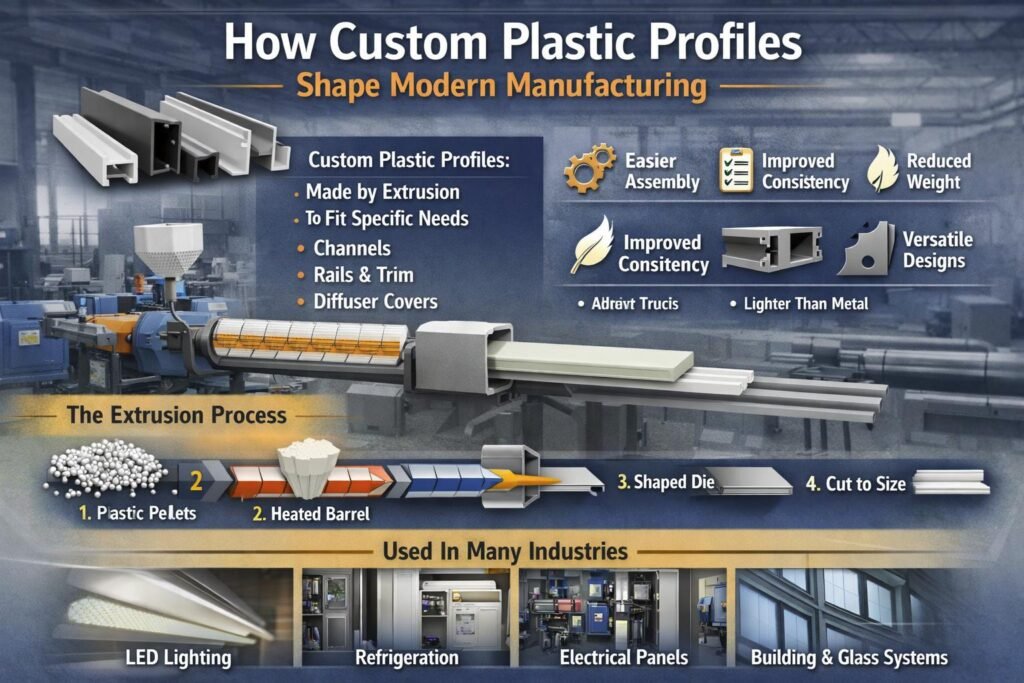
Custom plastic profiles are shapes produced by extrusion. Plastic material is heated until it melts. Melted plastic is forced through a metal die, which forms the final shape.
The shape stays the same along the entire length. That’s what makes plastic extrusion profiles useful for industrial products.
Instead of cutting different parts separately, manufacturers get a continuous shape that can be cut to the required length.
These profiles can look like:
- channels
- rails
- diffuser covers
- trim pieces
- structural supports
Why Manufacturers Use Custom Plastic Profiles
Extrusion produces the same shape repeatedly, which helps manufacturers maintain consistency during large production runs. To understand the full steps involved, you can also see how manufacturers produce custom extruded plastic profiles during the extrusion process.
Here are a few reasons.
They make assembly easier
A good profile design can replace several smaller components. Instead of installing separate brackets or clips, the extrusion itself can include those features.
They improve consistency
Extrusion produces the same cross-section repeatedly. That consistency helps when products are assembled in large quantities.
They reduce weight
Plastic is lighter than metal. In products like lighting fixtures or refrigerator doors, that difference actually matters.
They allow smarter designs
Engineers can include grooves, mounting slots, and reinforcement ribs in the same profile. But to be honest, not every design works the way people expect.
Some profiles look clever in a design file but turn into production headaches later.
Industries That Use Plastic Profiles
You’ll find extruded plastic profiles in more industries than most people expect.
LED Lighting
Lighting systems often use plastic diffuser profiles. These spread the light more evenly and protect the LED strips inside.
Commercial Refrigeration-
Refrigerator doors often contain plastic support profiles that help hold glass panels and structural components together.
Electrical Equipment
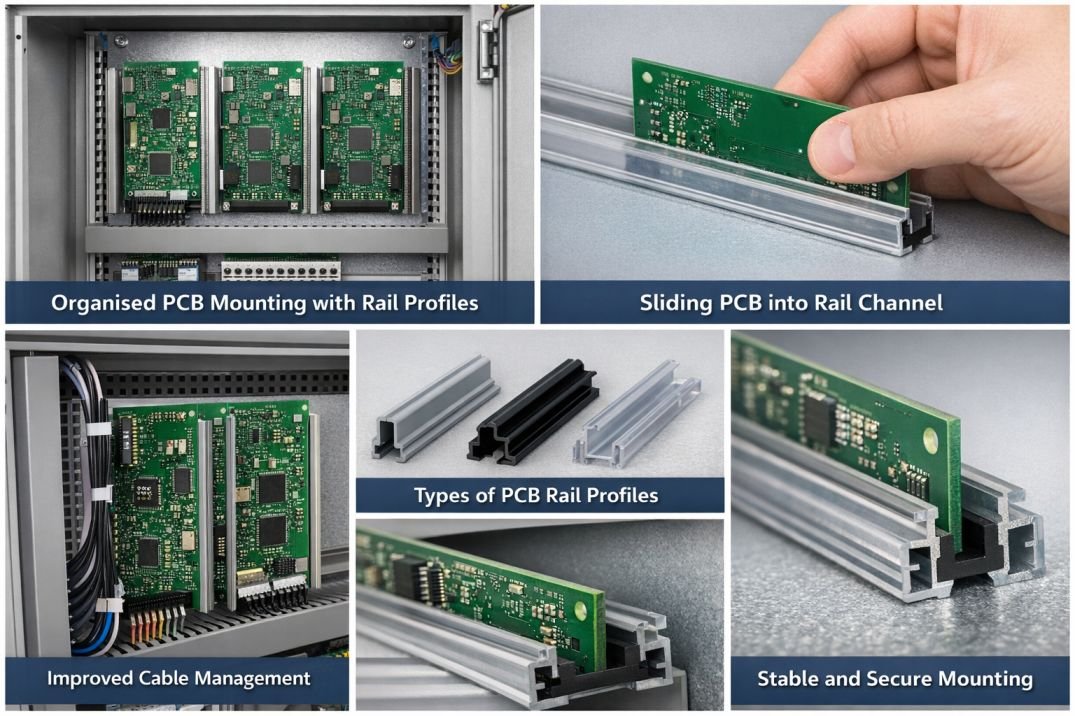
Electrical panels sometimes include plastic rails or cable management channels.
Glass and Façade Systems
Plastic profiles can protect glass edges or help align structural parts.
Most of the time, customers never see these components. But without them, many products simply wouldn’t function properly.
The Plastic Extrusion Manufacturing Process
The plastic extrusion manufacturing process sounds technical, but the idea is simple.
Plastic pellets are heated until they melt. The molten material is pushed through a shaped die. That die determines the final profile.
After that, the plastic cools and becomes solid again.
The process usually works like this:
- Plastic pellets enter the extrusion machine
- Heat melts the material
- The molten plastic is pushed through a die
- The profile cools and keeps its shape
- The finished profile is cut to size
Once production starts running smoothly, the machine can produce long lengths continuously.
What Usually Works Well in Profile Projects
After looking at several extrusion projects, a few things consistently work better than others.
These approaches usually give good results when working with custom plastic profiles in manufacturing:
- simple profile shapes
- clear functional purpose
- materials chosen carefully for the application
Profiles that focus on solving one specific problem tend to perform better. For example, a clean channel design that holds a panel or LED strip works very reliably.
What Often Fails
This is where things get interesting. Not every profile design works the first time. Some common problems show up again and again.
Over-engineered designs
Engineers sometimes try to add too many features to a single profile. The shape becomes difficult to extrude consistently.
Wrong material selection
Choosing the wrong plastic can cause bending, cracking, or colour changes during production.
Ignoring manufacturing limits
Extrusion machines have limits. If the design ignores those limits, the profile may distort during production.
These mistakes usually happen when design teams focus more on theory than on real manufacturing conditions.
Why Custom Plastic Profiles Continue to Grow
Manufacturers today want parts that are reliable, consistent, and easy to assemble.
That’s exactly where custom extruded plastic components shine.
Once the extrusion tooling is ready, companies can produce long lengths of the same profile again and again. That stability is valuable for large-scale manufacturing.
Companies like M3 Extrusion focus on producing profiles that match customer drawings and ongoing production needs. When manufacturers depend on consistent components, a reliable extrusion supply becomes very important.
Even though these parts rarely get attention, they quietly support many of the products people use every day.
Key Takeaways
- Custom plastic profiles in manufacturing help make product assembly easier and more consistent.
- Extruded plastic profiles are widely used in industries like lighting, refrigeration, and electrical systems.
- Simple profile designs usually work better than complex ones in real production.
- Choosing the right material is important for durability and long-term performance.
- Well-designed plastic extrusion profiles can replace multiple small components in a product.
Conclusion
In real manufacturing, small components often make a bigger difference than people expect. That’s exactly the case with custom plastic profiles in manufacturing. When the profile is designed well, it quietly solves several problems at once. It holds parts in place, protects sensitive components, and makes assembly easier on the production line. From what I’ve seen, the profiles that work best are usually simple ones that focus on doing one job properly instead of trying to do everything.
On the other hand, things can go wrong when designs become too complicated. Engineers sometimes add too many features into a single shape, and that can make the extrusion process harder than it needs to be. In my opinion, the most reliable plastic extrusion profiles are the straightforward ones. Clean shapes, the right material, and a practical design usually lead to smoother production and fewer headaches later.
FAQs
What are custom plastic profiles?
Custom plastic profiles are plastic shapes made through extrusion to match a specific design. They are commonly used in industrial products where standard plastic parts cannot fit or perform properly.
Where are extruded plastic profiles commonly used?
Extruded plastic profiles are used in lighting systems, refrigeration equipment, electrical panels, and construction systems to support, protect, or organise components.
What materials are used in custom extruded plastic profiles?
Common materials include PVC, polycarbonate, acrylic, and ABS. Each material offers different properties, such as strength, flexibility, or transparency.
What is the plastic extrusion manufacturing process?
Plastic extrusion is a process where melted plastic is pushed through a shaped die to form a continuous profile, which is then cooled and cut to size.
Why are plastic profiles used instead of metal?
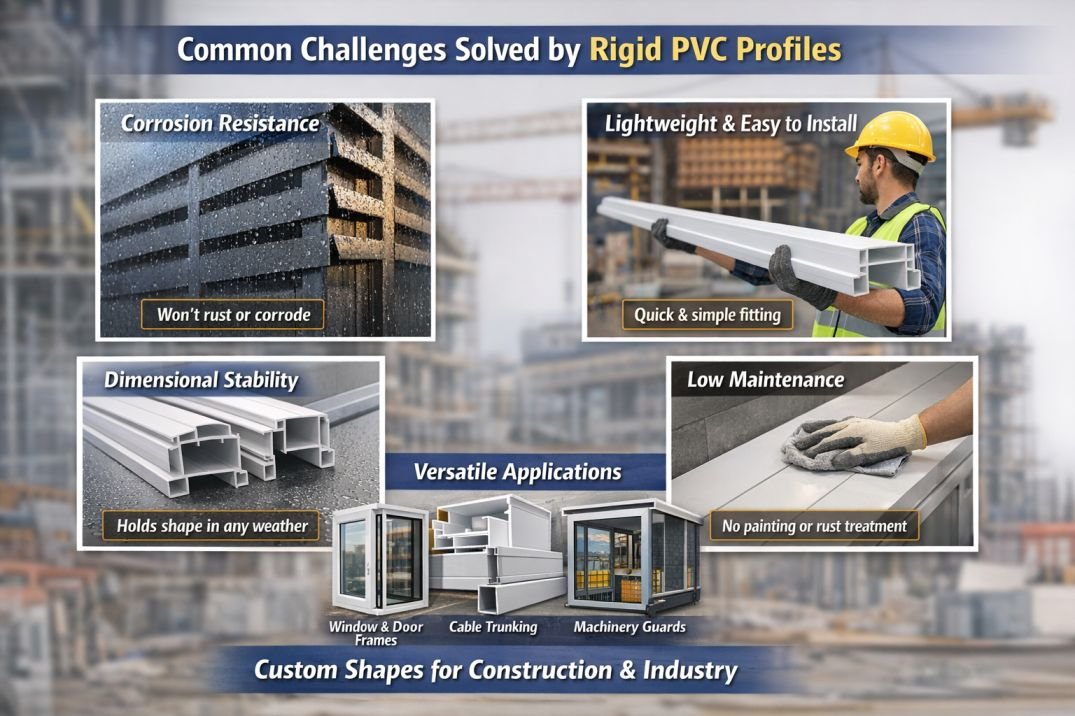
Plastic profiles are lighter, corrosion-resistant, and easier to shape into complex designs compared to metal components.
Can plastic extrusion profiles be customised?
Yes. Manufacturers can produce extrusion profiles based on technical drawings, allowing them to match specific product designs.
How long can extruded plastic profiles be produced?
Extruded plastic profiles can be produced in long continuous lengths and later cut according to the required size.
Are plastic profiles suitable for large production runs?
Yes. Once the extrusion tooling is ready, manufacturers can produce large quantities of consistent profiles.