Over the years, Noryl profiles have become immensely popular and are being widely used for producing durable plastic components for electrical systems, automotive parts, industrial equipment, and appliance manufacturing. Made from a blend of polyphenylene oxide and polystyrene, they are known for their strength, heat resistance and dimensional stability.
Not only do Noryl profiles maintain their shape under heat as well as mechanical stress, but they also offer excellent electrical insulation and low moisture absorption. These properties make them suitable for applications where consistent performance and long service life are important.
They are used across industries such as electrical manufacturing, automotive production, and industrial equipment manufacturing. Manufacturers and OEMs often buy these Noryl profiles from plastic extrusion companies in India to produce components that must handle heat, stress and continuous operation. This makes them a practical choice for both small and large-scale production needs.
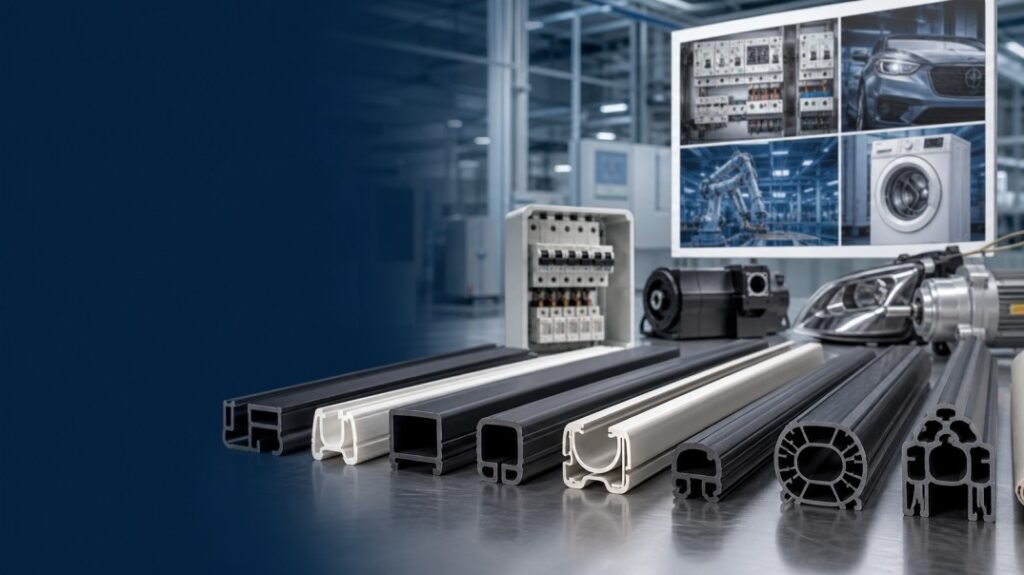
By offering a combination of strength, thermal stability and reliable performance, Noryl profiles have become a trusted choice for manufacturers looking to produce durable components for demanding industrial applications.
What Are Noryl Profiles?
Noryl profiles are plastic parts made from a blend of polyphenylene oxide and polystyrene. This blend is known as Noryl resin. It is designed to balance strength with heat resistance in a stable form. These profiles are shaped through an extrusion process. The melted material is pushed through a mould to form long, fixed shapes. These shapes are then cooled and cut based on need.
Noryl profiles are used when parts need to stay strong and stable under heat and pressure. They keep their shape well and do not bend easily. This makes them suitable for a wide variety of industrial and commercial applications.
They are also used when parts need to last a long time without breaking or losing form. Their structure helps reduce wear even in repeated use conditions.
Key Properties of Noryl Profiles
By offering a combination of strength, heat resistance, and dimensional stability, Noryl profiles have become a preferred material for a wide variety of industrial applications. These properties help them perform reliably in environments where heat, moisture, electrical insulation, and mechanical stress are important considerations.
Here are some of the key properties that make Noryl profiles suitable for a wide range of industrial applications.
Heat Resistance
Noryl profiles can handle high heat levels. They do not soften or change shape quickly. This makes them useful in machines and electrical systems where heat is common. They stay stable even when exposed to continuous heat for long hours.
Electrical Insulation
Noryl’s ability to resist electrical flow makes it suitable for use in housings and covers in electrical systems. This helps improve operational safety.
Low Water Absorption
These profiles do not absorb much water. This helps them keep their shape even in wet or humid areas. It also prevents swelling or weakening over time.
Strong Impact Resistance
Noryl profiles offer strong resistance to impact as well as pressure, allowing them to avoid cracking under stress. This helps in parts that face regular handling or operating stress. It reduces the chance of sudden breakage during operation.
Dimensional Stability
These profiles stay true to their shape. Even under stress, they don’t warp or bend easily. Because of this, they are suitable for components that require accurate fit and alignment during assembly.
How Different Industries Use Noryl Profiles
Noryl profiles are valued across many industries because they help improve the performance and reliability of plastic components. These profiles are often selected for applications where strength, stability and long service life are important.
Listed below are some of the industries that commonly use Noryl profiles.
Electrical and Electronic Components
Noryl profiles are commonly used in electrical and electronic components that require both safety and long-term performance. They help protect internal parts and support safe operation.
They are found in:
- Switch housings
- Connector covers
- Insulating frames
- Electrical panels
These parts need safe insulation as well as heat control. Noryl works well in these conditions. It also helps maintain safety in high-load electrical applications.
Automotive Components
Because of their ability to maintain performance under heat and stress, Noryl profiles are used in a variety of automotive components. They help manufacturers produce parts that remain stable and functional even when exposed to demanding operating conditions.
They are used in:
- Interior trim components
- Electrical covers
- Sensor housings
- Support brackets
Noryl profiles help support long-term performance in automotive applications where heat resistance as well as structural stability are important. They also contribute to consistent part quality throughout the product lifecycle.
Industrial Equipment
From machine covers and safety shields to structural supports and equipment frames, Noryl profiles are used in a wide array of industrial equipment applications. Their strength, dimensional stability and heat resistance make them suitable for components used in demanding operating environments.
They are used in:
- Machine covers
- Safety shields
- Structural supports
- Equipment frames
These parts must handle stress, vibration, and long working hours. They also need to stay stable in fast-moving production environments.
Home Appliance Manufacturing
Home appliance manufacturers use Noryl profiles in a variety of internal components, ranging from housing components and mounting brackets to protective covers used in washing machines, cooling systems, and kitchen appliances.
They are used in:
- Washing machines
- Air cooling systems
- Kitchen equipment
- Internal frames and supports
The combination of strength, heat resistance, and low moisture absorption makes Noryl profiles well-suited for components used in washing machines, cooling systems and kitchen appliances. These properties help support reliable performance and long service life in everyday appliance applications.
How to Choose the Right Noryl Profiles
When it comes to choosing the right Noryl profiles, there are a number of factors that should be considered before making a decision. Evaluating these factors can help ensure the profile meets both performance and production requirements.
Understand the Application Requirements
Before purchasing Noryl profiles, identify where and how they will be used. Make sure you consider factors such as heat exposure, load conditions and movement requirements to ensure the profile is suitable for the intended application.
Verify Material Strength and Performance
In addition to understanding the application requirements, make sure you evaluate whether the Noryl profile can withstand the operating conditions it will face. Reviewing material performance requirements early can help support long-term stability and reliable operation.
Confirm Dimensional Accuracy
Check whether the profile can meet the required dimensions and tolerances. Accurate sizing is important for proper fit, smooth assembly and consistent product quality.
Request Production Samples
Ask for production samples before moving forward with full-scale manufacturing. Testing a sample allows manufacturers to verify fit, finish and overall suitability while reducing the risk of costly production errors.
Assess Supply and Production Capability
Assess the manufacturer’s production capacity as well as supply capabilities before placing an order. A supplier that can support ongoing production requirements can help maintain consistent supply and reduce the risk of manufacturing delays.
Conclusion
Due to their strength, heat resistance, dimensional stability, and electrical insulation properties, Noryl profiles have become a widely used solution across many industrial applications. Their ability to perform reliably under demanding operating conditions makes them suitable for use in electrical equipment, automotive components, industrial machinery and appliance manufacturing.
These profiles help manufacturers produce durable components that support consistent performance, long service life, and product quality. Are you looking for reliable Noryl profiles? M3 Extrusion offers high-quality Noryl extrusion profiles built for strength, precision and consistent performance.
Frequently Asked Questions
What makes Noryl profiles different from other plastic profiles?
Noryl profiles are made from a blend of polyphenylene oxide and polystyrene. This gives them higher heat resistance and better dimensional stability than many standard plastic materials used in industrial applications.
What factors affect the cost of Noryl profiles?
The overall cost of Noryl profiles is influenced by factors such as material selection, profile design, tooling needs, dimensional requirements and order volume. Custom profiles and smaller production runs may also increase costs.
Can Noryl profiles be recycled?
Yes, Noryl material can often be recycled depending on the available recycling process and material condition. Recycling options may vary by region as well as the capabilities of the recycling facility.
Can Noryl profiles be used in outdoor conditions?
Yes, they can be used outdoors in many applications. Their low water absorption helps them maintain stability in moisture-prone environments.
Can Noryl profiles be produced in custom shapes and sizes?
Yes, Noryl profiles can be extruded into custom shapes based on application requirements. Custom tooling allows manufacturers to produce profiles that meet specific dimensional, functional and assembly needs.
How long do Noryl profiles typically last?
The lifespan of Noryl profiles varies depending on factors such as operating conditions, heat exposure and mechanical stress. When used in suitable applications, they can maintain their performance and structural stability for many years.