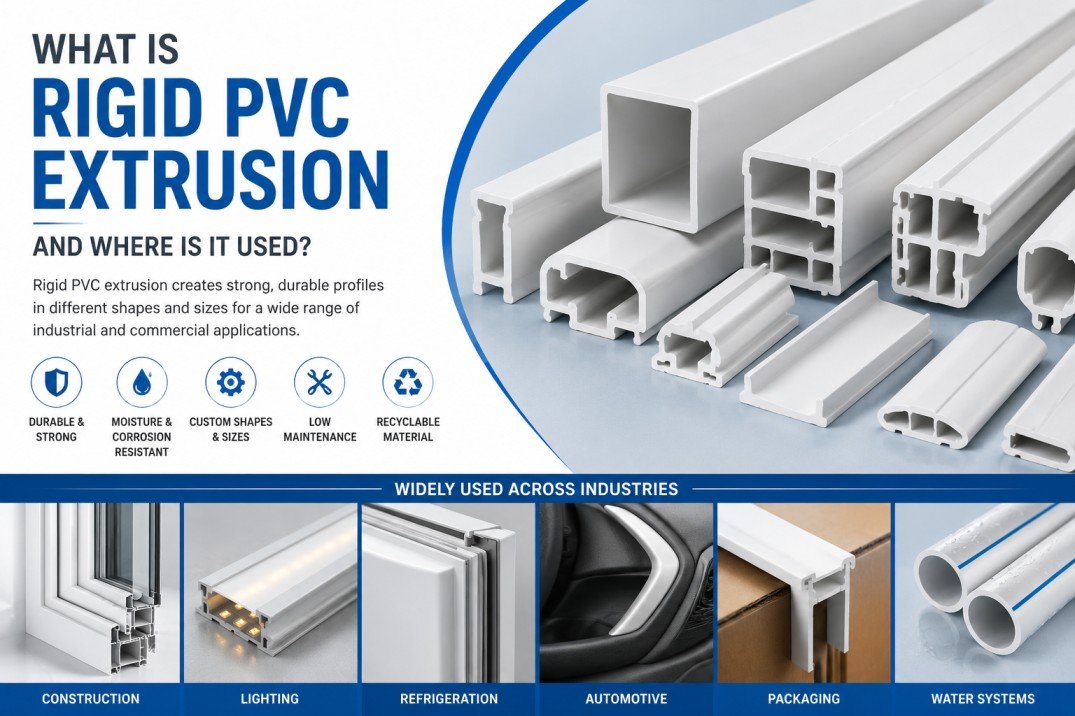
Whether you want to improve window performance in industrial spaces or reduce gaps in windows that allow air and water entry, uPVC window seals can be an ideal solution. These uPVC window seals are designed to sit between window frames and moving parts to close small openings that often go unnoticed but affect overall function. They are often made using custom uPVC extrusion profiles to match exact frame needs and ensure a tight, precise fit.
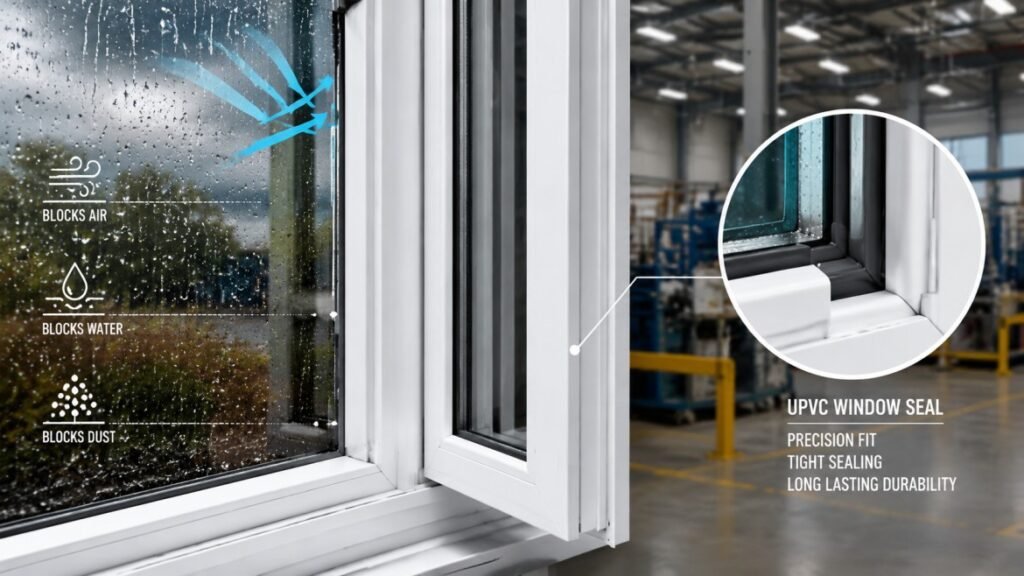
Not only do they help block air, water, dust, and noise, but they also support smoother Not only do they help block air, water, dust, and noise, but they also support smooth opening and closing of windows in daily operations. By sealing small openings in window frames, they help keep indoor conditions steady in factories, warehouses, and other industrial buildings.
This improves comfort inside and protects the window system from early wear. In demanding industrial environments, proper sealing plays a key role in keeping windows strong, stable, and reliable over time, and uPVC window seals ensure this level of protection.
What are uPVC window seals?
uPVC window seals are flexible strips made from unplasticised polyvinyl chloride. They are designed to fit into window frames and around glass edges. Their main job is simple: close gaps and create a tight seal.
Windows have small spaces between moving parts. These spaces may look minor, but they allow air, water, dust, and noise to pass through. uPVC seals fill these spaces and block unwanted entry.
These seals are used in many types of window systems, especially in industrial setups where windows must stay strong under constant use, making them an important part of long-lasting window sealing solutions.
Key features of uPVC window seals:
- Flexible material that fits tight spaces
- Strong enough to handle pressure and movement
- Resistant to wear from daily use
- Designed for long service life
They help windows stay firm, smooth and sealed even after repeated opening and closing.
Top 5 Benefits of uPVC Window Seals
uPVC window seals play a key role in how well industrial windows perform. They help close small gaps and improve how windows handle air, water, dust, and noise.
Here are five major benefits of uPVC window seals.
Air Control
One of the common issues in poorly sealed windows is air leakage, where small gaps allow outside air to enter and inside air to escape, affecting indoor comfort and stability.
uPVC window seals stop air from passing through the window gaps. They create a tight barrier that helps keep indoor air stable.
These uPVC window seals help reduce unwanted air flow through small gaps in window frames by:
- Maintaining stable environments in industrial areas
- Helping control airflow inside enclosed spaces
- Sealing air leaks along window edges
When air is controlled, indoor spaces stay more stable and consistent, which is important in industrial units.
Water Protection
Water entry is a serious problem in industrial buildings. Rainwater or moisture can enter through weak window points and cause damage over time. uPVC window seals block water from passing through the window joints. They act as a barrier that stops rainwater and moisture from entering interiors.
uPVC window seals help stop water and moisture from entering through window joints by providing clear protective functions in different ways. The table below shows how they support water control in industrial windows.
Function | How it helps |
Blocking rainwater | Stops rain from seeping through small window gaps |
Reducing dampness | Limits moisture build-up on walls and frames |
Protecting interiors | Keeps machines, tools, and stored items safe from water damage |
By preventing water entry through window joints, these seals help maintain dry and secure industrial spaces.
Dust and Dirt Control
Industrial units often have dust, dirt, and small particles in the air. If windows are not sealed well, these particles enter easily and settle inside.
uPVC window seals reduce dust entry by closing gaps around window frames. This helps maintain cleaner indoor environments.
uPVC window seals help limit dust and small particles from entering indoor spaces by:
- Reducing dust build-up in work areas
- Helping maintain cleaner indoor environments
- Closing open gaps around window frames
Cleaner spaces also reduce maintenance needs and help maintain better working conditions. uPVC window seals support this by limiting dust entry and keeping indoor areas cleaner for longer use.
Noise Reduction
Noise is common in industrial zones. Not only do machines, traffic, and outside activity produce steady noise, but they also impact comfort and focus in work areas.
uPVC window seals help reduce noise by blocking sound paths through window gaps. While they do not make a space fully soundproof, they lower outside noise levels.
These uPVC window seals help lower outside noise entering through window gaps by:
- Blocking sound paths through small openings
- Lowering machine and traffic noise inside buildings
- Improving comfort in work environments
This makes a noticeable difference in buildings located near roads, factories, or high-activity zones.
Longer Window Life
It goes without saying that windows in industrial buildings face constant stress from daily use, weather changes, and movement. Without proper sealing, windows often develop gaps that allow air, water, dust, and noise to enter, which affects performance and durability.
uPVC window seals help reduce this wear and strain on window frames and moving parts by creating a tight fit that supports smooth operation and limits exposure to air, water and dust.
This helps windows stay in better condition for longer use and reduces the need for frequent repairs or early replacement.
Frequently Asked Questions
What are uPVC window seals used for in industrial windows?
They are used to close gaps in window frames and block air, water, dust, and noise in industrial buildings.
How long do uPVC window seals last?
They can last many years, depending on use and conditions. In most industrial setups, they offer long service life with proper installation.
Do uPVC window seals improve energy use?
Yes. By blocking air leaks, they help maintain indoor temperature and reduce energy loss.
Where are uPVC window seals commonly used?
They are used in factories, warehouses, office buildings, and other industrial structures with window systems.
Conclusion
In today’s industrial buildings, windows need more than just frames and glass. They must stay sealed, stable, and strong under constant use and changing conditions. uPVC window seals help achieve this by closing small gaps that lead to air, water, dust, and noise entry. This improves windows’ performance and extends service life with less wear over time.
Are you looking for reliable uPVC window seals for industrial windows? M3 Extrusion offers high-quality uPVC window seals designed for a strong fit, long use and consistent performance across industrial applications.