With the rise in demand for safe and high-performing electrical equipment, more and more electrical manufacturers are turning to polycarbonate profiles for their unmatched durability, strength, and adaptability. From switch panels to enclosures, polycarbonate profiles are being used across a wide range of electrical equipment.
Not only do extruded polycarbonate PCB rail profiles shield sensitive electrical components, such as wires, circuit boards, and switches, from dust, moisture, and physical impacts, but they also help maintain electrical safety, reduce heat-related risks and support long-lasting performance.
Unlike metal, which can dent or rust and brittle plastics that may crack under pressure, polycarbonate profiles resist impact, corrosion and temperature changes while keeping electrical parts safe. Since polycarbonate is clear, technicians can check circuits and indicators without opening enclosures This is why polycarbonate profiles have become the go-to choice for electrical equipment manufacturers in industrial and commercial settings.
What Are Polycarbonate Profiles?
Polycarbonate profiles are strong, clear plastic pieces made in specific shapes and sizes for use in electrical equipment. They can take the form of bars, tubes, channels, or custom shapes and are produced through extrusion, where melted polycarbonate is pushed through a shaped die.
In electrical equipment, these profiles serve many purposes. They can act as parts of enclosures, edges, supports, covers, mounting frames, or guards. Manufacturers also use them in PCB rail mounting solutions for panels, providing stable support for circuit boards and keeping components secure.
Polycarbonate is highly durable, impact-resistant, and moisture-resistant, which protects sensitive electrical parts from dust, water, and physical damage. Using polycarbonate profiles helps manufacturers create equipment that lasts longer, operates safely, and meets precise design requirements.
Why Polycarbonate Profiles Are Ideal for Electrical Equipment
Polycarbonate profiles have several traits that make them perfect for use in electrical equipment. These qualities help protect sensitive components, improve durability and ensure reliable performance over time.
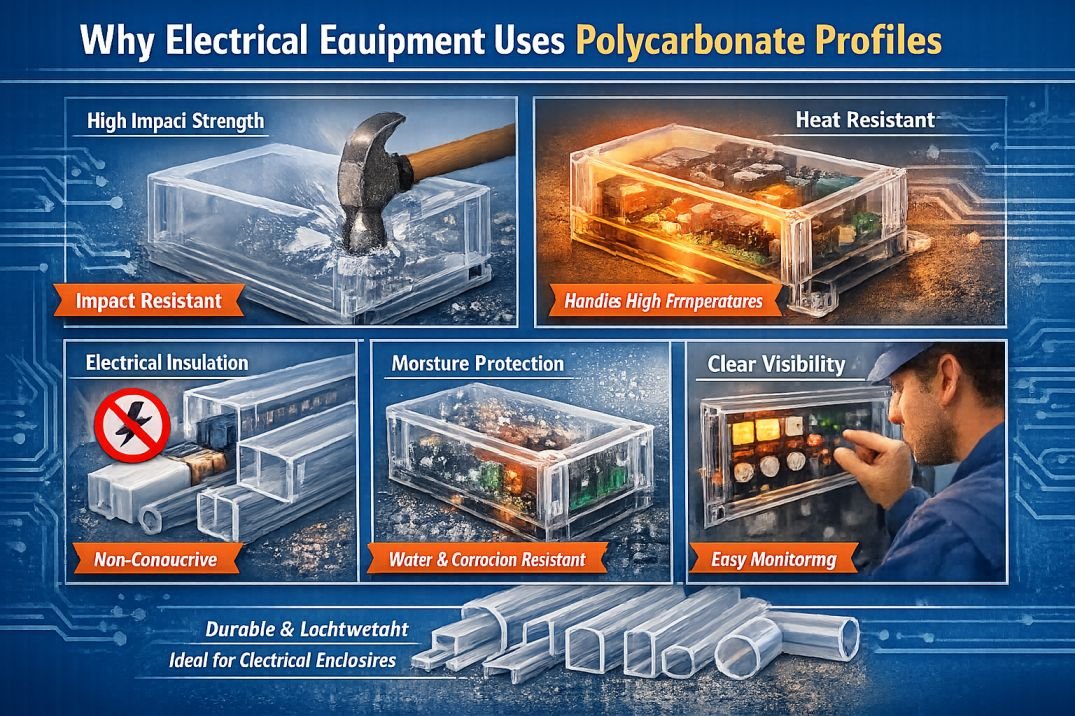
High Impact Strength
Polycarbonate can absorb impacts without cracking. Unlike metal or glass, which may dent or break, polycarbonate bends slightly without damage. This protects electrical enclosures, control panels and other equipment during shipping, installation, or everyday use.
Heat Resistance
Electrical equipment can get hot during use and some plastics may melt or warp under high temperatures. Polycarbonate handles heat much better, staying firm even near warm components. It also cools down quickly, helping the equipment maintain its shape and reliability over time.
Electrical Insulation
Polycarbonate does not carry electricity. This is very important for safety. In electrical panels and machines, insulation prevents shorts or shocks. Using nonconductive material like polycarbonate reduces the risk of harm to users or technicians. Makers can focus on design without adding extra layers of insulation around every part.
Moisture and Corrosion Resistance
It goes without saying that metal parts can rust or corrode when exposed to moisture, weakening enclosures or supports. Polycarbonate resists rust and corrosion, keeping electrical equipment safe in humid or damp environments.
Clarity and Visual Access
Polycarbonate is clear like glass but much stronger. It allows technicians to see switches, indicators or internal components inside electrical panels without opening covers, making monitoring and maintenance easier.
Polycarbonate Profiles vs Metal: Which is Better for Electrical Equipment?
The table below shows how polycarbonate profiles compare with metal options like steel or aluminum for electrical applications. It highlights differences in weight, durability, insulation, and ease of use to help manufacturers select the best material for enclosures, supports, and mounting solutions.
Feature | Polycarbonate Profiles | Metal Profiles (Steel/Aluminum) |
Weight | Lightweight, easy to handle for electrical enclosures and mounting frames | Heavy, harder to move or install in panels and cabinets |
Impact Resistance | High, resists cracks and dents, protecting circuit boards, switches, and other internal parts | Can dent or bend, risking damage to sensitive electrical components |
Heat Resistance | Resists heat and keeps shape, helping enclosures maintain integrity near hot components | Conducts heat, which can affect temperature-sensitive electrical parts |
Electrical Safety | Non‑conductive, reduces risk of short circuits or accidental shocks | Conductive, requires additional insulation for safety |
Corrosion & Moisture | Resistant to corrosion and moisture, keeping electrical panels and connectors safe in damp environments | Can rust or corrode, compromising enclosures and electrical connections |
Ease of Work | Easy to cut, drill, or shape, allowing precise custom profiles for PCB rail mounting solutions and panel supports | Requires special tools and effort, making custom fitting more difficult |
Durability & Lifespan | Long-lasting, low maintenance, keeps electrical equipment protected for years | Strong, but prone to rust or corrosion over time, may need frequent upkeep |
Typical Uses of Polycarbonate Profiles in Electrical Systems
Here are some common ways manufacturers use polycarbonate profiles:
Enclosures and Cases
Many control cabinets, switch boxes, and junction cases use polycarbonate walls and frames. These parts keep wires, switches and circuit boards safe from physical harm and the environment.
Mounting Frames and Guards
Profiles can form edges and frames for panels or display windows. They also make guards that keep live parts out of reach.
Wire Ducts and Channels
Polycarbonate profiles can be used to make wire ducts and channels, keeping cables organized as well as protected from damage.
Display Covers and Indicator Windows
When equipment needs clear windows to show lights or readings, polycarbonate fits well. It lets users view readings without opening a cover.
Connector Supports and Braces
Some machines need strong, precise support for connectors and fasteners. Polycarbonate profiles can act as braces that keep parts stable and aligned.
Each of these uses takes advantage of polycarbonate’s strength, safety, and light weight. That makes machines safer, easier to build, and easier to use.
How to Choose Polycarbonate Profiles for Electrical Equipment
Selecting the right polycarbonate profile is key to ensuring long-lasting, safe and reliable electrical equipment. Here are five tips to choose the right polycarbonate profiles for electrical equipment.
Check Impact Resistance
Always choose profiles that can withstand bumps and force without cracking. Strong impact resistance ensures enclosures, supports and mounting frames remain intact during handling or accidental hits.
Verify Heat Tolerance
Look for polycarbonate profiles that maintain their shape under high temperatures. This prevents panels and enclosures from bending or deforming when exposed to heat from components.
Confirm Electrical Insulation
Select profiles that are non-conductive. Proper insulation reduces the risk of short circuits and protects both users and internal electrical parts.
Ensure Moisture Resistance
Pick profiles that resist water, humidity, and corrosion. Moisture-resistant profiles keep connectors, boards and sensitive components safe in damp or challenging environments.
Test Ease of Fabrication
Choose profiles that can be cut, drilled, or shaped easily. This allows precise fitting for PCB rail mounting solutions, enclosures, and other custom electrical equipment designs.
By following these tips, manufacturers can confidently select polycarbonate profiles that offer durability, safety and reliable performance for electrical equipment.
Frequently Asked Questions
What are polycarbonate profiles used for in electrical equipment?
Polycarbonate profiles are used in enclosures, junction boxes, wire channels, panel frames, protective guards, and indicator windows. They shield components from dust, moisture and impact, improve safety and allow technicians to monitor internal parts without opening the equipment.
Are polycarbonate profiles durable?
Yes. Polycarbonate profiles resist impact, heat, and moisture, making them long-lasting. They perform better than many metals in humid or challenging environments and require minimal upkeep. This ensures enclosures, frames and mounting solutions remain reliable over years of use.
Do polycarbonate profiles conduct electricity?
No. Polycarbonate profiles are nonconductive, providing natural electrical insulation. This reduces the risk of shocks or short circuits and makes them safe for use in enclosures, panel frames, PCB rail mounting solutions, and other components in electrical equipment.
Can polycarbonate profiles handle heat from electrical devices?
Yes. Polycarbonate profiles maintain their shape and stability at elevated temperatures. They resist warping or melting near hot components, making them suitable for enclosures, panel supports, and other electrical equipment exposed to heat during regular operation.
Are polycarbonate profiles easy to install?
Yes. Polycarbonate profiles are lightweight and simple to cut, bend, and fit. Manufacturers can customise profiles precisely for enclosures, PCB rail mounting solutions, or protective frames without specialised tools, making installation faster and more efficient.
Conclusion
Polycarbonate profiles are a smart choice for electrical equipment makers. They offer safety, strength, heat resistance, and ease of use. Electrical equipment requires materials that protect components and ensure safe operation.
Using polycarbonate profiles helps extend the lifespan of enclosures, panels, and protective frames. They reduce maintenance needs, improve reliability and provide lightweight, durable solutions that support high-performance designs. From enclosure walls to wire ducts and guards, polycarbonate profiles play many roles in modern electrical products.
Are you looking for high-quality polycarbonate profiles for your electrical equipment? M3 Extrusion offers a wide range of durable and lightweight polycarbonate profiles designed to meet the needs of electrical equipment manufacturers.