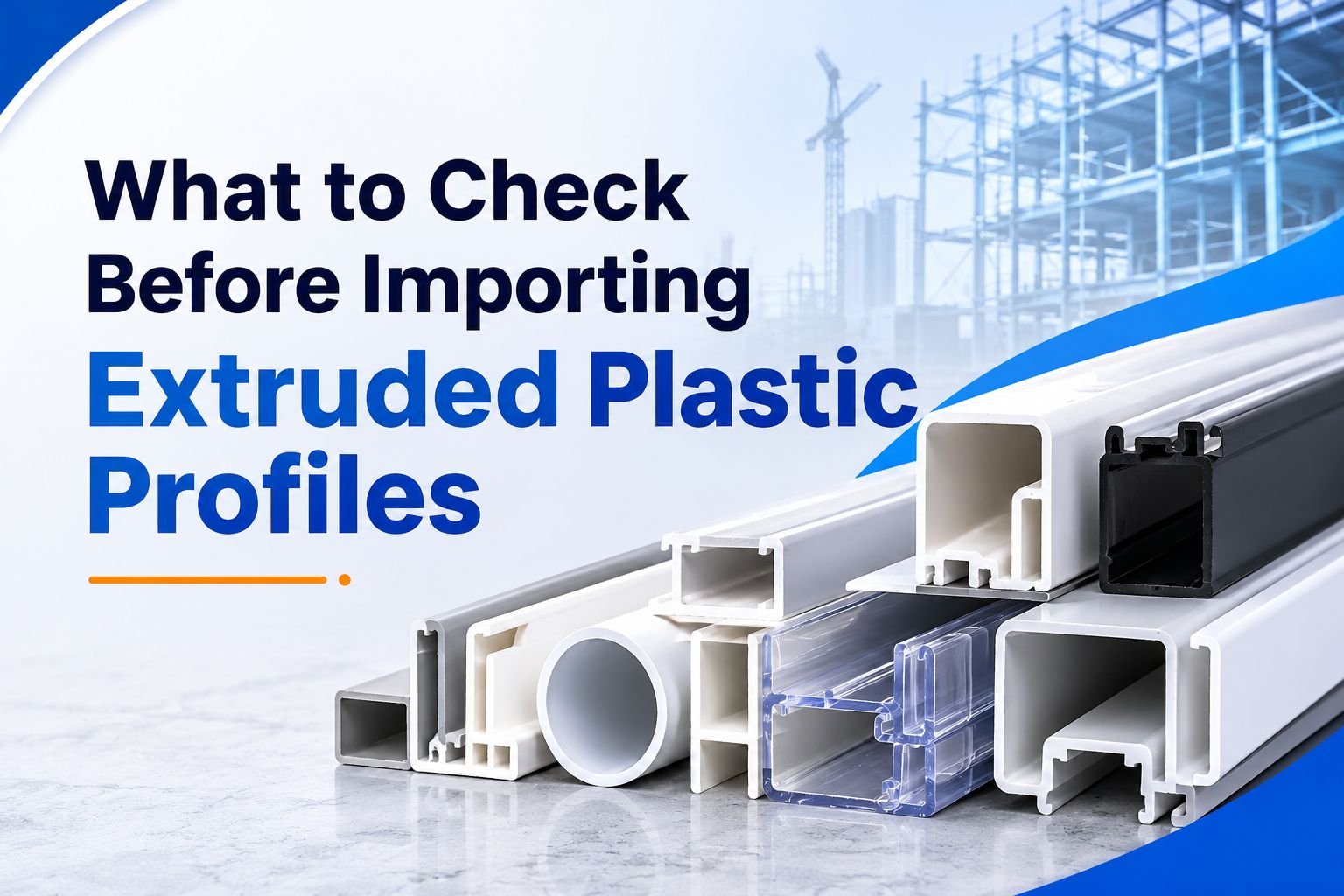
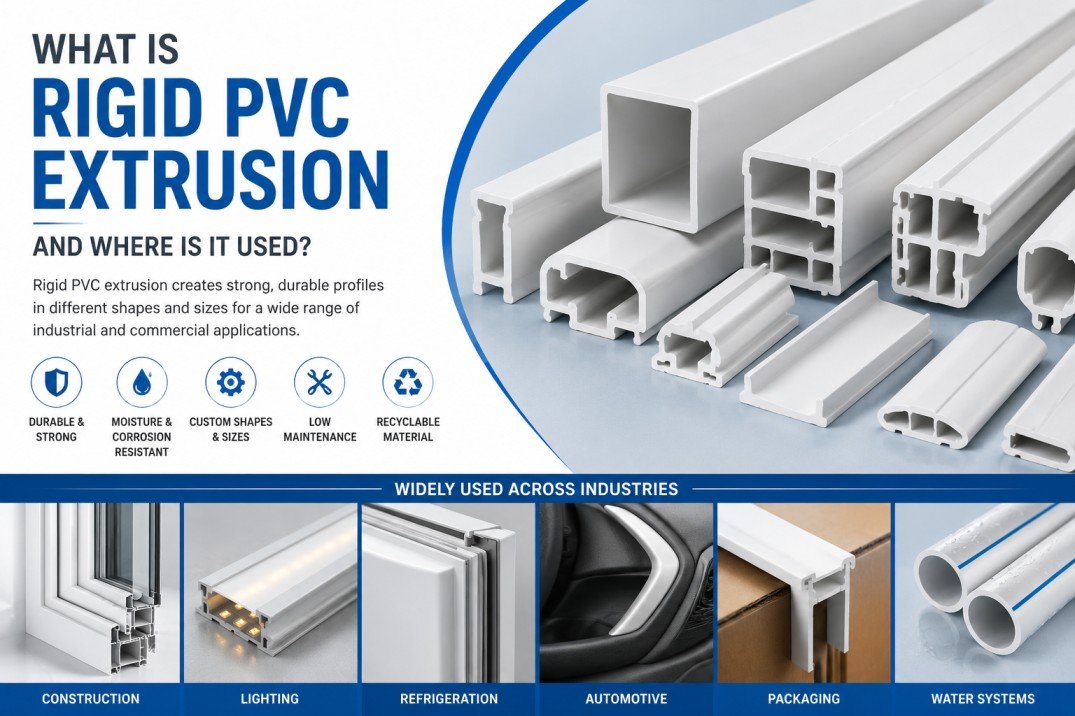
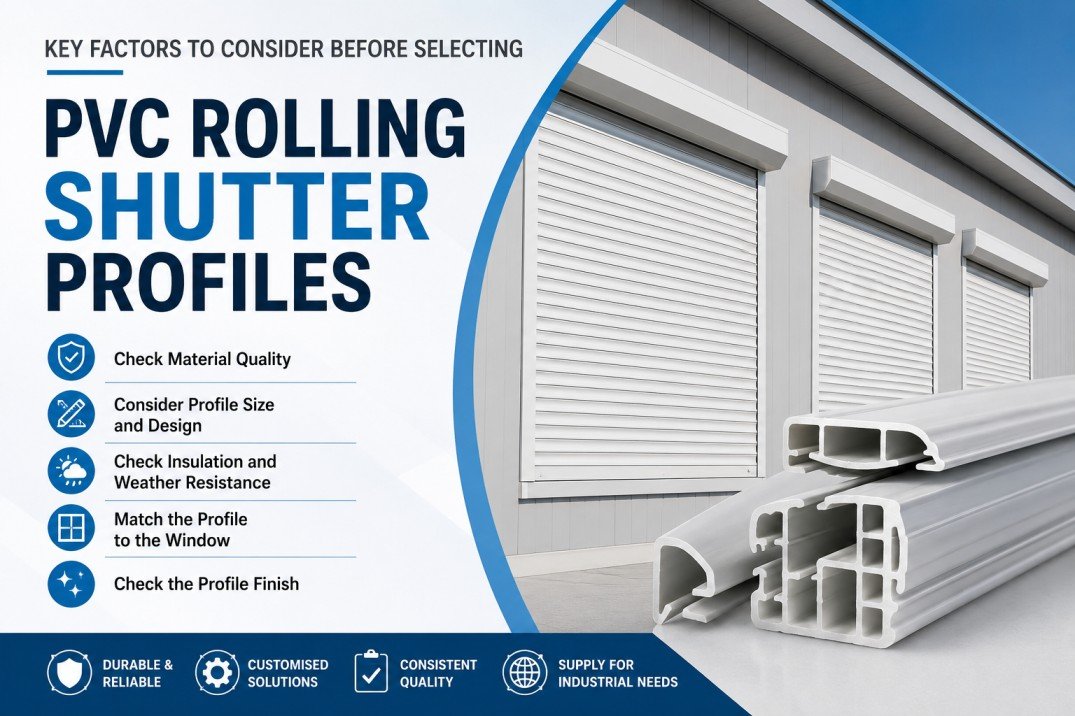
Over the years, extruded plastic profiles have gained popularity in construction due to their strength, durability, and ability to be used for different construction needs, including sealing, insulation, edge protection, framing, and finishing.
Not only can they be made in different shapes and sizes, but they can also be customised to match specific project requirements. This makes them a practical choice for construction projects that require specific profile designs, thicknesses, or finishes.
Many businesses have started importing extruded plastic profiles to access custom designs, different material options, larger production capacity, and more affordable solutions. However, while you can find a plethora of companies offering custom plastic extrusion solutions in India, importing extruded plastic profiles for construction can be a daunting task. Since different suppliers offer different materials, profile designs, production capacity, quality checks, lead times, and shipping options, it is important to compare them before placing an order.
Nonetheless, by doing proper research and keeping a few key factors in mind, you can effortlessly import the right extruded plastic profiles for your construction needs.
5 Things to Check Before Importing Extruded Plastic Profiles
Check the Material and Profile Quality
The material used for an extruded plastic profile can affect its strength, surface finish, and ability to perform in the intended setting. This makes material selection one of the first things to check before placing an import order.
Construction profiles may be used for different purposes. Some may be used in building systems, façade work, glazing, wall protection, lighting, or other parts of a structure. Each use can have different material needs.
Before placing an order, ask the extruded plastic profile supplier which material is suitable for your application. Common options include PVC, ABS, HDPE, polycarbonate, PMMA, PET, and PETG. The right choice will depend on how and where the profile will be used.
You should also ask about the checks carried out during production. Requesting samples before a bulk order can help you review the actual profile before committing to a larger shipment.
Pay attention to:
- Material Quality: Check whether the material suits the intended construction use.
- Profile Strength: Make sure the profile can handle the expected load and use.
- Surface Finish: Look for an even surface without cracks, marks, or other visible defects.
- Dimensional Accuracy: Check whether the profile matches the required size and shape.
- Batch Consistency: Ask whether the same material and profile quality can be maintained across orders.
Profile quality becomes even more important when the product is used in a construction system where it needs to fit with other parts. A change in size or shape can lead to fitting problems during installation.
By checking the material, profile quality, and production checks before placing an order, you reduce the risk of receiving profiles that do not meet your construction needs.
Review the Profile Design and Specifications
Even a high-quality profile may not work well if it does not have the right size, shape, or wall thickness. Make sure you check the extruded plastic profile’s dimensions, shape, wall thickness, length, and tolerance before placing an order.
Before ordering, prepare the full profile details and share them with the supplier. A technical drawing, CAD file, sample, or clear set of measurements can help the supplier understand what you need.
The profile may need to fit around another component, cover an edge, support a part, or work as part of a larger building system. In such cases, the dimensions need to be clear before production starts.
Check the following details:
- Profile Size: Confirm the required width, height, and other key measurements.
- Wall Thickness: Check the thickness needed for the intended use.
- Profile Shape: Make sure the cross-section matches the required design.
- Length: Confirm the required cutting length for each profile.
- Tolerance: Discuss the acceptable size variation for the application.
- Surface and Colour: Confirm any finish or colour requirements.
- Fit: Check that the profile will work with the other parts of the project.
Custom profiles may need more care than standard profiles. If the design is made to fit a certain part, even a small change can affect installation.
It is also useful to approve a sample before bulk production. This gives you a chance to check the size, shape, material, and finish before the full order is made.
Clear specifications can also help reduce mistakes between the buyer and supplier. When both sides work from the same drawing and product details, it becomes easier to produce the required profile and repeat it for future orders.
Check the Supplier’s Production Capacity
No matter how suitable a supplier’s profiles may be, you also need to check whether they can produce the required quantity within your project schedule. Construction projects can require large quantities, especially when the same profile is used across many buildings, windows, panels, walls, or other parts.
If the supplier cannot produce the required quantity on time, it can affect your construction schedule. Start by asking whether the supplier can handle your expected order volume. If you plan to place repeat orders, ask how they manage regular production for the same profile.
You should also consider your future needs. A project may start with one order and later require more profiles. Choosing a supplier that can support larger or repeat orders can make future supply easier to manage.
When checking production capacity, look at:
- Order Quantity: Ask whether the supplier can produce the required quantity.
- Bulk Production: Check whether they support large construction orders.
- Custom Production: Find out if custom profiles can be made in the required volume.
- Repeat Orders: Ask whether the same profile can be produced again.
- Future Demand: Check whether the supplier can support higher quantities later.
- Production Planning: Discuss how your order will be planned and scheduled.
Production capacity is not only about how much a supplier can make. The supplier should also be able to keep the profile quality steady while producing larger quantities.
For repeat construction projects, this matters even more. A supplier should be able to make the same profile to the approved design rather than changing the size, material, or finish from one batch to another.
Ask About Lead Times and Shipping
When importing plastic profiles, you need to consider both production time and shipping time. A supplier may need several weeks to make the order before it is ready for export. The shipment then needs to reach the destination and clear the required import steps.
For this reason, ask about the supplier’s production lead time before placing an order. The time may depend on the profile design, order quantity, material, and production needs.
You should also discuss the shipping plan. Knowing the shipping terms and expected delivery schedule can help you plan the construction work around the arrival of the profiles.
Before importing extruded plastic profiles for construction, check:
- Production Lead Time: Ask how long production takes after order confirmation.
- Order Schedule: Confirm when production will start and when the order should be ready.
- Packaging: Ask how profiles will be packed for long-distance transport.
- Shipping Terms: Check whether FOB or CIF shipping terms are available.
- Delivery Time: Discuss the expected time from dispatch to arrival.
- Urgent Orders: Ask whether faster shipping options are available when needed.
The supplier should also be able to explain how repeat orders are handled. If profiles are needed at set times during a project, sharing the expected order schedule early can help with production planning.
For international buyers, export experience can also make the ordering process easier. A supplier that regularly ships profiles to other markets is more likely to understand the steps involved in preparing an export order.
Overall, checking lead times, shipping terms, and delivery schedules before placing an order can help you plan your construction work and avoid delays in receiving the profiles.
Check Quality Documents and Export Support
Before importing extruded plastic profiles, check what quality and export documents the supplier can provide. The exact documents you need may depend on the destination country, project requirements, and type of profile.
Having the right documents can help you confirm product details and complete the import process. They may also be needed for customs clearance or to meet project requirements.
Ask the supplier about:
- Test Reports: Find out whether test reports can be provided when required.
- Product Specifications: Check whether documents showing material, size, thickness, and other profile details are available.
- Compliance Documents: Confirm whether the required product or material documents can be provided.
- Inspection Reports: Ask whether inspection reports can be arranged before shipment.
- Export Documents: Check which documents are provided for international orders.
- Certificate of Origin: Confirm whether a certificate can be provided if needed.
You should also confirm when the documents will be shared. Some documents may be needed before shipment, while others may be required during customs clearance.
For international orders, make sure the supplier clearly understands the documents required for your destination. Sharing these requirements before production can help avoid missing paperwork later.
By checking the required documents before placing an order, you can prepare for customs clearance and other import steps with fewer issues.
Get Extruded Plastic Profiles for Construction From M3 Extrusion
M3 Extrusion manufactures custom plastic extrusion profiles for building and construction applications as well as other industries. The company has been manufacturing customised plastic profiles since 2011 and supplies products to customers in India and international markets.
Custom Profile Manufacturing
M3 Extrusion can manufacture profiles based on customer drawings, samples, dimensions, and technical requirements. Profiles can be made in different shapes, colours, materials, and cutting lengths based on the application.
Material Options
The company manufactures profiles using materials such as PVC, UPVC, ABS, HDPE, polycarbonate, PMMA, PET, and PETG. This gives buyers different material options based on the needs of their construction or industrial application.
Bulk Order Support
M3 Extrusion supports bulk production, repeat manufacturing, and long-term supply needs. The company also provides samples before bulk production to help customers check the profile before placing a larger order.
Export Supply
Leveraging years of experience, M3 Extrusion supplies custom plastic profiles from India to international markets. The company supports FOB and CIF shipping terms and can arrange air freight for urgent orders. Its standard production lead time is about 45 days after order confirmation, depending on the profile and order quantity.
Conclusion
Importing extruded plastic profiles for construction involves more than finding a supplier and placing an order. Since material quality, profile design, production capacity, lead times, shipping, and required documents can affect your order, each of these factors should be checked before importing.
By keeping the above-mentioned tips in mind, you can easily import extruded plastic profiles that match your construction needs and avoid common supply issues.
Are you looking to import extruded plastic profiles for construction? M3 Extrusion offers custom plastic extrusion profiles that are made to meet different construction needs, along with bulk order support and export supply. Contact us today to discuss your profile requirements.
Frequently Asked Questions
How can buyers assess plastic profiles before importing them?
Buyers can request samples and check the profile’s size, shape, material, surface finish, and fit before placing a bulk order. This can help confirm that the profiles match the project requirements.
What factors affect the cost of imported plastic profiles?
The cost can depend on the material, profile design, size, wall thickness, order quantity, tooling needs, packaging, and shipping method. Custom designs may also have different costs from standard profiles.
How can buyers avoid delays when importing plastic profiles?
Buyers can share clear product details, confirm the order quantity early, agree on production and shipping schedules, and check the required import documents before production begins.
What materials are commonly used for extruded plastic profiles?
Common materials include PVC, ABS, HDPE, polycarbonate, PMMA, PET, and PETG. The right material depends on the profile’s intended use, required strength, finish, and other project needs.