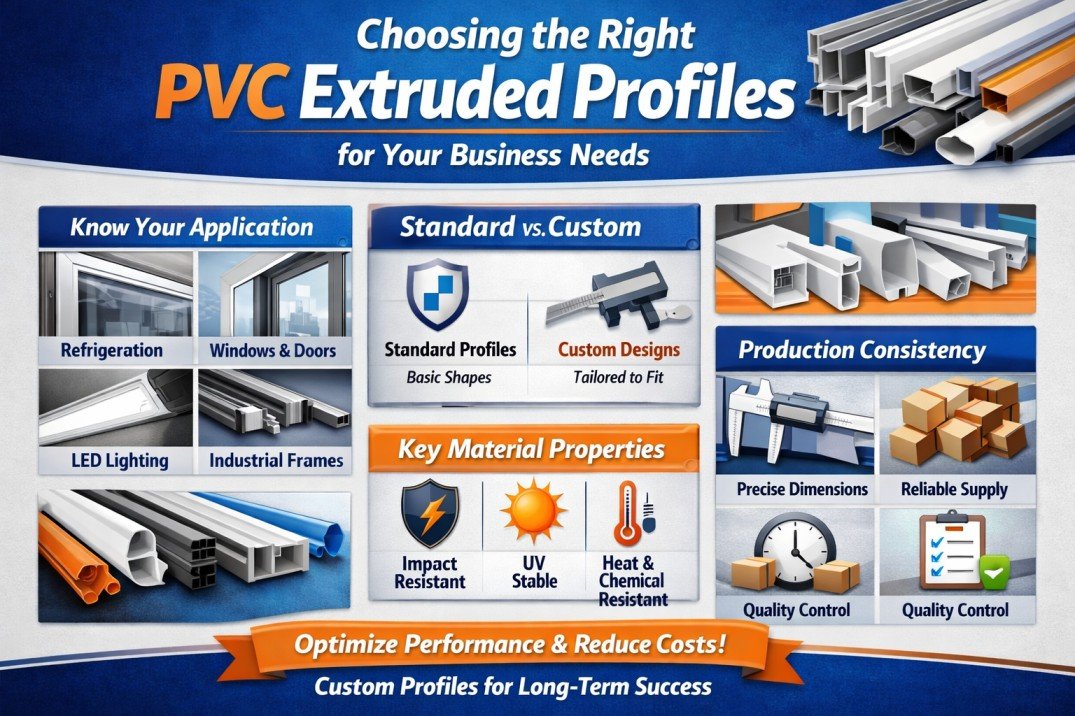
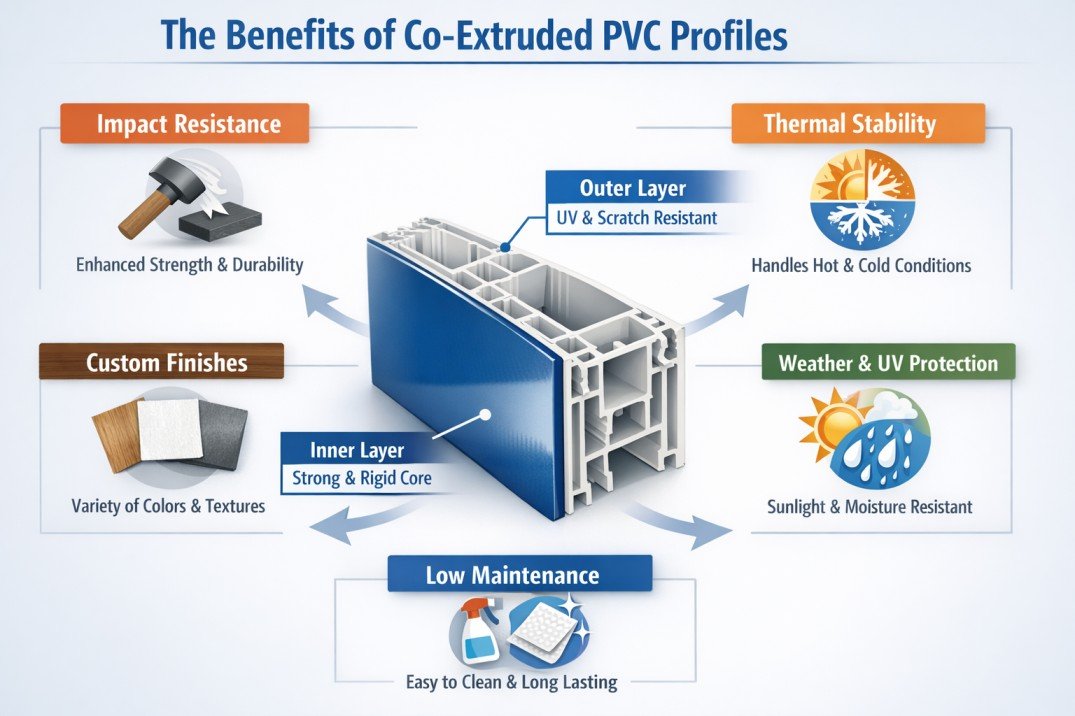
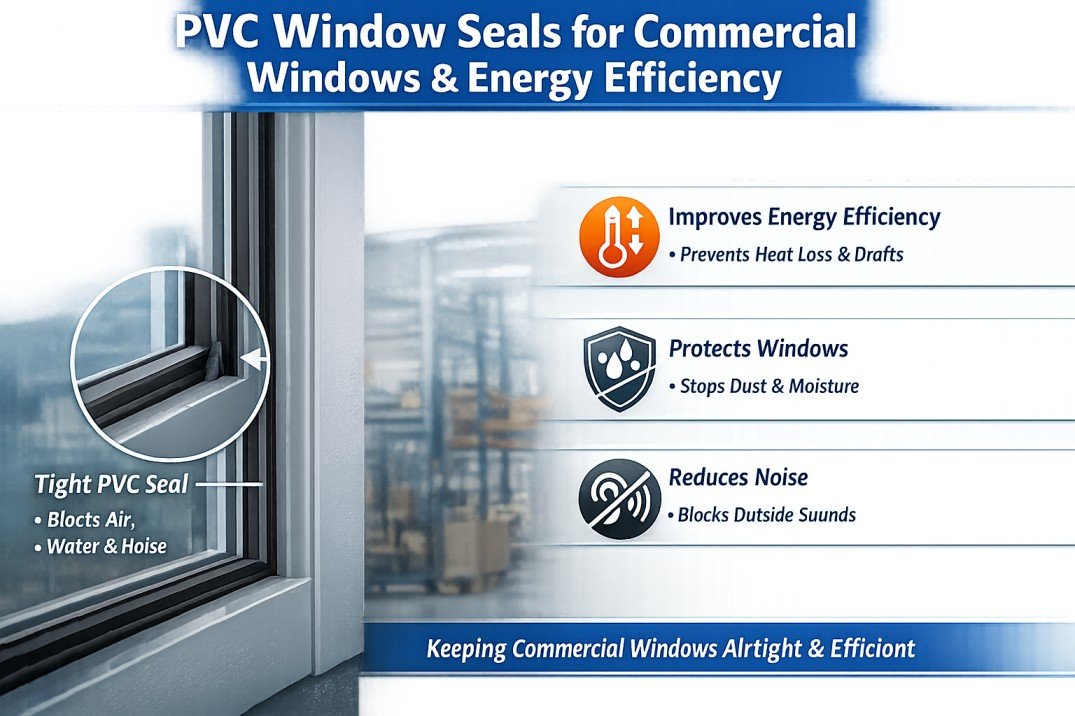
Security, access control, and long-term durability are key concerns for any commercial or industrial facility. For many buyers, selecting the right rolling shutter system starts with the material. In recent years, rolling shutter PVC in the USA has gained steady attention for its balance of strength, weight, and weather resistance. When chosen correctly, PVC shutters support daily operations without adding maintenance pressure or unnecessary cost.
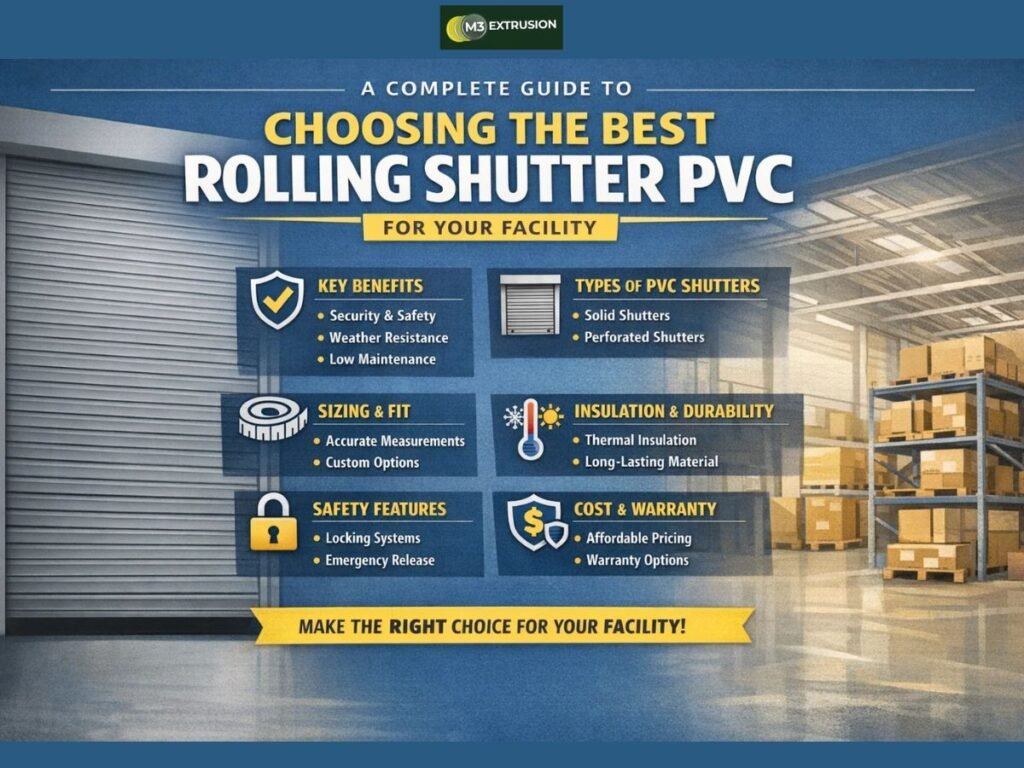
This guide explains how rolling shutter PVC works, what to check before ordering, and how to match the material to your facility needs.
What Is Rolling Shutter PVC?
Rolling shutter PVC refers to rigid or semi-rigid PVC profiles used to form shutter slats. These slats interlock and roll vertically into a compact coil above the opening. Unlike metal shutters, PVC-based systems focus on controlled access, corrosion resistance, and smooth operation rather than heavy impact protection.
Direct answer:
Rolling shutter PVC is a plastic-based shutter material designed for controlled access, light security, and frequent operation in commercial and industrial spaces.
Why Facilities Choose PVC Over Metal Shutters
Metal shutters are strong, but they are not always practical for every environment. PVC shutters are often selected where ease of use, clean appearance, and moisture resistance matter.
Key reasons include:
Lower weight reduces motor load and wear
No rust or surface corrosion
Quieter operation during opening and closing
Consistent finish for indoor or semi-outdoor use
These features make PVC shutters suitable for warehouses, retail storage zones, service corridors, and controlled entry points.
Understanding Performance Requirements Before Selection
Frequency of Use
Facilities with high open-close cycles need shutters that do not deform or crack over time. PVC profiles with proper wall thickness and internal rib design handle repeated movement more reliably.
Environmental Exposure
Consider whether the shutter faces:
Direct sunlight
Humidity or wash-down areas
Temperature variations
PVC compounds can be adjusted to handle UV exposure and heat without becoming brittle.
Material Properties That Matter Most
Impact Resistance
PVC shutters are not designed for forced-entry resistance, but good-quality material absorbs minor impacts without permanent damage. This is useful in loading zones or areas with trolley movement.
Dimensional Stability
Consistent profile dimensions ensure smooth rolling and reduce jamming. Poor dimensional control often leads to misalignment and early motor failure.
Surface Finish
A smooth, sealed surface prevents dust build-up and makes cleaning easier. This is important in food storage, healthcare, and clean commercial environments.
How PVC Rolling Shutters Support Daily Operations
PVC shutters are often chosen for operational efficiency rather than pure security.
Direct answer:
PVC rolling shutters support smooth access control by reducing noise, maintenance effort, and mechanical strain during frequent use.
They are commonly used where shutters open many times a day and must operate reliably without disruption.
PVC Rolling Shutters Benefits for Industrial Facilities
Understanding the PVC rolling shutter benefits helps buyers make informed decisions beyond upfront cost.
Key advantages include:
Lightweight operation, reducing motor strain
Resistance to rust, moisture, and chemicals
Lower maintenance compared to steel shutters
Smooth and quiet opening and closing
Improved safety in case of accidental impact
These benefits make PVC shutters suitable for both indoor and semi-outdoor applications.
Common Applications Across Facilities
Rolling shutter PVC is widely used in:
Warehouses and distribution centres
Retail back rooms and storage areas
Cold rooms and temperature-controlled spaces
Parking garages
Industrial workshops
Each application may require a slightly different PVC formulation based on load, temperature, and usage frequency.
Key Design Checks Before Ordering
Profile Thickness and Geometry
Thicker profiles offer better rigidity, but unnecessary thickness adds weight. Balanced design is more effective than simply increasing material volume.
Interlocking Strength
The way slats connect affects wind resistance and alignment. Poor interlock design causes gaps and uneven rolling.
Compatibility With Motors and Guides
PVC shutters must match the motor torque and guide rail dimensions. Mismatch leads to uneven wear and noise.
Quality Control Factors Buyers Often Miss
Many issues with PVC shutters come from overlooked production details:
Inconsistent extrusion temperature
Uneven cooling during profile formation
Incorrect PVC compound selection
Lack of batch testing for repeat orders
Working with a manufacturer that controls extrusion accuracy and material formulation reduces these risks.
Manufacturers such as M3 Extrusion supply PVC profiles for rolling shutter systems based on technical drawings and repeat production requirements, supporting consistency across large projects.
Maintenance Expectations for PVC Rolling Shutters
PVC shutters are low maintenance, but they are not maintenance-free.
Recommended practices:
Clean slats periodically to remove dust
Check guide rails for debris
Inspect interlocks during routine facility checks
With basic care, PVC shutters maintain smooth operation for years.
Cost vs Long-Term Value
PVC shutters are often more affordable than metal systems, but the real value lies in reduced downtime and maintenance.
Direct answer:
Lower motor strain and corrosion resistance help PVC rolling shutters maintain performance without frequent repairs.
Over time, this translates into predictable operating costs and fewer disruptions.
Compliance and Safety Considerations
Ensure the shutter system meets local safety and fire regulations. While PVC shutters are not fire-rated by default, they can be used safely in non-fire-separation areas when installed correctly.
Always confirm:
Emergency release mechanisms
Motor safety cut-offs
Proper signage where required
Future Trends in PVC Rolling Shutter Systems
Demand is growing for:
Custom colours and finishes
Improved UV-stable PVC compounds
Better dimensional control for automation systems
As facilities move toward cleaner, quieter operations, PVC shutters are expected to see wider adoption in controlled environments.
Frequently Asked Questions
Is PVC rolling shutter material suitable for outdoor use?
PVC rolling shutters can be used outdoors in shaded or semi-covered areas. For full outdoor exposure, the PVC compound must include UV stabilisers to prevent brittleness and colour fading over time.
How long does a PVC rolling shutter typically last?
With proper material selection and correct installation, PVC rolling shutters can last 8–12 years in moderate-use environments. Regular cleaning and guide rail checks help extend service life.
Can PVC shutters handle frequent daily operation?
Yes. PVC shutters are well-suited for high-cycle use when the profile design and motor selection are matched correctly. Their lighter weight reduces mechanical stress during repeated opening and closing.
Are PVC rolling shutters noisy?
PVC shutters are quieter than metal shutters due to lower material resonance. Noise levels depend mainly on installation quality, guide alignment, and motor condition.
Do PVC rolling shutters require special cleaning products?
No. Mild soap and water are usually sufficient. Avoid abrasive cleaners, as they may scratch the surface and affect long-term appearance.
Closing Note
Choosing the right rolling shutter PVC is less about price and more about matching material performance to daily operational needs. When profile design, compound quality, and installation are aligned, PVC shutters provide reliable access control with minimal maintenance across a wide range of facilities.
Check related articles for more insights:
- How PVC Rolling Shutters Address Weather and Safety Issues in US Industrial Sites
- How PVC Rolling Shutters Address Space and Installation Challenges in US Industries
- Struggling with Rust and Heavy Doors? Plastic Roller Shutters Offer a Lighter, Low-Maintenance Option