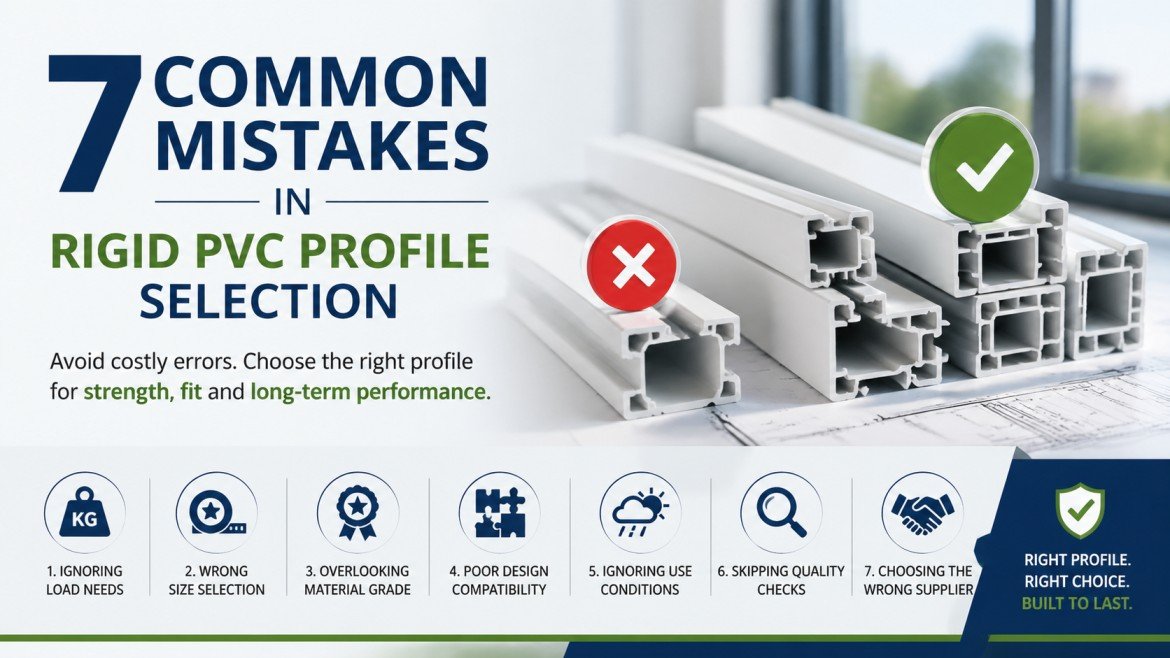
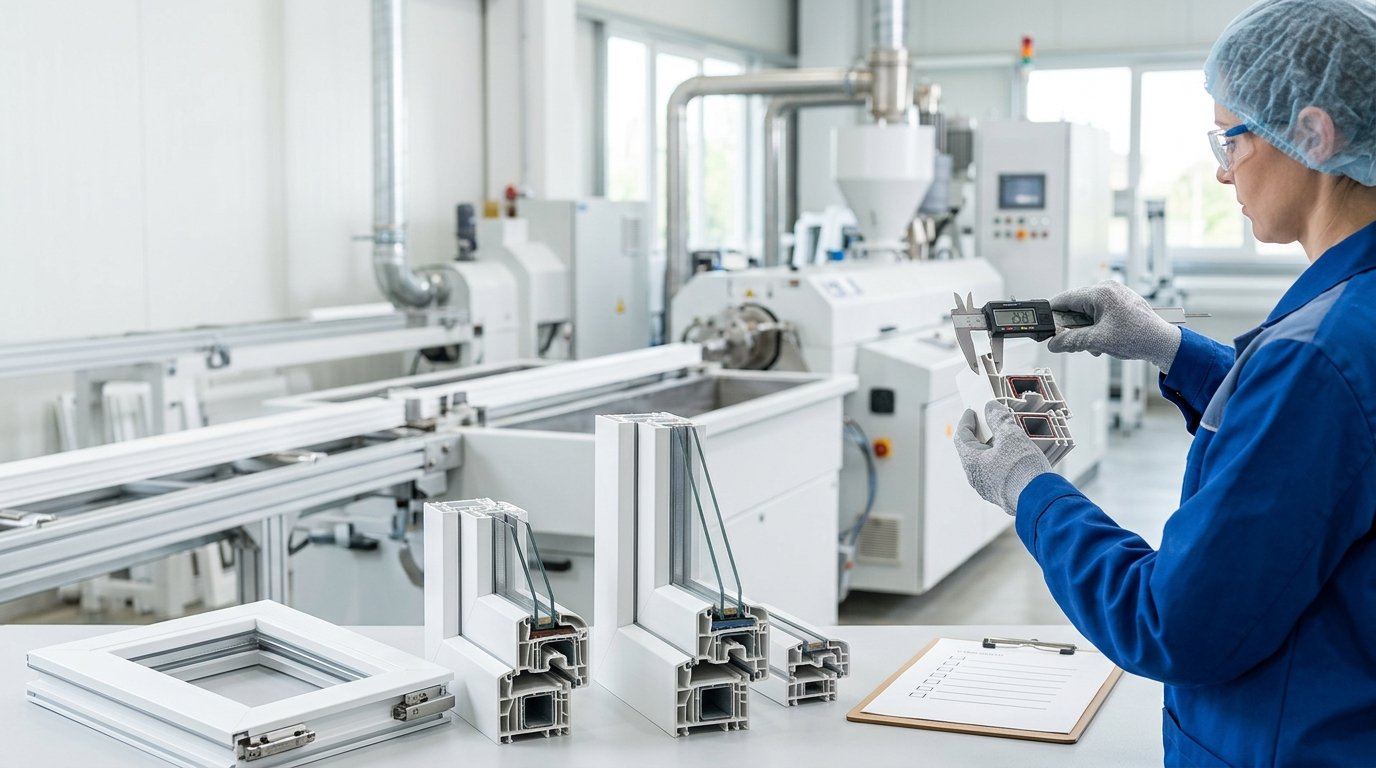
Rigid PVC extrusion supports a wide range of industrial applications, from building materials to refrigeration components. It is valued for consistency and durability, especially among manufacturers looking for long-run, stable production. In many cases, buyers and engineers search specifically for rigid pvc extrusion in india, as the demand for PVC profiles continues to grow across construction, interiors, and electrical systems.

Rigid PVC is known for its strength and dimensional stability. This is also why professionals often refer to guides such as 5 insights into why rigid PVC extrusion is widely used in Construction. If you need a quick reference to that topic, here is a helpful internal link placed at the right stage of your reading journey:
Rigid PVC in Construction – Why It Is Widely Used.
Even though the extrusion process is reliable, production teams regularly face issues related to heat balance, flow behaviour, cooling, or tooling. The following sections break down common problems and practical ways to overcome them.
Why Rigid PVC Needs Consistent Process Control
Rigid PVC responds quickly to temperature changes. When heat, pressure, or flow varies even slightly, it affects fusion, shine, surface smoothness, and shape accuracy.
Rigid PVC extrusion issues commonly include rough surfaces, colour variation, warping, and inaccurate dimensions. These problems usually come from unstable melt temperature, uneven cooling, poor mixing, or misaligned tooling.
Surface Roughness and Burn Marks
These defects appear when PVC does not melt evenly or begins to degrade.
Why It Happens
- Overheating in barrel zones
- Irregular material flow inside the die
- Carbon deposits caused by thermal degradation
How to Fix It
- Gradually reduce barrel temperature
- Clean die channels to remove burnt resin
- Use additives that support heat stability
A small decrease in temperature can prevent dark streaks and rough textures.
Colour Variation Across the Profile
In long production runs, even a minor shift leads to visible shade differences.
Common Causes
- Uneven pigment distribution
- Temperature fluctuations
- Changing regrind percentage
Solutions
- Mix raw materials thoroughly
- Maintain stable melt temperature
- Use a consistent regrind ratio
Uniform colour is essential in interior profiles, refrigerator frames, and decorative strips.
Warping and Dimensional Inaccuracy
Warping leads to rejection during quality checks and can disrupt large-volume orders.
Why It Occurs
- Irregular cooling water temperature
- Incorrect vacuum calibration
- Excessive stretching during haul-off
Prevention Methods
- Balance vacuum pressure
- Keep cooling baths at a steady temperature
- Reduce haul-off speed to avoid pulling the profile out of shape
A stable cooling line is one of the strongest defences against profile distortion.
Die Lines and Flow Marks
These thin lines appear when melt flow becomes unstable or obstructed.
Reasons Behind the Issue
- Contaminated or worn-out die
- Low melt pressure
- Material impurities
How to Reduce It
- Clean and polish die channels
- Filter PVC material before feeding
- Increase melt pressure gently to maintain smooth flow
Cleaner flow results in smoother, more uniform profiles.
Brittleness and Low Impact Strength
When profiles crack during fitting or bending, the issue is often related to fusion quality.
Possible Causes
- Incorrect stabiliser or modifier level
- Too much regrind
- Rapid overcooling
How to Improve Impact Strength
- Use proper impact modifiers
- Control regrind ratio
- Allow gradual cooling for better fusion
Rigid PVC requires uniform fusion for long-term performance.
Temperature Stability Drives Quality Output
PVC softens slowly but burns quickly. Because of this, temperature stability across zones is crucial. Manufacturers often use step-down settings to melt PVC gradually, keeping the final output smooth, consistent, and free from scorch marks.
Material Quality and Mixing Accuracy
PVC resin, additives, and pigments must blend evenly for predictable results.
Best Practices
- Maintain accurate additive ratios
- Use dry, clean resin
- Keep every batch consistent to reduce profile variation
Even a one percent shift in stabiliser levels can change melt flow and mechanical strength.
Tooling, Calibration, and Haul-Off Settings
Tooling affects shape, wall thickness, and dimensional stability.
Checklist for Better Results
- Inspect die lips daily
- Align calibrator blocks properly
- Keep haul-off pressure equal on both sides
Incorrect haul-off speed is a quick way to distort profiles. Reducing the speed helps the profile stabilise before it cools fully.
Cooling Control Is Essential
Rigid PVC requires smooth, stable cooling to prevent shrinkage and internal stress.
How to Maintain Consistent Cooling
- Keep water temperature uniform
- Ensure steady water flow
- Clean cooling tanks regularly
Many manufacturers notice that a 3°C shift in cooling water can change profile width by up to 0.5 mm, showing how sensitive PVC is to cooling conditions.
A Real-World Note from Production Floors
In bulk manufacturing, small errors compound quickly. When producing thousands of metres of profiles for construction or industrial use, temperature changes or poor mixing can impact entire batches. Companies such as M3 Extrusion use controlled processing to maintain stable quality throughout long production cycles.
FAQ
What causes colour variation in rigid PVC profiles?
Colour variation usually comes from poor mixing, unstable temperature, or inconsistent regrind use. Keeping pigment ratios steady and maintaining a stable melt temperature helps the profile stay uniform across the entire production run in bulk manufacturing.
Why do rigid PVC profiles warp during production?
Warping is often caused by uneven cooling or incorrect vacuum calibration. A controlled cooling bath, balanced suction, and the right haul-off speed ensure that the profile retains its shape as it becomes rigid.
How important is material quality in PVC extrusion?
Material quality affects flow behaviour, surface finish, impact strength, and stability. Clean resin and accurate additive mixing help maintain smooth processing, reduce defects, and support consistent output in large-volume orders.
What leads to surface roughness or burn marks?
These problems usually occur when the melt temperature is too high or when the die contains carbon deposits. Lowering the temperature and cleaning the die regularly helps produce smoother, cleaner profiles without scorch marks.
How can manufacturers maintain stable output in bulk production?
Stability improves when temperature zones, cooling systems, vacuum settings, and haul-off speeds remain consistent. Regular monitoring helps prevent sudden shifts that affect long runs of rigid PVC profiles.