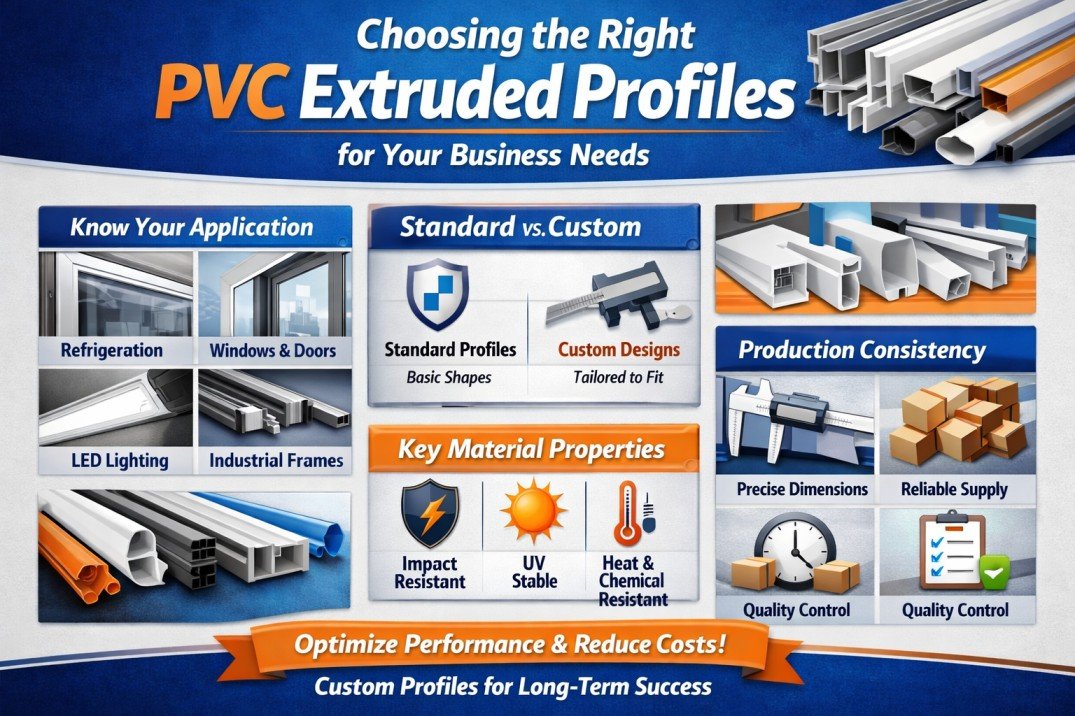
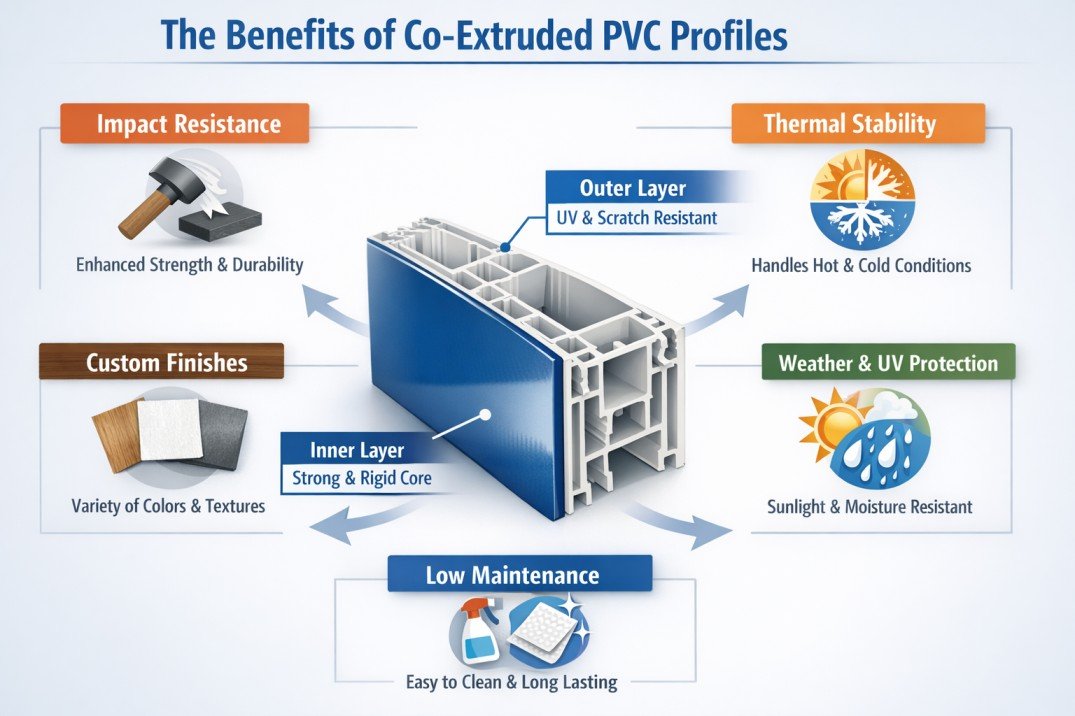
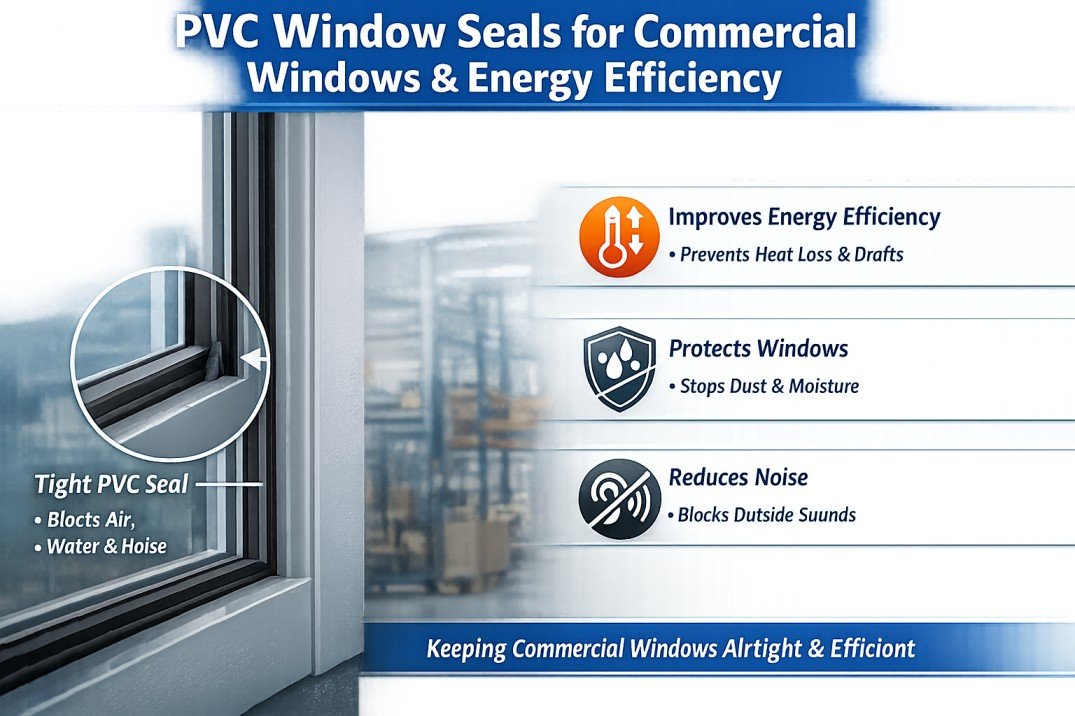
In many projects, the difference between a smooth installation and repeated adjustments comes down to one detail: the profile design. Engineers and manufacturers often realise this only after production starts. That is why it is important to choose rigid PVC profiles with a clear understanding of application, material behaviour, and long-term use.
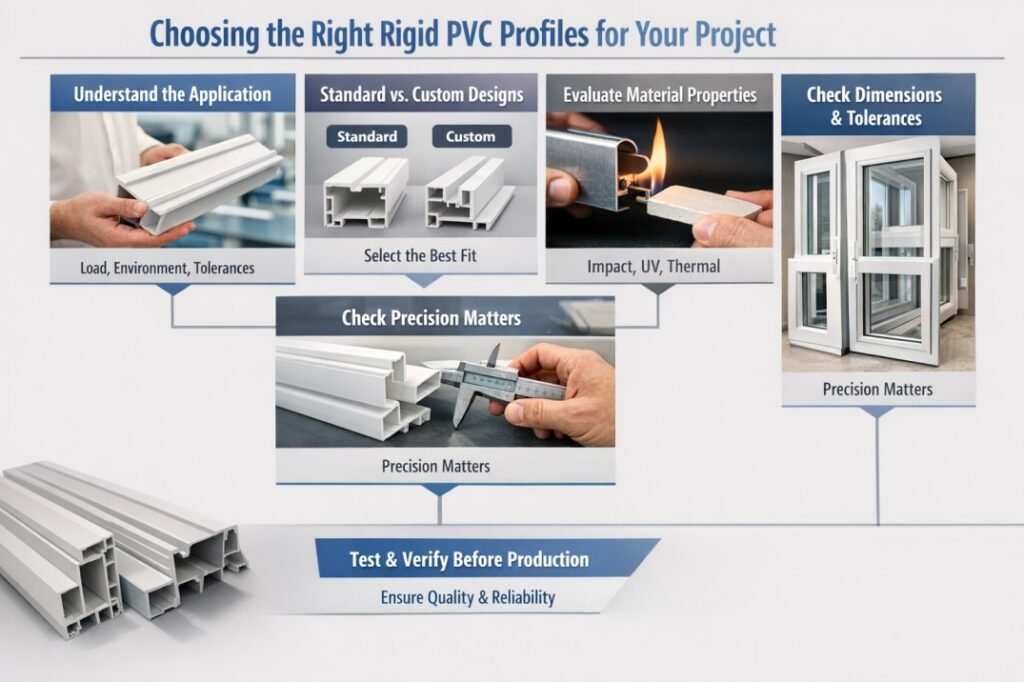
Rigid PVC profiles are used in windows, façades, refrigeration systems, LED lighting, and industrial structures. When selected correctly, they support stable performance, reduce maintenance issues, and improve overall product life.
What Are Rigid PVC Profiles?
Rigid PVC profiles are solid plastic sections produced through extrusion. They are designed to provide structural support, sealing, protection, or functional performance in industrial and construction applications.
Simple definition:
Rigid PVC profiles are shaped plastic components used in industrial and building systems where strength, durability, and dimensional stability are required.
Why Choosing the Right Profile Matters
Not all rigid PVC profiles perform the same way. A profile that works well in one application may fail in another due to temperature, load, or environmental exposure.
Choosing the right profile helps you:
- Avoid design mismatches
- Maintain consistent production quality
- Reduce material waste
- Improve product durability
For businesses working with a reliable rigid PVC profiles supplier, this selection process becomes more precise and efficient.
Key Factors to Consider When Selecting Rigid PVC Profiles
1) Understand the Application Requirements
Start by defining how the profile will be used.
Ask questions like:
- Will it carry load or provide support?
- Will it be exposed to heat, moisture, or chemicals?
- Does it need precise tolerances?
Different applications require different formulations and designs.
2) Choose Between Standard and Custom Designs
Standard profiles are useful for general applications, but they often do not match exact project requirements.
Custom rigid PVC profiles allow you to:
- Match specific dimensions
- Integrate with existing systems
- Improve assembly speed
- Reduce modification costs
In industrial projects, custom designs often deliver better long-term results than generic profiles.
3) Evaluate Material Properties
Rigid PVC can be engineered with various properties depending on additives and formulation.
Key properties to review:
- Impact resistance
- UV stability
- Thermal performance
- Chemical resistance
These factors determine how the profile behaves under real operating conditions.
4) Consider Dimensional Accuracy and Tolerances
Precision matters in extrusion. Even small deviations can cause alignment issues or sealing problems.
Before finalising a profile, check:
- Tolerance limits
- Surface finish
- Consistency across batches
This is especially important for manufacturers who depend on repeat production.
5) Think About Sustainability and Long-Term Use
Modern projects increasingly focus on durability and material efficiency.
Rigid PVC profiles support sustainable building solutions with rigid PVC by offering:
- Long service life
- Low maintenance needs
- Reduced material replacement
- Compatibility with energy-efficient systems
When designed correctly, rigid PVC profiles contribute to stable and resource-efficient construction.
Real-World Example: Profile Selection in Practice
A façade manufacturer once used a standard PVC profile for window frames. Over time, they faced issues with fitting accuracy and thermal performance.
After switching to custom-designed rigid PVC profiles:
- Installation became faster
- Fit accuracy improved
- Long-term performance stabilised
Companies like M3 Extrusion work closely with manufacturers to develop rigid PVC profiles based on drawings, technical specifications, and production requirements, ensuring consistent quality for both bulk and project-based applications.
Practical Checklist for Choosing Rigid PVC Profiles
Use this simple checklist before finalising your design:
- Define application conditions clearly
- Decide between standard and custom designs
- Review material and performance requirements
- Confirm manufacturing tolerances
- Test samples under real conditions
Quick takeaway:
The right rigid PVC profile is not just about shape. It is about how well the profile supports the entire system over time.
Short Answers for Search and AI Summaries
- How do I choose rigid PVC profiles for my project?
Analyse application requirements, material properties, and dimensional accuracy before selecting standard or custom profiles. - Are custom rigid PVC profiles better than standard ones?
Yes, custom profiles provide better fit, performance, and long-term reliability for specific applications. - Why is the supplier important in rigid PVC extrusion?
Because consistent manufacturing quality ensures stable dimensions, material performance, and repeat production capability.
FAQs About Rigid PVC Profiles
1) What should I consider before choosing rigid PVC profiles?
Before choosing rigid PVC profiles, consider application requirements, environmental exposure, load conditions, and dimensional accuracy. Also evaluate whether standard or custom designs are needed. Reviewing material properties and testing samples helps ensure the profiles perform reliably in real operating conditions.
2) How do custom rigid PVC profiles help industrial projects?
Custom rigid PVC profiles help industrial projects by matching precise design requirements and improving system integration. They reduce assembly errors, minimise material waste, and support repeat production. Over time, custom profiles often improve product consistency and reduce operational disruptions in manufacturing processes.
3) How do I identify a reliable rigid PVC profiles supplier?
A reliable rigid PVC profiles supplier maintains consistent quality, precise tooling, and stable production processes. They also provide technical support and flexible design options. Checking past projects, sample quality, and production consistency can help you assess whether a supplier meets industrial requirements.
4) Are rigid PVC profiles suitable for construction and industrial use?
Yes, rigid PVC profiles are widely used in construction and industrial applications. They offer durability, corrosion resistance, and dimensional stability. These properties make them suitable for windows, façades, refrigeration systems, and equipment structures where long-term performance and reliability are required.
5) How do rigid PVC profiles support sustainable construction?
Rigid PVC profiles support sustainable construction by offering long service life, low maintenance needs, and efficient material use. Their durability reduces replacement frequency, while compatibility with energy-efficient systems helps improve building performance and resource efficiency over time.
6) How can I test rigid PVC profiles before large-scale production?
You can test rigid PVC profiles by reviewing technical specifications, evaluating samples, and conducting performance tests under real conditions. This process helps identify potential issues early and ensures the profiles meet functional, dimensional, and durability requirements before bulk production begins.
Summary
Choosing the right rigid PVC profiles requires a clear understanding of application needs, material properties, and manufacturing precision. When you focus on real operating conditions rather than just design shape, you can avoid common issues and achieve stable performance.
Whether you use standard designs or custom rigid PVC profiles, the key is to align profile selection with long-term project goals. Working with a dependable rigid PVC profiles supplier and testing profiles under real conditions helps ensure consistent results across production cycles and applications.