In commercial buildings, keeping indoor spaces comfortable without pushing energy bills higher is a constant challenge. Architects, façade consultants, and glass processors often focus on glazing, but the frame and profile system plays an equally important role. This is where window PVC profiles come into the picture.
When designed and applied correctly, a window PVC profile in India can significantly improve thermal performance, especially in offices, hospitals, hotels, and institutional buildings where temperature control matters every day.

What Is a Window PVC Profile?
A window PVC profile is an extruded plastic section used to form the frame or supporting elements of a window system. These profiles are usually made from rigid PVC and are designed to hold glass securely while reducing heat transfer between indoor and outdoor environments.
From a PVC profile basics point of view, the material itself has low thermal conductivity. This means it does not allow heat to pass through easily, making it suitable for commercial window applications.
Why Thermal Performance Matters in Commercial Windows
In large commercial buildings, even small heat losses can add up quickly. Poor thermal performance leads to:
Higher air conditioning or heating loads
Uneven indoor temperatures
Increased energy consumption
Reduced occupant comfort
In climates commonly seen across India, where both heat and humidity are major concerns, the role of the window system becomes even more critical.
How Window PVC Profiles Reduce Heat Transfer
1. Low Thermal Conductivity of PVC
PVC naturally resists heat flow compared to metal alternatives like aluminium. When used in window frames, it helps slow down the transfer of external heat into the building and internal heat loss during cooler periods.
This basic property makes window PVC profiles in India a practical choice for energy-conscious commercial projects.
2. Multi-Chamber Profile Design
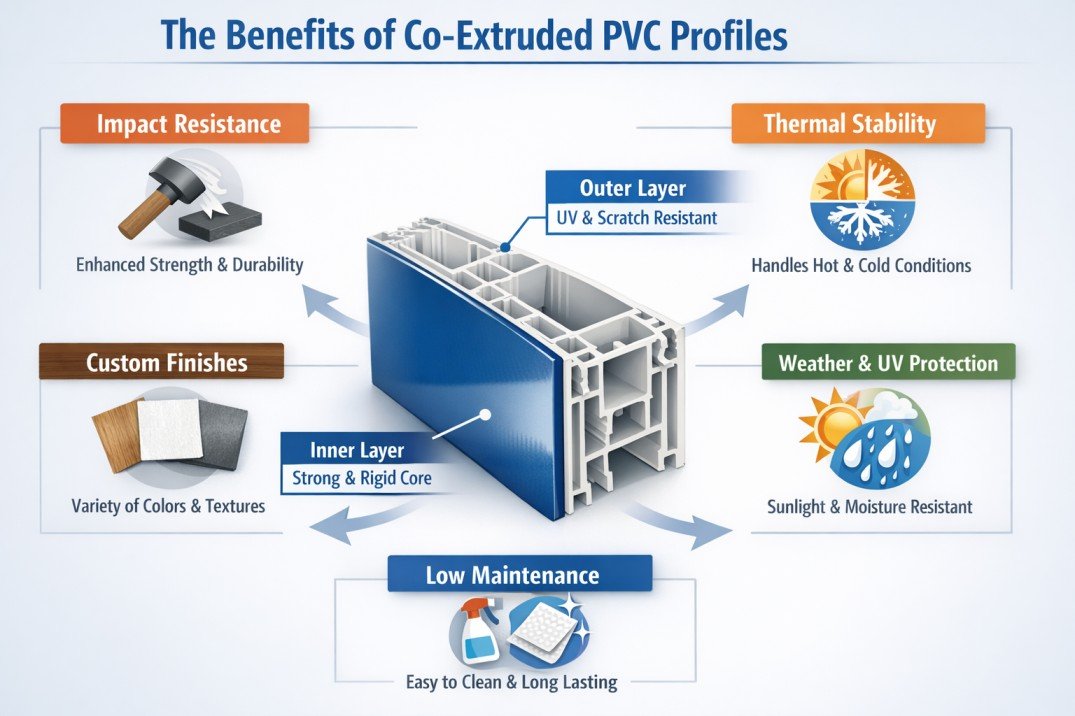
Modern PVC window profiles are often designed with internal chambers. These air pockets act as insulation layers.
Benefits of multi-chamber designs include:
Reduced thermal bridging
Improved insulation without added materials
Better overall U-value performance
This design principle is a core part of PVC profile basics and is widely adopted in commercial window systems.
3. Compatibility with Double and Triple Glazing
PVC profiles work well with insulated glass units. When paired with double or triple glazing, the thermal efficiency of the entire window system improves.
The profile helps maintain:
Tight sealing around the glass
Consistent spacing
Long-term dimensional stability
This combination is commonly used in commercial façades and office buildings.
Role of PVC Profiles in Preventing Air Leakage
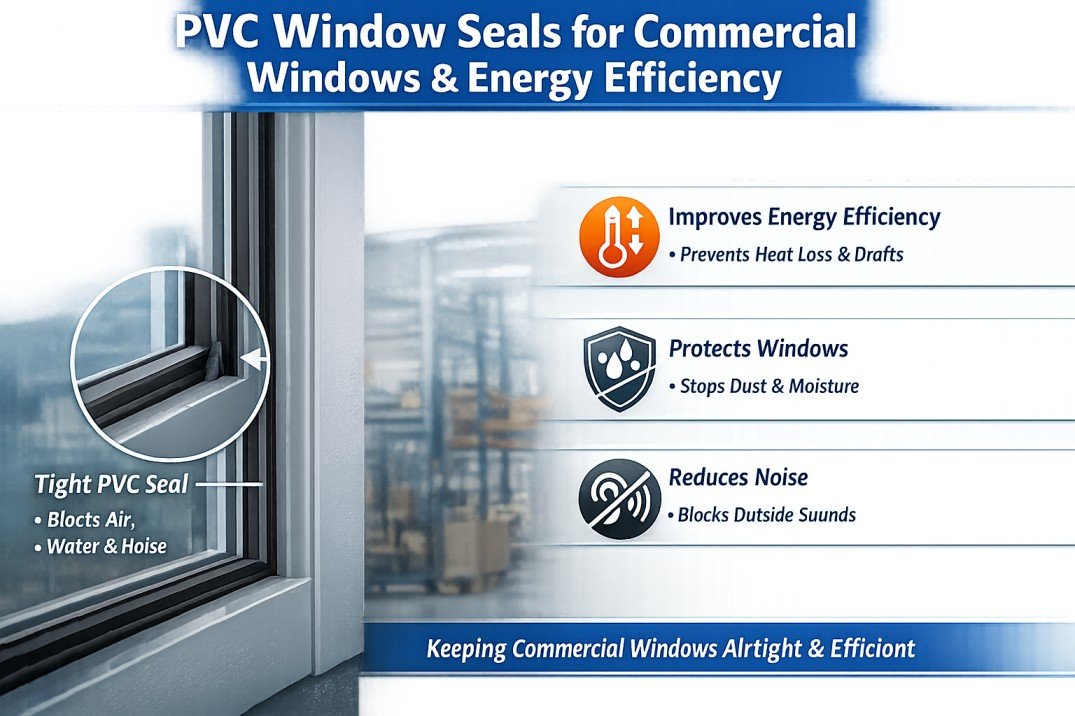
Heat loss is not only about material conductivity. Air leakage around window frames can significantly reduce performance.
PVC profiles support:
Precise extrusion tolerances
Better gasket integration
Reliable sealing over long periods
In real projects, poorly sealed frames often cause drafts even when high-quality glass is used. Properly designed PVC profiles help address this issue effectively.
Thermal Performance in Indian Commercial Conditions
India’s commercial buildings face varied climate conditions. In many regions, windows must handle:
High external temperatures
Strong sunlight exposure
Seasonal humidity changes
A window PVC profile in India is often selected because PVC remains dimensionally stable across temperature variations. This stability helps maintain insulation performance over time without frequent adjustments or replacements.
Comparison: PVC Profiles vs Metal Profiles
| Feature | PVC Window Profiles | Metal Window Profiles |
|---|---|---|
| Thermal conductivity | Low | High |
| Need for thermal breaks | Not required | Required |
| Condensation risk | Lower | Higher |
| Energy efficiency | Naturally higher | Depends on design |
This comparison explains why PVC is increasingly used in commercial window systems focused on energy efficiency.
Practical Example from Commercial Projects
In a mid-sized office building project, switching from standard metal frames to PVC-based window systems resulted in noticeably lower indoor temperature fluctuations. Facility teams reported reduced air conditioning load during peak summer months.
While glass quality remained the same, the improved performance came from better insulation at the frame level, highlighting the real impact of well-designed PVC profiles.
Manufacturing Accuracy and Its Impact on Performance
Thermal performance is closely linked to how accurately profiles are manufactured. Consistent wall thickness, proper chamber formation, and stable material quality all contribute to long-term results.
Manufacturers like M3 Extrusion produce PVC window profiles based on detailed drawings and technical specifications. This ensures that profiles fit correctly within commercial window assemblies and perform as expected over repeated production runs.
Installation Matters as Much as the Profile
Even the best profile design will underperform if installation is not handled properly.
Key installation factors include:
Correct alignment within the façade system
Proper gasket placement
Secure fixing without deformation
When profile design and installation work together, thermal efficiency improves noticeably.
Key Takeaways for Commercial Buyers
PVC profiles play a direct role in reducing heat transfer
Multi-chamber designs improve insulation performance
PVC frames support better sealing and lower air leakage
A well-made window PVC profile in India suits varied climate conditions
Manufacturing accuracy and installation quality are essential
Understanding these fundamentals helps decision-makers select window systems that perform reliably over time.
Frequently Asked Questions
What makes PVC window profiles suitable for thermal insulation?
PVC has low thermal conductivity, which means it slows down heat transfer. When used in window frames, it reduces heat loss or gain through the frame, helping maintain stable indoor temperatures in commercial buildings.
How do multi-chamber PVC profiles improve thermal performance?
Multi-chamber profiles contain air pockets that act as insulation layers. These chambers reduce thermal bridging and help lower overall heat transfer, improving the window’s energy efficiency without adding extra materials.
Are PVC window profiles suitable for Indian climate conditions?
Yes. PVC window profiles are dimensionally stable across temperature changes and humidity levels commonly found in India. This stability helps maintain consistent thermal performance over long-term commercial use.
Do PVC window profiles work well with double glazing?
PVC profiles are highly compatible with double and triple glazing systems. They support tight sealing and correct spacing, which improves insulation and reduces air leakage around insulated glass units.
How does installation affect thermal performance?
Proper installation ensures the profile sits correctly within the window system. Poor alignment or sealing can create gaps that allow air leakage, reducing insulation performance even if high-quality profiles are used.
What should buyers check when selecting PVC window profiles?
Buyers should review profile design, chamber structure, material quality, and manufacturing consistency. Profiles made to precise specifications perform better and support long-term thermal efficiency in commercial windows.
Check related articles for more insights:
- How to Improve Weather Resistance with Durable PVC Sealing Solutions
- How to Improve Weather Resistance with Durable PVC Sealing Solutions
- Why uPVC Window Seals Matter for Long-Lasting Performance in Indian Homes