Moisture damage is a constant problem in industrial environments. Water exposure slowly breaks down many common materials. Over time, this leads to weak parts, poor fit and early failure of systems.
In many industries, equipment works in damp spaces or under regular water contact. Cleaning cycles, humidity and outdoor use make the problem worse. Materials that cannot handle moisture often fail early and need frequent replacement.
This creates extra cost, downtime, and safety risks.
HDPE profiles offer a practical solution for these conditions. Not only do they maintain structural stability in wet and damp environments, but they also resist water absorption and retain strength during long use.
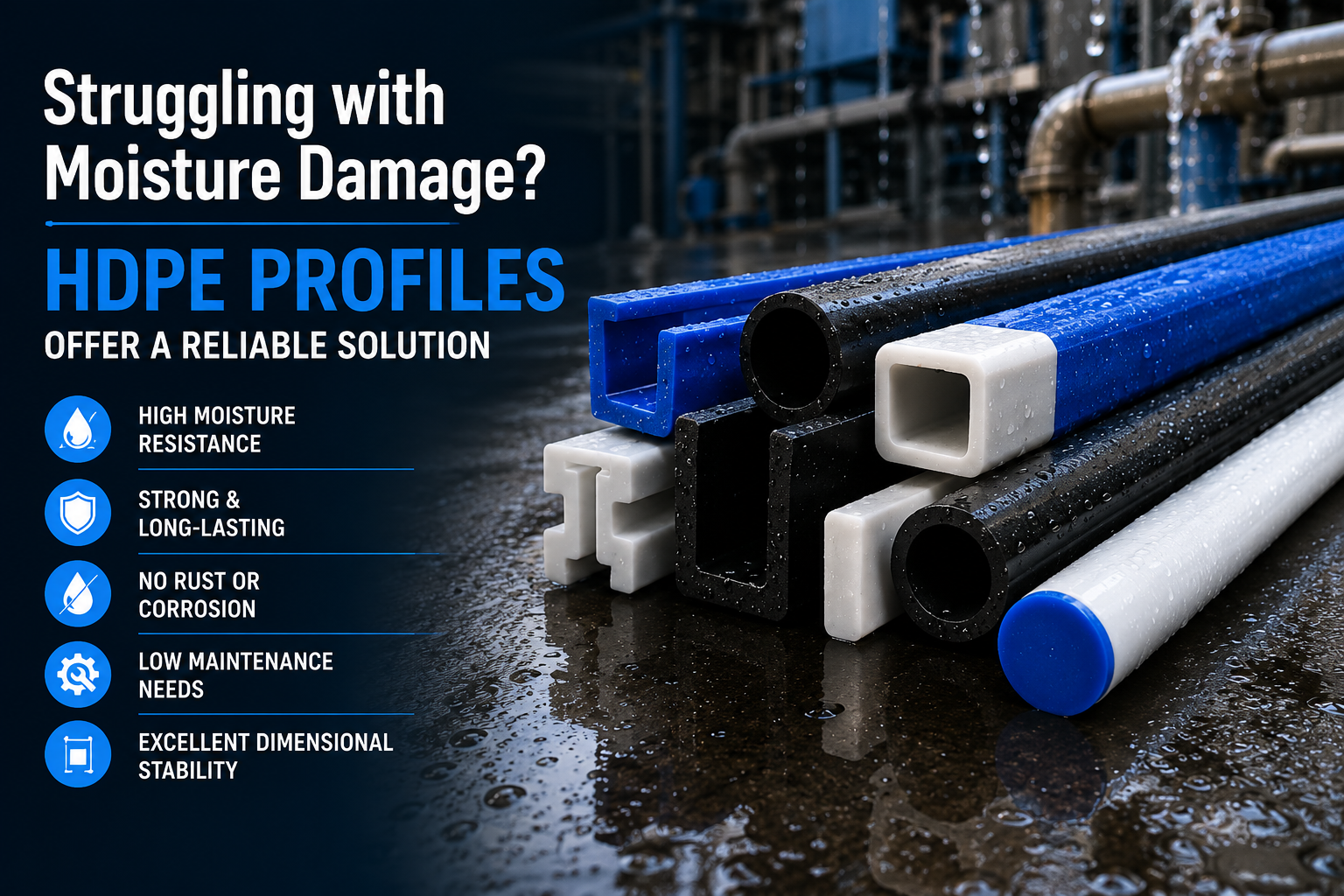
By preventing water from entering the material, HDPE profiles help maintain shape, strength and fit over time. This reduces early damage and keeps industrial equipment working with fewer interruptions. This is why custom HDPE profiles for industrial applications are widely used in moisture-prone environments, where consistent performance and long service life are needed.
What Are HDPE Profiles?
HDPE profiles, short for ‘high-density polyethylene’ profiles, are custom plastic shapes such as channels, tubes, and rods made by melting and pushing high-density polyethylene through a shaped die. The material has a tight molecular structure, meaning the particles are closely packed. Because of this structure, water cannot easily enter the material. HDPE profiles are known for being tough and stable. They do not rot like wood, and they do not rust like metal. They also do not break down quickly when exposed to moisture or chemicals.
When choosing material for industrial use, it is important to be careful and avoid poor-quality HDPE profiles, as they may not deliver the same level of stability as well as performance over time. This is why proper material selection matters in industrial systems where long-term use and steady performance are expected. In industrial systems, HDPE profiles are a reliable choice, especially in setups where long service life and steady performance are required.
They maintain their form over time, which helps in applications where correct fit as well as alignment are important for smooth industrial operation.
Why HDPE Profiles Work Well in Moisture-Prone Areas
Moisture is one of the main reasons materials fail in industrial use. It affects strength, shape and surface condition. HDPE profiles are built to resist these effects.
Their structure does not allow water to enter easily. This prevents internal damage and keeps the material stable for long periods.
Below are the key reasons HDPE profiles perform well in moisture-heavy environments.
1. High Moisture Resistance
HDPE profiles have very low water absorption, which makes them highly reliable in wet and damp conditions. When many materials come in contact with water, they start to swell, weaken, or lose shape, but HDPE does not behave this way. Water stays on the surface instead of entering the material, which keeps the internal structure safe.
In industrial setups where equipment often goes through cleaning cycles or operates in humid air, this stability becomes important. By preventing moisture from affecting the material, HDPE profiles help reduce early wear, extend service life and lower the risk of unexpected failure. They also maintain their shape over time, which supports consistent performance as well as helps equipment operate without unnecessary interruptions.
2. Strong and Long-Lasting
In addition to being resistant to moisture, HDPE profiles are also built to handle load, vibration and continuous use in industrial applications. They maintain their strength even in moisture-heavy conditions, unlike many materials that weaken after long exposure to water.
This makes them suitable for long-term installations where frequent replacement is not practical. They handle stress well and do not crack easily under normal industrial pressure.
This long service life reduces downtime as well as helps industries plan better since parts remain usable for longer periods. Over time, it also improves efficiency by reducing repair needs and replacement cycles.
3. No Rust or Corrosion
Due to the fact that HDPE profiles are non-metal and do not react with moisture, they do not rust or corrode like metal parts exposed to water. Rust is a common problem in metal parts exposed to moisture, and it slowly weakens the structure until failure occurs. HDPE profiles avoid this issue completely because they are not metal-based. Even in areas with constant water contact, they do not corrode or break down due to oxidation.
This makes them useful in environments where metal parts fail quickly under similar conditions. It also improves safety since corroded parts can become weak as well as unreliable over time. By avoiding rust and corrosion, HDPE profiles offer more stable and long-term performance in moisture-heavy environments.
4. Low Maintenance Needs
Compared to materials like wood, metal and basic plastics used in industrial systems, HDPE profiles have little to no maintenance needs because they do not rust, absorb water, or break down easily. This reduces the need for regular upkeep in industrial systems, where many materials require frequent checks and repairs to stay in working condition. Cleaning HDPE profiles is simple and usually needs only basic washing to keep them in good shape. Unlike metal parts, they do not need coatings, painting or surface treatment to protect them from damage.
This helps reduce extra work during maintenance cycles and keeps industrial systems running without frequent interruptions.
5. Good Dimensional Stability
HDPE profiles maintain excellent dimensional stability, which means they keep their shape and size even in changing environments. Since HDPE profiles resist expansion and shrinkage caused by moisture or temperature changes, they help maintain the precise fit required for proper function in industrial systems. Even small changes in size can cause alignment issues or reduced efficiency in machines.
HDPE profiles help avoid these problems by staying stable over time as well as maintaining consistent dimensions. This makes installation easier and supports long-term reliability in industrial applications.
Frequently Asked Questions
1. Are HDPE profiles suitable for both indoor and outdoor industrial use?
Yes. HDPE profiles perform well in both indoor and outdoor environments because they resist moisture, weather exposure and many common industrial conditions without losing their strength.
2. Do HDPE profiles weaken after repeated water contact?
No. Repeated water contact does not significantly affect the strength of HDPE profiles. They remain stable as well as continue to perform well in industrial applications where moisture exposure is common.
3. Can HDPE profiles be cut and shaped for custom use?
Yes. HDPE profiles can be cut, drilled and shaped based on design needs. This makes them useful for different industrial setups that require specific sizes and fitting.
4. Do HDPE profiles stay stable in changing weather conditions?
Yes. HDPE profiles maintain their shape and strength in both dry and wet conditions. They do not expand, shrink or crack easily when exposed to temperature or weather changes, which helps ensure steady performance in outdoor industrial use.
5. Do HDPE profiles absorb water during long use?
No. HDPE profiles have very low water absorption. They do not take in moisture even during long exposure. This helps them stay stable and maintain performance in industrial use.
Conclusion
Moisture damage creates serious problems in industrial setups. It affects material strength, safety, and long-term performance.
HDPE profiles provide a reliable solution to this issue. They resist moisture, maintain strength, avoid rust and need low maintenance. They also stay stable in size and shape, which supports smooth industrial operations.
These qualities make them a strong choice for industries that deal with wet or humid environments on a regular basis.
Are you looking for reliable HDPE profiles? M3 Extrusion offers high-quality HDPE profiles that perform well in industrial settings and help maintain consistent performance under demanding conditions.