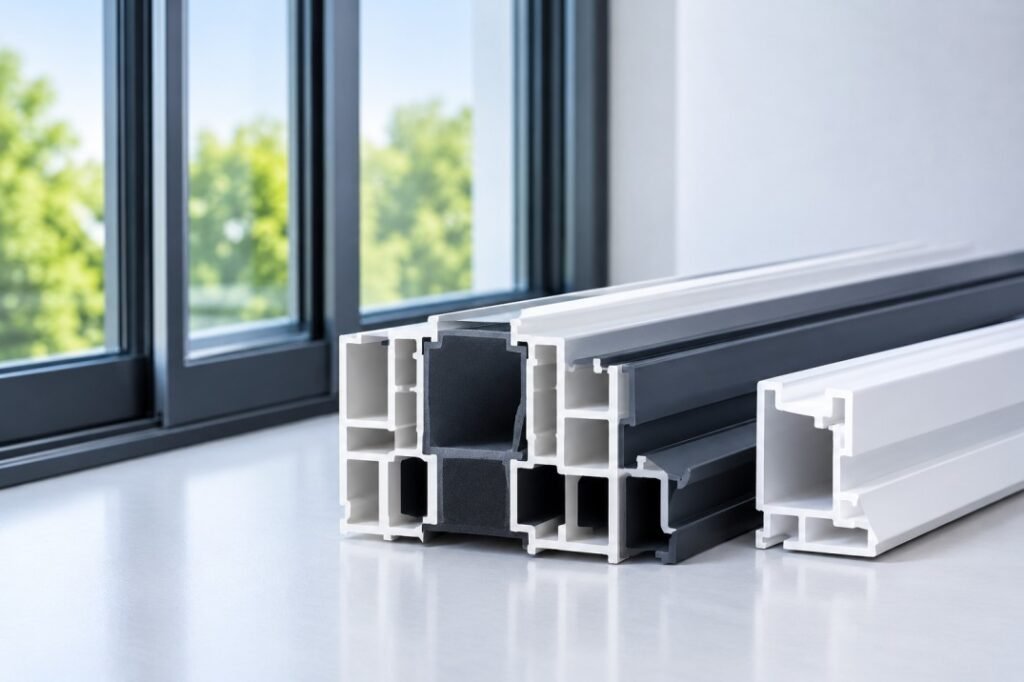
Made from durable and insulating PVC material, thermal break PVC profiles have become immensely popular in aluminium window and door systems and are widely used in the manufacturing of thermally insulated aluminium windows and doors. Not only do these profiles create an insulating barrier between the inner and outer sections of the frame, but they also help maintain indoor temperatures and improve energy efficiency. They are also used in curtain wall systems where thermal control is important.
However, choosing the right thermal break PVC profiles requires more than checking their size and shape. Buyers need to consider material quality, insulation performance, frame compatibility, and manufacturing accuracy. Selecting profiles that do not match the aluminium frame design can lead to fitting issues and poor thermal performance.
Nonetheless, by doing some research and keeping a few important factors in mind, buyers can find thermal break PVC profiles that match their aluminium window and door system requirements.
5 Important Factors to Check When Buying Thermal Break PVC Profiles for Aluminium Windows and Doors
Thermal break PVC profiles must meet certain size, strength, and quality requirements to work well in aluminium windows and doors. Since their main purpose is to limit heat transfer through aluminium frames, buyers should understand how thermal break profiles reduce heat loss before choosing a product. The right material, design, and fit all play a role in their insulation performance.
Here are five important factors buyers should check before placing an order:
1. Profile Size and Dimensions
One of the major factors that you need to take into account when choosing thermal break PVC profiles is their size and dimensions. These profiles must match the aluminium frame design to ensure proper fitting during assembly. Even small differences in width or height can lead to fitting issues and affect the overall performance of the window or door system.
Buyers should check the following measurements:
- Width: The profile width should match the space available within the aluminium frame.
- Height: It should fit the required section of the window or door system.
- Wall thickness: The thickness should meet the design and strength needs of the application.
- Length: The profile length should suit the assembly and production process.
- Custom dimensions: The manufacturer should be able to produce profiles based on the required measurements.
Buyers should share technical drawings or samples with the manufacturer before production. This helps ensure that the profile dimensions match the aluminium sections.
2. Material Grade and Quality
The type and quality of PVC used to make thermal break profiles can affect their strength, insulation, and service life. The material should meet the performance needs of aluminium window and door systems and withstand the conditions they are exposed to during use.
When choosing thermal break PVC profiles, buyers should check these material features:
- Material quality: The PVC compound should have a uniform mix and suit the intended application.
- Heat resistance: The material should handle the expected temperature range without losing its shape.
- Moisture resistance: It should withstand normal exposure to moisture.
- Strength: The profile should have enough strength for fitting and use within the frame.
- Shape retention: The material should not crack or deform easily under normal conditions.
Good-quality PVC offers moisture and corrosion resistance, which makes it suitable for building applications. Buyers should also ask the manufacturer about the material grade and its suitability for the intended window or door system.
3. Thermal Insulation Performance
The main purpose of a thermal break PVC profile is to reduce heat transfer through a window or door frame. Aluminium conducts heat easily, so a suitable insulating section helps reduce the transfer of heat between the indoor and outdoor sides.
However, the insulation performance depends on more than the material alone. Buyers should also check the profile design and how it fits within the frame.
Here are a few points to consider:
- Thermal barrier design: The profile should create the required separation between the inner and outer frame sections.
- Material properties: PVC should have suitable insulating properties for the application.
- Profile shape: The cross-section should match the design of the thermal break system.
- Frame fit: Poor fitting can affect the overall performance of the window or door.
- System performance: The complete window or door design should be assessed to understand its thermal performance.
Buyers should discuss their insulation needs with the manufacturer and check whether the profile design suits the required frame system.
4. Fit and Compatibility with Aluminium Frames
A thermal break PVC profile must fit properly within the aluminium frame. If its shape or dimensions do not match the frame sections, it can create problems during assembly. Poor fit may also affect the thermal barrier.
Before placing an order, buyers should check the following details:
- Frame design: The profile should match the aluminium section used in the system.
- Cross-section: Its shape should suit the required fitting method.
- Grip and fit: The profile should stay in place within the aluminium sections.
- Assembly needs: It should support the required manufacturing and fitting process.
- Custom design: The manufacturer should be able to match the profile to the buyer’s drawings or samples.
It is best to share the aluminium frame drawings with the manufacturer before production. Buyers can also request samples to check the fit before approving a bulk order.
5. Strength and Resistance to Temperature Changes
Thermal break PVC profiles may face changes in temperature during their service life. They must retain their shape and basic properties under the expected conditions of use. A profile that cracks or deforms can affect the fit within the aluminium frame.
Buyers should check these features:
- Heat resistance: The material should handle the expected operating temperatures.
- Dimensional stability: The profile should retain its size and shape during temperature changes.
- Impact resistance: It should withstand normal handling during transport and assembly.
- Moisture resistance: The material should handle exposure to moisture without losing its basic properties.
- Long-term performance: The profile should remain suitable for the expected period of use.
The required strength and resistance may vary based on the window or door design and the conditions in which it will be used. Buyers should discuss these needs with the manufacturer before finalising the material and profile design.
Get Custom Thermal Break PVC Profiles from M3 Extrusion
M3 Extrusion manufactures custom thermal break PVC profiles for aluminium windows, doors, and curtain wall systems. Buyers can discuss their required dimensions, profile shapes, and design details with the company.
Custom Profile Manufacturing
M3 Extrusion produces thermal break PVC profiles based on different size and design needs. Buyers can share technical drawings, samples, and measurements to discuss custom production. This helps ensure that the profiles match the intended window and door systems.
Quality and Production Support
The company focuses on product quality and dimensional accuracy. Buyers can request samples before bulk production to check the profile size, shape, surface finish, and fit. This helps confirm whether the product meets their requirements.
Export Support
For international buyers sourcing thermal break PVC profiles from India, M3 Extrusion offers FOB and CIF shipping terms. Air freight can also be arranged for urgent orders. Export documents, including a Certificate of Origin, can be provided as required.
Frequently Asked Questions
What are thermal break PVC profiles used for in aluminium windows and doors?
Thermal break PVC profiles create an insulating barrier within aluminium window and door frames. They help reduce heat transfer between the indoor and outdoor sides of the frame. These profiles are also used in curtain wall systems.
How do thermal break PVC profiles help reduce heat transfer?
PVC has lower thermal conductivity than aluminium. When used as a thermal barrier between frame sections, it helps reduce the flow of heat through the frame. The overall result depends on the profile design and the complete window or door system.
Can thermal break PVC profiles be made in custom sizes?
Yes, manufacturers can produce custom thermal break PVC profiles based on technical drawings or physical samples. Buyers can share their required width, height, wall thickness, length, and profile shape before production.
How can buyers check the quality of thermal break PVC profiles?
Buyers should check the PVC material grade, dimensions, wall thickness, surface finish, and profile shape. They should also check whether the profile fits the aluminium frame. Requesting a sample before bulk production can help confirm its quality.
What factors affect the cost of thermal break PVC profiles?
The cost depends on the PVC material grade, profile dimensions, wall thickness, design, and order quantity. Custom tooling or die costs may also apply when a new profile design is needed. Buyers should share their specifications and order volume to get a clear price quote.
Conclusion
Choosing the right thermal break PVC profiles requires careful attention to dimensions, material grade, insulation performance, frame compatibility, strength, and manufacturing quality. Buyers should also check the profile design and request samples before bulk production. These steps can help avoid fitting issues and ensure the profiles meet the needs of the window and door system.
Are you looking for a reliable manufacturer of custom thermal break PVC profiles? M3 Extrusion offers high-quality thermal break PVC profiles at affordable rates. With 14+ extrusion lines, sample production support, bulk order capacity, and export services, the company helps buyers source thermal break PVC profiles that match their needs. Contact us today to discuss your custom thermal break PVC profile requirements.