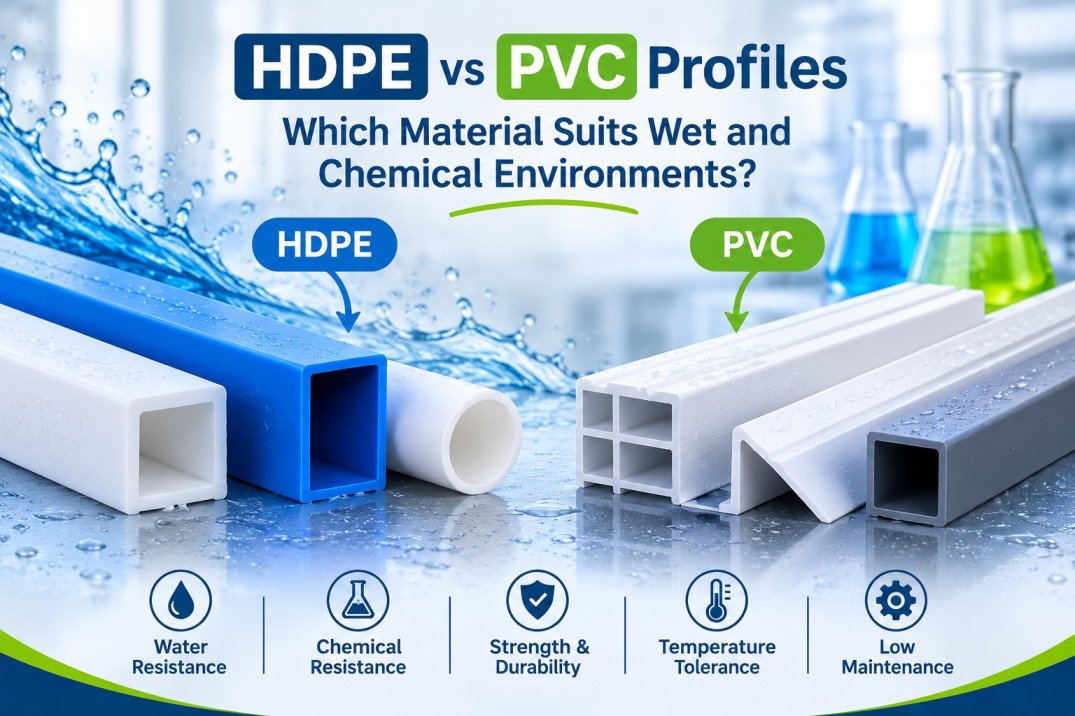
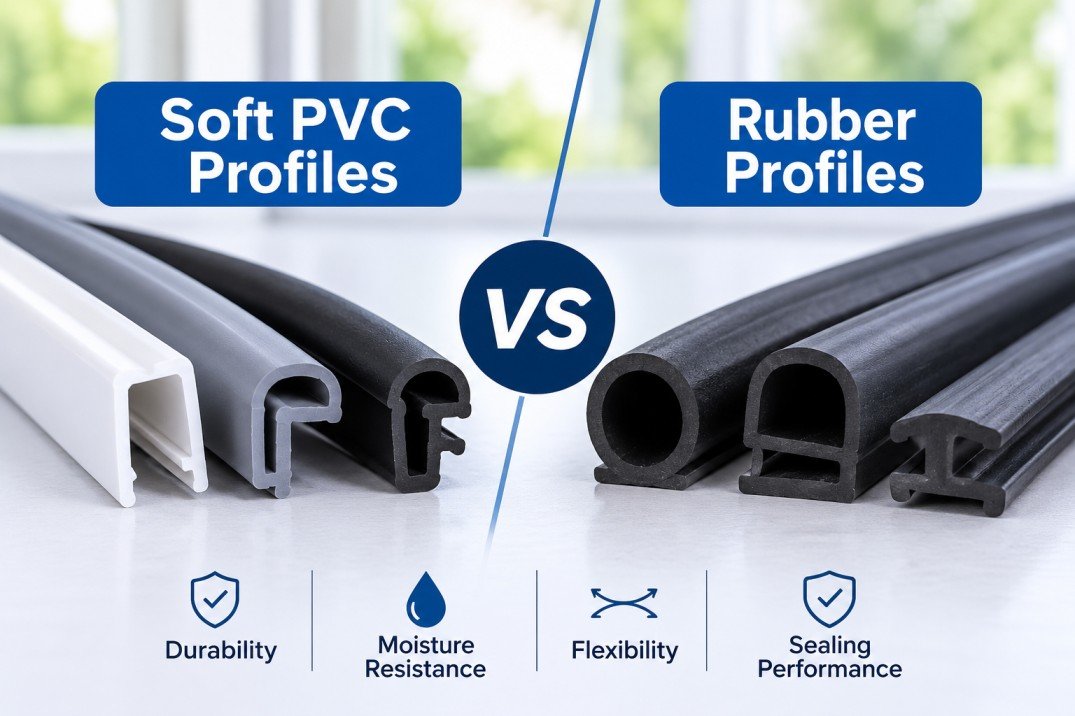
When it comes to selecting materials for industrial use in wet and harsh chemical conditions, PVC and HDPE profiles offer two practical choices. While both materials provide good moisture and chemical resistance, they also differ in strength, flexibility, and heat tolerance.
PVC profiles offer good rigidity, shape retention, and resistance to many chemicals. On the other hand, HDPE profiles offer high impact strength, flexibility, and resistance to a wide range of chemicals.
Understanding the differences between PVC and custom HDPE profiles and how they perform in wet and chemical environments can help you select the right material for your application.
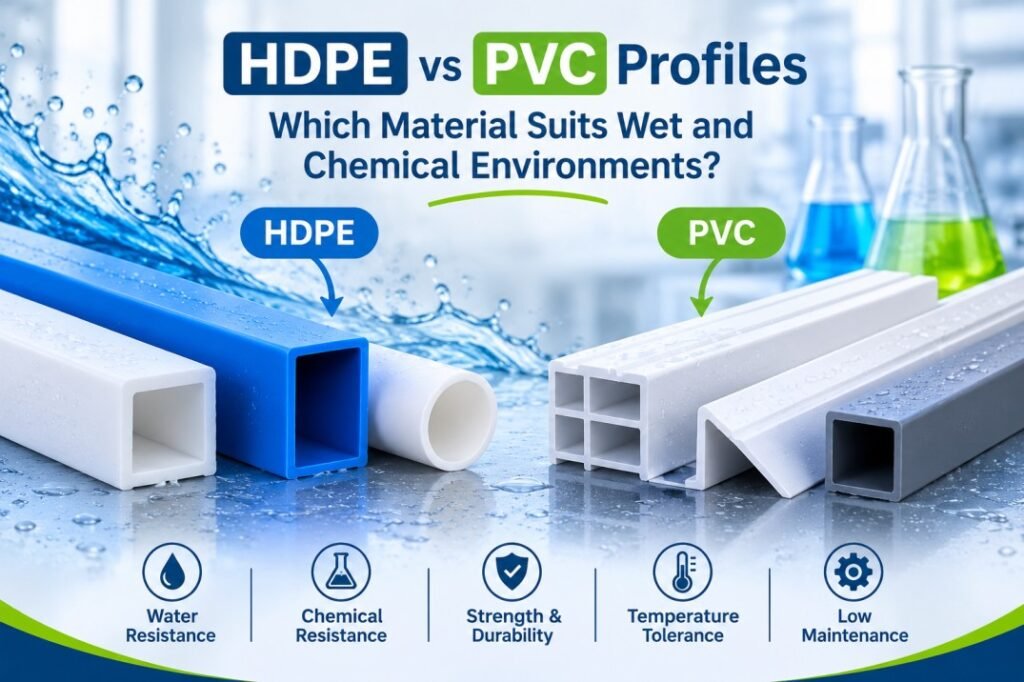
HDPE vs PVC Profiles: Key Differences
HDPE and PVC profiles offer different benefits in wet and chemical environments. While HDPE is known for its impact strength and chemical resistance, PVC offers good rigidity and dimensional stability. Let’s compare both materials based on six important factors.
1. Water and Moisture Resistance
Both HDPE and PVC have low water absorption, making them suitable for applications exposed to moisture. They do not rust or rot when exposed to water, unlike some metal and wood materials.
HDPE has very low water absorption and performs well in wet conditions. This makes it a practical option for buyers looking for HDPE profiles for moisture problems in industrial settings.
PVC also offers good moisture resistance. It can retain its basic properties in damp areas and wet industrial settings. Both materials can work well in these conditions, so the choice depends on other application needs.
2. Chemical Resistance
In terms of chemical resistance, both HDPE and PVC can withstand exposure to several industrial chemicals, but their level of compatibility differs.
HDPE offers good resistance to many acids, alkalis, salts, and selected industrial chemicals. This makes it useful in applications where profiles may come into contact with chemical solutions.
PVC also resists many acids, alkalis, salts, and other chemicals. However, some solvents and strong chemical mixtures can affect its surface and structure.
Buyers should check the chemical type, concentration, temperature, and contact time before selecting either material.
3. Strength and Impact Resistance
Even though both HDPE and PVC offer good strength for industrial applications, they differ in how they handle physical impact and stress.
HDPE offers good impact resistance and can handle knocks and physical stress without cracking easily. Its slightly flexible nature also helps it absorb impact during regular use.
PVC is a more rigid material, which helps it retain its shape under normal working conditions. However, rigid PVC can crack under heavy impact, especially at low temperatures.
HDPE is often a better choice for applications that involve frequent impact or rough handling. PVC is suitable when rigidity and shape retention are more important.
4. Temperature Resistance
When it comes to temperature resistance, both HDPE and PVC offer specific operating temperature ranges that make them suitable for different industrial applications.
HDPE performs well across a range of temperatures and offers good stability under normal working conditions. PVC also provides reliable performance within its recommended temperature range and maintains its shape during regular use.
Buyers should consider the operating temperature of their application and check the recommended temperature range of the selected material grade before ordering.
5. Maintenance and Service Life
Both HDPE and PVC require little maintenance compared with many traditional materials. They do not rust and can handle regular exposure to moisture.
HDPE is resistant to many chemicals and physical impacts, which helps it perform well in demanding industrial settings. PVC also offers good durability when the material grade suits the working conditions.
The service life of either material depends on its quality, chemical exposure, temperature, and handling. Choosing the right grade helps maintain profile performance over time.
When Should You Choose HDPE Profiles?
HDPE profiles are a good choice for applications that need high impact resistance, low water absorption, and good chemical resistance. Their flexible structure also helps them handle regular physical stress.
Consider HDPE profiles for the following uses:
- Wet industrial areas: HDPE works well in areas with regular water contact and damp conditions.
- Chemical handling systems: Its resistance to many acids, alkalis, and salts makes it suitable for selected chemical applications.
- Impact-prone areas: HDPE can handle knocks and rough handling without cracking easily.
- Industrial equipment: Its strength and low water absorption make it useful for different equipment parts and protective components.
However, buyers should confirm that the selected HDPE grade can withstand the chemicals and temperatures found in their application.
When Should You Choose PVC Profiles?
PVC profiles are suitable for applications that need rigidity, shape retention, and resistance to moisture and selected chemicals. Rigid PVC can maintain its form during regular use, making it a common choice for industrial and building applications.
Consider PVC profiles for the following uses:
- Rigid industrial components: PVC works well where profiles need to retain a fixed shape.
- Wet areas: Its moisture resistance makes it suitable for damp spaces and applications with regular water exposure.
- Chemical processing areas: PVC can be used where the chemicals involved are compatible with its material grade.
- Building and construction: PVC profiles are used in frames, trims, covers, and other components that need stable dimensions.
Buyers should also consider the PVC compound, as different grades can offer different levels of flexibility, strength, and chemical resistance.
Get Custom HDPE and PVC Profiles from M3 Extrusion
M3 Extrusion manufactures custom HDPE and PVC profiles for different industrial and commercial applications. Buyers can share their drawings, samples, and dimensional requirements to discuss profile production.
Custom Profile Manufacturing
M3 Extrusion manufactures custom HDPE and PVC profiles in different shapes, sizes, colours, and cutting lengths. Buyers can share their required material, profile design, dimensions, and application needs with the team before production.
Sample and Production Support
The company supports sample production of HDPE and PVC profiles before bulk orders. This allows buyers to check the profile design, dimensions, surface finish, and material suitability before approving larger quantities.
Export Support
M3 Extrusion supplies custom HDPE and PVC profiles to international buyers. The company offers FOB and CIF shipping terms and can arrange air freight for urgent orders.
Frequently Asked Questions
Can HDPE and PVC profiles be made in custom sizes?
Yes, manufacturers can produce HDPE and PVC profiles in custom sizes based on technical drawings, samples, and design needs. Buyers can share the required shape, dimensions, wall thickness, and cutting length before production.
What factors affect the cost of HDPE and PVC profiles?
The cost depends on the material grade, profile size, wall thickness, design complexity, and order quantity. Custom tooling costs may also apply if a new die is needed. Buyers should share their specifications to get an accurate quote.
Can HDPE and PVC profiles withstand long-term exposure to water?
Yes, both materials offer good moisture resistance and low water absorption. HDPE performs well in regular water contact, while PVC is also suitable for damp and wet areas. The right choice depends on the application and working conditions.
Can HDPE and PVC profiles be used outdoors?
Yes, both materials can be used outdoors when the right grade and formulation are selected. HDPE profiles can be made with UV-resistant additives, while PVC profiles may need suitable UV protection to reduce damage from long-term sunlight exposure.
Conclusion
Choosing between HDPE and PVC profiles depends on the conditions in which they will be used. HDPE is a good choice for applications that need impact strength, flexibility, and chemical resistance. PVC is more suitable for applications that need rigidity, moisture resistance, and stable shapes. Buyers should match the material grade with the working conditions to get the required performance.
Are you looking for a reliable manufacturer of custom HDPE and PVC profiles? M3 Extrusion manufactures HDPE and PVC plastic profiles based on different size, shape, and design requirements. With 14+ extrusion lines, sample support, bulk production capacity, and export services, the company helps industrial buyers source profiles that suit their applications. Contact us today to discuss your custom HDPE and PVC profile needs.