Walk into a modern office, a retail store, or even a premium residential space today, and you will notice one thing immediately. The lighting feels smooth, even, and comfortable on the eyes. That effect does not come from the LED strip alone. It comes from the LED diffuser profile, a small but critical component that defines how light is seen, felt, and maintained over time.
Having worked with linear lighting installations across factories, commercial ceilings, and architectural projects, I can confidently say that choosing the right LED diffuser profile in India is just as important as choosing the LED itself.
What Is an LED Diffuser Profile?
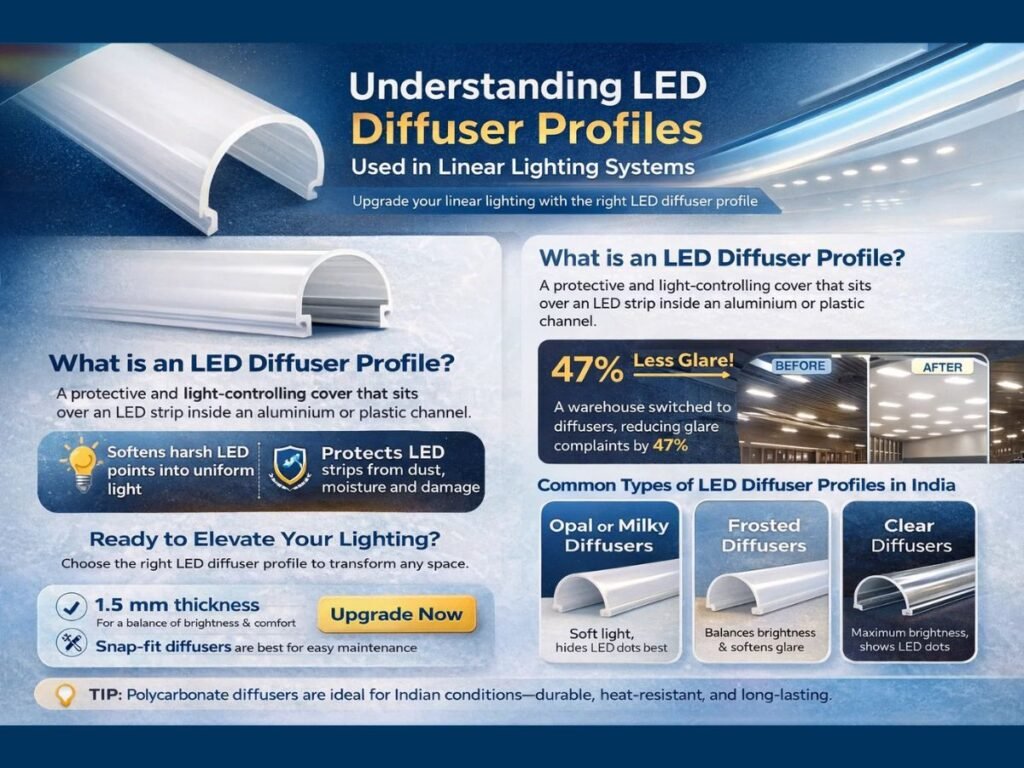
An LED diffuser profile is a protective and light-controlling cover, usually made from polycarbonate or acrylic, that sits over an LED strip inside an aluminium or plastic channel.
In simple terms, it does three main jobs:
- Softens harsh LED points into smooth, uniform light
- Protects the LED strip from dust, moisture, and physical damage
- Improves the overall appearance and lifespan of the lighting system
Quick answer: An LED diffuser profile spreads light evenly, reduces glare, and protects LED strips in linear lighting systems.
Why LED Diffuser Profiles Matter in Linear Lighting
Linear lighting is all about clean lines and visual consistency. Without a diffuser, LED dots become visible, causing glare and uneven brightness. This is especially problematic in commercial and industrial spaces where lighting runs for long hours.
In Indian conditions, factors like dust, heat, and voltage fluctuations make diffuser profiles even more essential.
Real-world example
In a warehouse ceiling project in Pune, switching from bare LED strips to proper diffuser profiles reduced visible glare complaints by over 60 percent and extended LED replacement cycles by nearly a year.
Types of LED Diffuser Profiles Commonly Used in India
Different applications need different diffuser styles. Below are the most commonly used options in linear lighting systems.
1. Opal or Milky Diffusers
These are the most popular LED diffuser profiles in India.
Best for:
- Offices and commercial interiors
- Retail lighting
- Residential linear lighting
They provide soft, uniform illumination and hide individual LED points very effectively.
2. Frosted Diffusers
Frosted diffusers balance brightness and diffusion.
Best for:
- Task lighting
- Workshops and workstations
- Industrial assembly areas
They allow slightly higher light output while still controlling glare.
3. Clear Diffusers
Used when maximum brightness is required.
Best for:
- Industrial zones
- Utility lighting
- Areas where aesthetics are less critical
These do not hide LED dots but offer the highest light transmission.
Materials Used in LED Diffuser Profiles
Material choice directly impacts durability, heat resistance, and optical performance.
Material | Key Benefit | Typical Use |
Polycarbonate | High impact resistance, long life | Industrial and commercial |
Acrylic | Better clarity, lower cost | Residential and retail |
Co-extruded plastics | Balanced strength and diffusion | Custom linear systems |
For projects exposed to heat or frequent cleaning, polycarbonate diffusers are generally the safer long-term choice.
LED Diffuser Profiles for Ceiling Lights
One of the fastest-growing applications today is LED diffuser profiles for ceiling lights. These profiles help create seamless, dot-free ceiling illumination that looks professional and premium.
Common ceiling applications include:
- Recessed linear ceiling lights
- Surface-mounted office lighting
- Suspended linear fixtures
The diffuser ensures that light spreads evenly across the ceiling without harsh shadows or eye strain, especially important in offices and commercial buildings.
How Diffuser Thickness Affects Light Output
This is a detail many people overlook.
- Thicker diffusers provide better dot hiding but slightly reduce brightness
- Thinner diffusers allow more light but may show LED hotspots
Practical tip: For standard 120 LED per metre strips, a diffuser thickness of 1.2 mm to 1.5 mm offers a good balance between brightness and visual comfort.
Choosing the Right LED Diffuser Profile in India
Before finalising a diffuser profile, ask these practical questions:
- Will the light be used for long hours daily
- Is glare control more important than brightness
- Is the environment dusty or humid
- Is the installation ceiling-mounted, recessed, or surface-mounted
Answering these helps narrow down the correct diffuser type without costly trial and error.
Installation Tips from Real Projects
From hands-on experience, here are a few points that save time and money:
- Always test the diffuser with the actual LED strip before bulk installation
- Leave expansion gaps for long aluminium profiles to handle heat
- Use snap-fit diffusers for easier maintenance and replacement
These small details prevent cracking, uneven lighting, and future service issues.
Where Custom LED Diffuser Profiles Add Value
Standard diffusers work for many projects, but custom profiles make a difference when:
- Ceiling designs are non-standard
- Lighting runs are very long
- Light output and diffusion must be precisely controlled
Manufacturers like M3 Extrusion work closely with lighting brands to develop diffuser profiles that match exact project requirements, ensuring consistency across large installations.
Summary: Key Takeaways
LED diffuser profiles are not just accessories. They define light quality, comfort, and durability in linear lighting systems. Choosing the right LED diffuser profile in India improves glare control, protects LED strips, and enhances the overall visual appeal of ceiling and linear lighting applications. Small decisions at this stage lead to long-term performance benefits.
Frequently Asked Questions
What is the main purpose of an LED diffuser profile?
An LED diffuser profile spreads light evenly and reduces glare from LED strips. It also protects the LED from dust, moisture, and accidental damage. In linear lighting systems, it improves visual comfort while extending the overall lifespan of the lighting setup.
Which LED diffuser profile is best for ceiling lights?
Opal or milky diffusers are best for ceiling lights because they hide LED dots effectively and provide soft, uniform illumination. They are widely used in offices, retail spaces, and residential ceilings where visual comfort and clean aesthetics are important.
Does an LED diffuser reduce brightness?
Yes, diffusers slightly reduce brightness, but the trade-off improves light quality. A well-designed LED diffuser profile balances light transmission and diffusion, ensuring the space feels evenly lit without harsh glare or visible hotspots.
Are LED diffuser profiles suitable for industrial environments?
Absolutely. Polycarbonate LED diffuser profiles are commonly used in industrial environments due to their impact resistance, heat tolerance, and durability. They protect LED strips from dust and vibration while maintaining consistent light output.
How long do LED diffuser profiles last?
High-quality LED diffuser profiles can last for many years, often matching or exceeding the lifespan of the LED strips themselves. Proper material selection, correct installation, and routine cleaning help maintain clarity and performance over time.
Can LED diffuser profiles be customised?
Yes, LED diffuser profiles can be customised in shape, thickness, and diffusion level. Customisation is useful for large projects, unique ceiling designs, or applications where light distribution and appearance must meet specific technical requirements.
Check related articles for more insights: