Let’s face it, rigid PVC profiles are only reliable when they are made with correct dimensions and consistent shape throughout the full profile length. Not only does correct sizing help with smooth fitting, but it also supports stable performance during use. Even when the material quality is good, small changes in width, height, or thickness can create fitting issues and weak joints, which is why consistency from a rigid PVC profile solution in India plays a key role in real-world performance.
Besides, when rigid PVC profiles are made without proper size control, small errors can turn into real problems during use. If they are not dimensionally accurate, fitting becomes difficult, joints lose strength and the overall structure fails to stay stable over time.
What Does Dimensional Accuracy Mean in Rigid PVC Profiles?
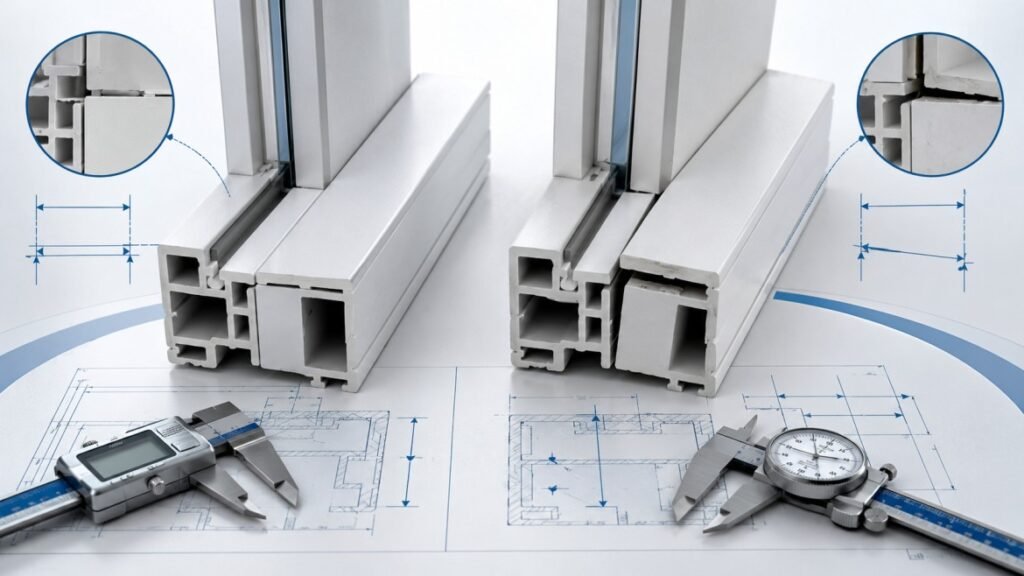
Dimensional accuracy in rigid PVC profiles means how closely each profile matches its required size during production and use. It includes width, height, thickness and shape consistency across the full length of the profile.
When a rigid PVC profile is accurate, every section stays within the set measurement limits. There are no sudden changes in size, no twist in shape and no uneven wall thickness. This level of control is important because these profiles are often used in systems where exact fit is needed.
Even a small change in size can affect how rigid PVC profiles connect with other parts. This can lead to gaps, tight fits, or weak alignment during installation. This is also one of the key factors to check when choosing rigid PVC profiles for industrial and construction use.
To maintain dimensional accuracy in rigid PVC profiles, the profiles should have:
- Same width and height from start to end
- Straight shape without twist or bend
- Proper fit with matching parts and frames
When these points are maintained, rigid PVC profiles fit easily into their intended systems. Installation becomes smooth and alignment stays correct. When they are not, problems begin right at the fitting stage.
Causes of Dimensional Inaccuracy in Rigid PVC Profiles
Dimensional changes in rigid PVC profiles do not happen for one reason only. They can develop during different stages of production. When these stages are not controlled properly, the final rigid PVC profile may lose size accuracy and shape consistency.
Poor extrusion control
During extrusion, rigid PVC material passes through a shaped die to form the required profile. If the material flow is uneven during this process, the rigid PVC profile may not maintain the correct dimensions. This can lead to size variation across the full length of the profile.
Temperature variation
Temperature plays a major role in shaping rigid PVC profiles. If the heat level changes too much during production, the material may not settle correctly into its final shape. This can cause uneven thickness, shrinkage or slight expansion in different parts of the rigid PVC profile.
Low-quality raw material
Rigid PVC profiles made from low-quality or unstable raw material often struggle to maintain consistent dimensions. This can lead to uneven sizing, poor shape retention and reduced accuracy in the final profile.
Worn or damaged tooling
The die and tooling used during production control the final shape of rigid PVC profiles. When these tools become worn out or damaged, the profile may develop uneven edges, incorrect thickness or shape inconsistency. This directly affects dimensional accuracy and fitting performance.
What Happens When Rigid PVC Profiles Are Not Dimensionally Accurate
When rigid PVC profiles are not made with correct size control, the impact is seen in daily use, installation, and long-term performance. These issues do not stay small. They affect the full structure and reduce the overall reliability of rigid PVC profile systems.
Here are some common problems caused by dimensionally inaccurate rigid PVC profiles.
Poor fit during installation
One of the most common problems caused by dimensionally inaccurate rigid PVC profiles is that they do not fit properly during installation. Profiles with incorrect dimensions may feel too tight in some areas and too loose in others, which affects proper fitting and alignment.
In some cases, installers may need to apply extra force to fit these profiles into place. In other cases, the profiles may fail to stay fixed correctly because the dimensions do not match the required size.
This creates delays during installation work. Installers may need to trim, adjust or force the profiles into position. This slows down the full process and increases effort on-site. It also reduces fitting quality because the profiles are no longer installed as intended.
Weak structural strength
It goes without saying that the strength of rigid PVC profiles depends on correct thickness and proper shape consistency. When dimensional accuracy is poor, some areas of the rigid PVC profile may become thinner or uneven.
Thin sections become weak points under pressure. They may bend more easily during use or fail to handle the load evenly. Thick sections can also create uneven stress across the rigid PVC profile structure.
Over time, this imbalance affects stability and reduces long-term strength. Furthermore, the rigid PVC profiles may no longer maintain their original shape during regular use.
Surface and alignment issues
Incorrect dimensions also create alignment problems during assembly. Rigid PVC profiles may not line up properly with connected parts or matching sections.
Some edges may sit higher or lower than others. This creates an uneven surface and affects the final appearance of the system.
Visible joints, uneven lines and poor fitting reduce the finish quality of rigid PVC profile installations. Even when the material itself is strong, poor dimensional accuracy lowers the final result.
Higher waste and rejection rate
Incorrect dimensions in rigid PVC profiles also increase material waste. Profiles that do not match the required measurements are often rejected during production, inspection, or installation.
This increases overall material use and adds extra cost. It also slows down work because additional checking and correction are needed.
In larger projects, repeated rejection of rigid PVC profiles affects project speed and overall efficiency. More time and material are needed to complete the same installation work.
Gaps and loose joints
Another common issue caused by dimensionally inaccurate rigid PVC profiles is the formation of gaps between connected sections. Although these gaps may look minor at first, they weaken the connection between the joined sections over time.
Loose joints reduce the stability of rigid PVC profile systems. With regular use, sections may shift slightly from their original position. This affects both alignment and structural support.
In visible applications, these gaps also affect surface finish. The profiles begin to look uneven, and joints become easier to notice. This lowers the final quality of the installation.
Frequently Asked Questions
What causes size variation in rigid PVC profiles?
It can happen due to poor extrusion control, heat changes during production, low-quality raw material, or worn tooling used in making rigid PVC profiles.
How do inaccurate rigid PVC profiles affect installation?
They make installation slow and difficult. Parts made from rigid PVC profiles may not fit properly and may need adjustments or extra force during fitting.
Can small size changes affect the rigid PVC profile’s performance?
Yes. Even small changes in rigid PVC profiles can affect fitting, strength, and alignment, which reduces overall performance in use.
Where are rigid PVC profiles commonly used?
Rigid PVC profiles are used in industrial fittings, frames, panels, and many construction systems that need stable and accurate parts.
Why is dimensional accuracy important in rigid PVC profiles?
It ensures proper fitting, stable structure and smooth use without gaps or alignment problems in systems that use rigid PVC profiles.
Conclusion
Dimensional accuracy can make or break the performance of rigid PVC profiles.
Accurate rigid PVC profiles help systems work smoothly, stay stable, and reduce waste during use. They also improve the final finish and reduce extra effort during installation.
Are you looking for reliable rigid PVC profiles with consistent dimensional accuracy? M3 Extrusion offers high-quality PVC profiles with strong control over dimensional accuracy, stable performance and long service life.