Over the years, PVC window seals have become immensely popular for effectively controlling airflow, noise, and leaks in industrial windows. Not only do they help maintain a stable indoor environment, but they also reduce energy costs by improving heating and cooling efficiency.
Unlike wood or metal, PVC is flexible, durable, and resistant to wear even in harsh conditions. These window frame seals fit tightly around the glass and frame, forming a strong barrier that protects workspaces, storage areas and equipment from dust, moisture, and temperature fluctuations.
For industries where window performance and efficiency matter, PVC window seals offer a low-maintenance, long-lasting solution that keeps buildings airtight and energy-efficient.
What Are PVC Window Seals?
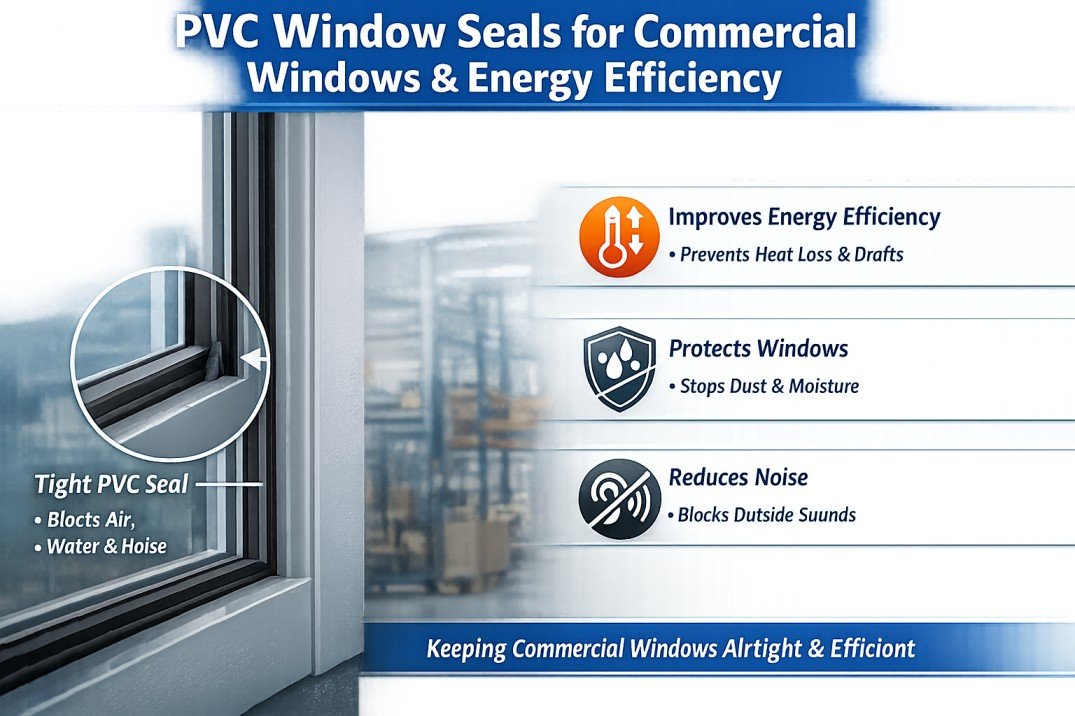
Made from PVC (polyvinyl chloride), window seals are flexible strips that fit around the edges of windows. They create a tight barrier between the glass and the frame, stopping air, water, dust, and noise from entering. In industrial and commercial buildings, this helps maintain a stable indoor environment and improves energy efficiency by reducing heat loss or gain.
Some seals have hollow chambers or multiple layers to add insulation. Others have smooth surfaces that allow windows to open and close easily. These weather-resistant PVC sealing systems provide long-lasting protection against moisture, drafts, and temperature changes in commercial windows.
Though small, these seals are essential for keeping windows airtight, protecting workspaces, and ensuring long-lasting performance.
How PVC Window Seals Work in Commercial Windows
PVC window seals may look small, but they play a big role in keeping commercial windows airtight and efficient. They prevent air, water, dust, and noise from entering while helping maintain indoor comfort and energy efficiency.
Here’s how PVC window seals function to keep commercial windows airtight and protected.
1. Filling the gaps: The seal fits tightly around the edges of the window frame as well as glass, closing any spaces where air, water, or dust could enter.
2. Compression: When the window is closed, the seal compresses slightly, creating a strong barrier that blocks drafts, leaks, and noise.
3. Insulation: Some seals have hollow chambers or multiple layers that trap air, adding extra insulation and improving energy efficiency.
Why You Should Install PVC Window Seals
Installing PVC window seals can not only improve energy efficiency and indoor comfort but also protect commercial windows from dust, moisture, and noise. In addition, they help prevent wear and tear on the window frame and glass by creating a consistent buffer against external elements.
This helps prevent damage from harsh weather, temperature changes, or repeated opening and closing. PVC seals also make cleaning and upkeep easier, as they block debris from accumulating in the gaps around the window.
Over time, this simple addition can extend the overall life of the windows while maintaining a more stable and controlled indoor environment. For businesses and industrial units, PVC window seals provide a practical, low-maintenance solution that keeps windows functioning reliably day after day.
Improves energy efficiency
One of the major benefits of installing PVC window seals is the fact that they improve energy efficiency by preventing air from escaping or entering through gaps in windows. This lightens the workload on heating and cooling systems, lowering energy consumption in commercial and industrial buildings.
- Reduces energy costs: By sealing gaps tightly, PVC window seals help HVAC systems work less, saving on electricity and fuel bills.
- Supports consistent climate control: Even with frequent opening and closing of windows, the seals help maintain a controlled indoor temperature, reducing energy waste.
- Minimizes energy waste: PVC window seals prevent heat loss or gain, ensuring energy is used efficiently throughout the building.
Overall, PVC window seals offer a simple and effective way to maintain energy-efficient buildings while keeping indoor spaces comfortable and operationally reliable.
Protects windows
In addition to improving energy efficiency, PVC window seals also help protect commercial and industrial windows from dust, moisture, and everyday wear. They act as a barrier, keeping frames and glass in good condition over time.
- Prevents water damage: PVC window seals stop rain and condensation from entering gaps, protecting interiors and equipment from moisture-related issues.
- Reduces maintenance needs: Using PVC sealing systems keeps dust and debris out, making cleaning easier and lowering repair frequency.
- Maintains window integrity: PVC window frame seals offer constant protection, keeping glass and frames durable, secure, and fully functional over time.
By creating a reliable barrier against external elements, PVC window seals help extend the life of commercial and industrial windows while keeping them clean, strong, and fully operational.
Enhances indoor comfort
Since PVC window seals create a secure barrier around windows, they help keep indoor spaces consistently comfortable. They reduce temperature fluctuations, limit exposure to wind and outside noise and prevent dust or pollutants from entering, making workspaces more pleasant.
- Reduces noise: PVC window seals block outside sounds, creating a quieter environment.
- Minimizes dust and pollutants: Seals keep dust, pollen, and debris out, improving air quality.
- Reduces glare and sunlight impact: PVC window seals help limit harsh sunlight entering the building, making workspaces more comfortable and protecting sensitive equipment from heat or UV damage.
PVC window seals help maintain a comfortable, quiet, and healthy indoor environment, ensuring workspaces and equipment stay protected and pleasant throughout the year.
Improves sound insulation
By creating a tight seal around windows, PVC window seals block external noise from entering commercial and industrial spaces. This keeps work areas quieter, reduces distractions, and protects sensitive equipment from vibrations or sound interference.
- Reduces echo and reverberation: PVC window seals help limit sound bouncing inside large industrial or commercial spaces, creating a more comfortable environment.
- Protects sensitive operations: With PVC window seals, sound interference is reduced, allowing machinery, equipment, and precision work in industrial settings to operate smoothly and without disruption.
- Controls background noise levels: PVC window seals help maintain a consistent indoor sound environment, preventing sudden spikes in outdoor noise from disturbing work or production areas.
PVC window seals provide effective noise control, creating a quieter, more focused and comfortable environment for employees, equipment and industrial operations.
Conclusion
In today’s commercial and industrial buildings, PVC window seals play a vital role in creating more reliable and controlled indoor environments. They help maintain consistent temperatures, prevent drafts, improve indoor air quality and enhance privacy and overall comfort.
Durable and low-maintenance, PVC sealing systems ensure windows remain functional and long-lasting while supporting smoother, safer, and more efficient operations.
Are you looking for custom PVC window seal profiles? M3 Extrusion offers durable, weather-resistant, and energy-efficient custom PVC window seal profiles designed to protect windows, enhance comfort, and improve performance.
Frequently Asked Questions
How do PVC window seals work?
These seals fill the small gaps between the glass and frame. When the window closes, the seal compresses, creating a tight barrier that prevents drafts, water leaks, dust and noise from entering commercial or industrial spaces.
How long do PVC window seals last?
PVC window seals can last several years with proper care. Their lifespan depends on usage, weather exposure, and maintenance. Regular inspection and cleaning help prevent cracks, shrinking, or damage, keeping windows airtight and energy-efficient.
Are PVC window seals better than rubber or metal?
PVC seals are more flexible, durable, and low-maintenance compared to wood, metal, or standard rubber. They resist wear, moisture and temperature changes, making them a practical choice for industrial as well as commercial windows where long-term performance matters.
Why are PVC seals used in industrial windows?
PVC seals are durable, flexible, and resistant to temperature changes and moisture. They keep industrial windows airtight, protect workspaces from dust or leaks, and improve energy efficiency, making them a reliable choice for large commercial and industrial buildings.