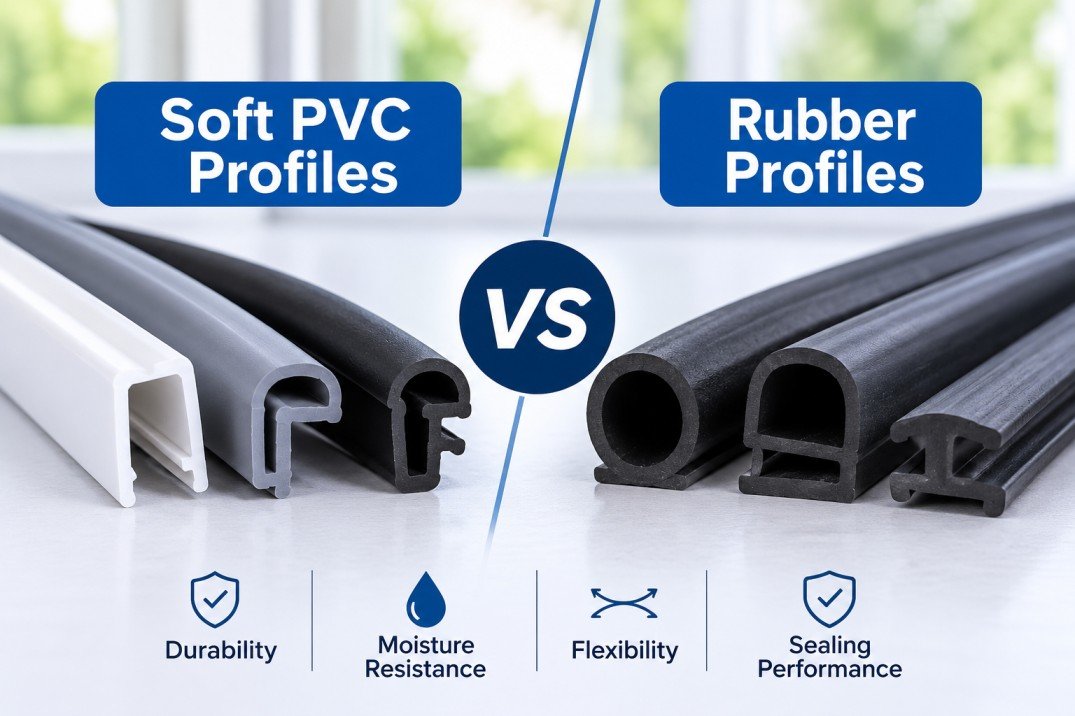
When it comes to choosing materials for sealing and edging, soft PVC and rubber profiles are two common options. Both materials offer flexibility and help protect edges, close gaps, and prevent the entry of dust and moisture. However, they differ in their strength, elasticity, shape retention, and cost.
Soft PVC profiles offer a good balance of flexibility, durability, moisture resistance, and ease of processing. Rubber profiles are known for their high elasticity and ability to recover after compression. However, they can be more expensive and may require specific grades to resist oils, chemicals, and changing temperatures.
Understanding the differences between soft PVC profiles and rubber profiles can help buyers select a material that suits their application and working conditions.
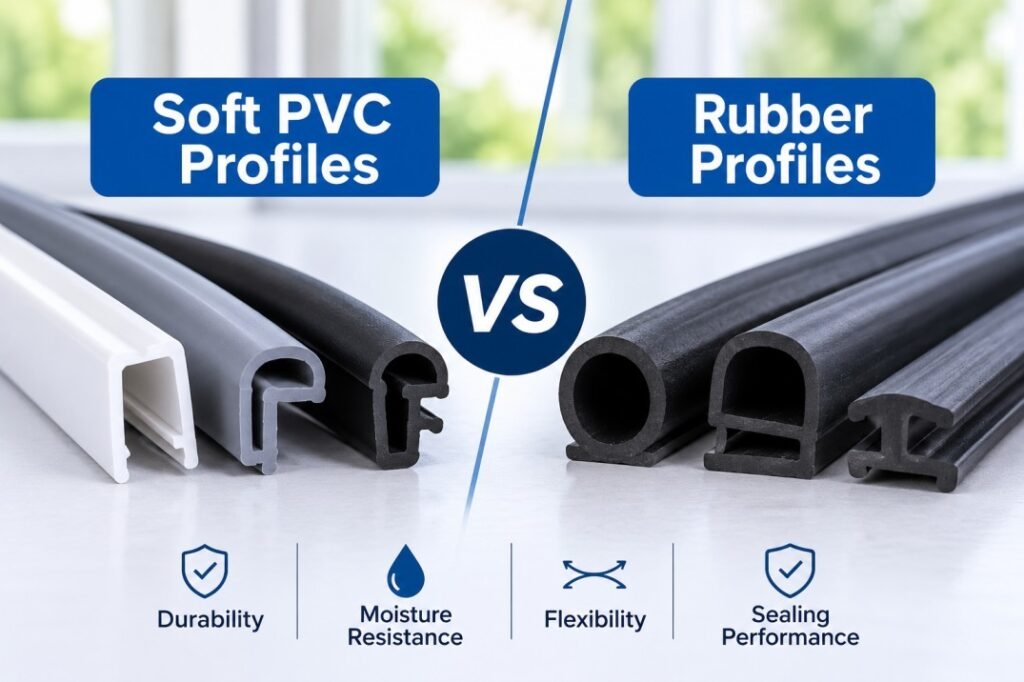
Soft PVC vs Rubber: Which Material Offers Better Sealing and Edge Protection?
While both soft PVC and rubber profiles are used for sealing and edge protection, they differ in their flexibility, durability, shape retention, and resistance to wear. Each material has properties that make it suitable for certain applications.
Let’s compare their key features to understand how they perform and which material may be better suited to different sealing and edging needs.
1. Flexibility and Elasticity
Soft PVC and rubber profiles offer flexibility, but they respond differently to bending and stretching.
Soft PVC profiles can bend around edges, corners, and curved surfaces without losing their basic shape. Their flexibility depends on the material hardness and formulation. They can adapt to different surfaces while retaining their shape, which is why flexible PVC works well for sealing compared with materials that may stretch more but offer less shape stability.
Rubber profiles offer higher elasticity in many applications. They can stretch and return to their original shape after the force is removed. This makes rubber useful where repeated stretching or movement is required.
However, not every sealing and edging application needs high elasticity. Soft PVC offers enough flexibility for many uses while maintaining a stable shape during regular use.
2. Sealing Performance
Both soft PVC and rubber profiles help seal gaps and prevent the entry of dust, moisture, and air. However, their sealing performance can differ based on their material properties, profile design, and level of compression.
Soft PVC profiles provide reliable sealing when designed with the right shape and dimensions. Their flexible structure allows them to fit against different surfaces and cover small gaps. They also retain their shape during regular use, making them suitable for edge seals, protective trims, and enclosure seals.
Rubber profiles offer good compression and recovery, but some types may lose their shape or sealing performance over time due to repeated pressure, wear, or exposure to certain chemicals. Their performance also depends on the rubber grade selected.
For many general sealing needs, soft PVC offers a practical combination of flexibility, reliable sealing, shape retention, and cost-effectiveness.
3. Durability and Wear Resistance
In terms of durability and wear resistance, soft PVC profiles offer good performance compared with rubber profiles in many industrial and commercial sealing and edging applications. Their ability to retain shape and resist regular wear helps them maintain a proper fit against edges and surfaces.
Soft PVC profiles offer good resistance to scratches, friction, and minor impacts. This is useful for edging applications where profiles may come into regular contact with other surfaces. They can also maintain their shape during regular use when the right hardness and formulation are selected.
Rubber profiles can handle repeated movement and compression, but some types may be more prone to surface wear and changes in shape over time. This can affect how well they fit against edges or maintain a seal. Exposure to certain oils, chemicals, and harsh conditions can also affect their service life.
Soft PVC is a suitable choice for sealing and edging applications that need good wear resistance, shape retention, and lasting surface protection.
4. Weather and Temperature Resistance
While both soft PVC and rubber profiles offer some resistance to changing weather and temperatures, their performance can affect how well they seal gaps and protect edges in indoor and outdoor settings.
Soft PVC profiles perform well within their recommended temperature range. Their formulation can be adjusted to provide different levels of flexibility and resistance for specific working conditions. Suitable UV-resistant additives can also help improve their performance when used outdoors, where exposure to sunlight may affect the profile over time.
Rubber profiles can handle a wide range of temperatures, depending on the rubber type. However, some grades may become hard or lose flexibility after prolonged exposure to sunlight, heat, or changing weather conditions. These changes may affect their fit against surfaces and their ability to maintain a seal.
For sealing and edging applications exposed to regular indoor or outdoor conditions, soft PVC can offer reliable performance when the correct grade and formulation are selected.
5. Chemical and Moisture Resistance
Both soft PVC and rubber profiles offer resistance to moisture and selected chemicals, but their compatibility depends on the substances they come into contact with. This is important for sealing and edging profiles used in damp areas or industrial settings.
Soft PVC has low water absorption and performs well in damp conditions. It also resists many acids, alkalis, and salts. These properties help it protect edges and maintain its function in applications where it may come into contact with water or mild chemical solutions.
Rubber also offers good moisture resistance, but its chemical resistance varies by type. Some rubber grades resist oils and selected chemicals, while others may swell or break down when exposed to certain substances. This can affect the profile’s fit, condition, and sealing performance.
Overall, soft PVC is a practical choice for many sealing and edging applications that need moisture resistance and protection from selected chemicals.
M3 Extrusion: Offering High-Quality Custom Soft PVC Profiles
M3 Extrusion manufactures custom soft PVC profiles for different industrial and commercial applications. Buyers can share their technical drawings, samples, and design requirements to discuss profile production.
Custom Profile Manufacturing
M3 Extrusion manufactures soft PVC profiles in different shapes, sizes, colours, and cutting lengths. Production is based on the required design, dimensions, material hardness, and application needs. This allows buyers to source profiles that fit their products and equipment.
Sample and Production Support
Sample production is available before bulk orders. Buyers can check the profile dimensions, flexibility, surface finish, and fit before approving larger quantities. This helps confirm that the profile meets the required design and application needs.
Export Support
M3 Extrusion supplies custom plastic profiles to international buyers. The company offers FOB and CIF shipping terms and can arrange air freight for urgent orders. This helps buyers manage their profile orders and shipping needs.
Frequently Asked Questions
Can soft PVC profiles be made in custom shapes and sizes?
Yes, soft PVC profiles can be manufactured in custom shapes and sizes based on technical drawings, samples, and design requirements. The profile design can include different widths, heights, wall thicknesses, and cross-sectional shapes.
How do soft PVC and rubber profiles respond to repeated compression?
Rubber profiles generally offer better compression recovery and can return to their original shape after repeated pressure. Soft PVC profiles can also handle compression, but their recovery depends on the material hardness, formulation, and profile design. They are suitable for applications that do not require high levels of repeated compression.
Are soft PVC profiles easier to cut and install than rubber profiles?
Soft PVC profiles are easy to cut and can be designed for simple fitting. Their installation depends on the profile shape and application. Rubber profiles can also be cut and fitted, but some designs may need more effort due to their thickness and elasticity. Soft PVC offers a practical option for many standard edging and sealing jobs.
What information should buyers provide when ordering custom soft PVC profiles?
Buyers should provide the required profile shape, dimensions, wall thickness, material hardness, colour, and cutting length. Technical drawings or physical samples can also help manufacturers understand the design. Information about the working conditions and intended use helps in selecting the right material grade.
Conclusion
Choosing between soft PVC and rubber profiles depends on the sealing and edging needs of an application. Rubber offers high elasticity and compression recovery, while soft PVC provides a good balance of flexibility, shape retention, moisture resistance, and cost. For many industrial and commercial uses, soft PVC profiles are a practical choice. Not only do they offer good wear resistance, but they are also easy to process and provide reliable performance across different applications.
Are you looking for a reliable manufacturer of custom soft PVC profiles? M3 Extrusion manufactures soft PVC profiles based on different shapes, sizes, colours, and design requirements. With 14+ extrusion lines, sample support, bulk production capacity, and export services, the company helps industrial buyers source profiles that suit their applications. Contact M3 Extrusion today to discuss custom soft PVC profile requirements.