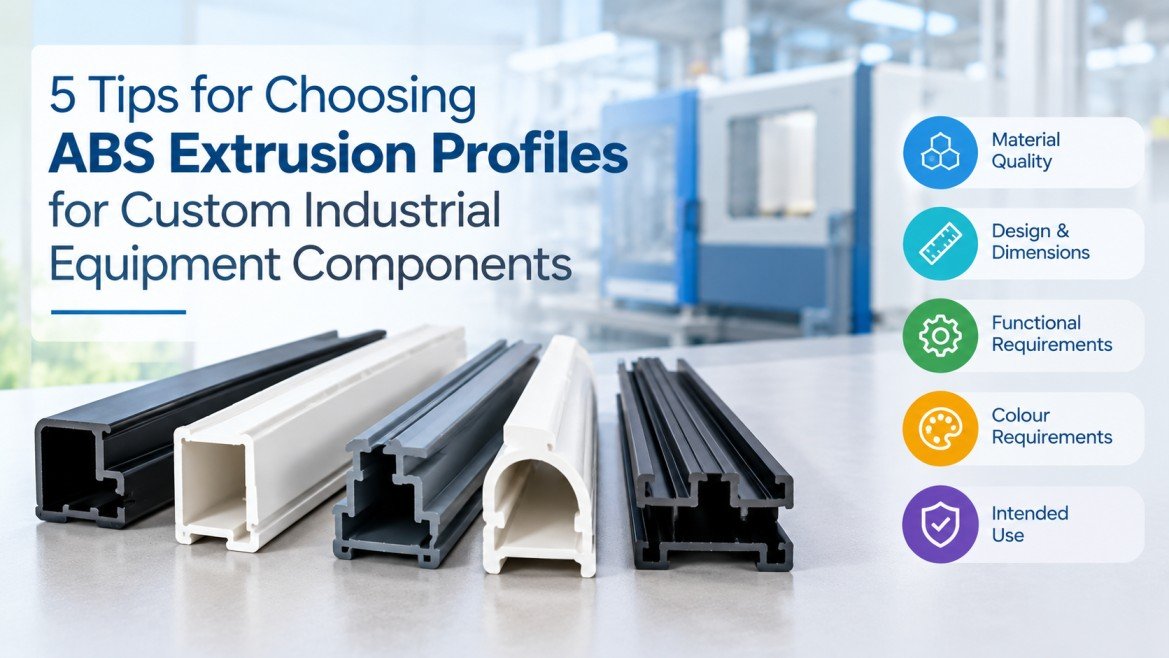
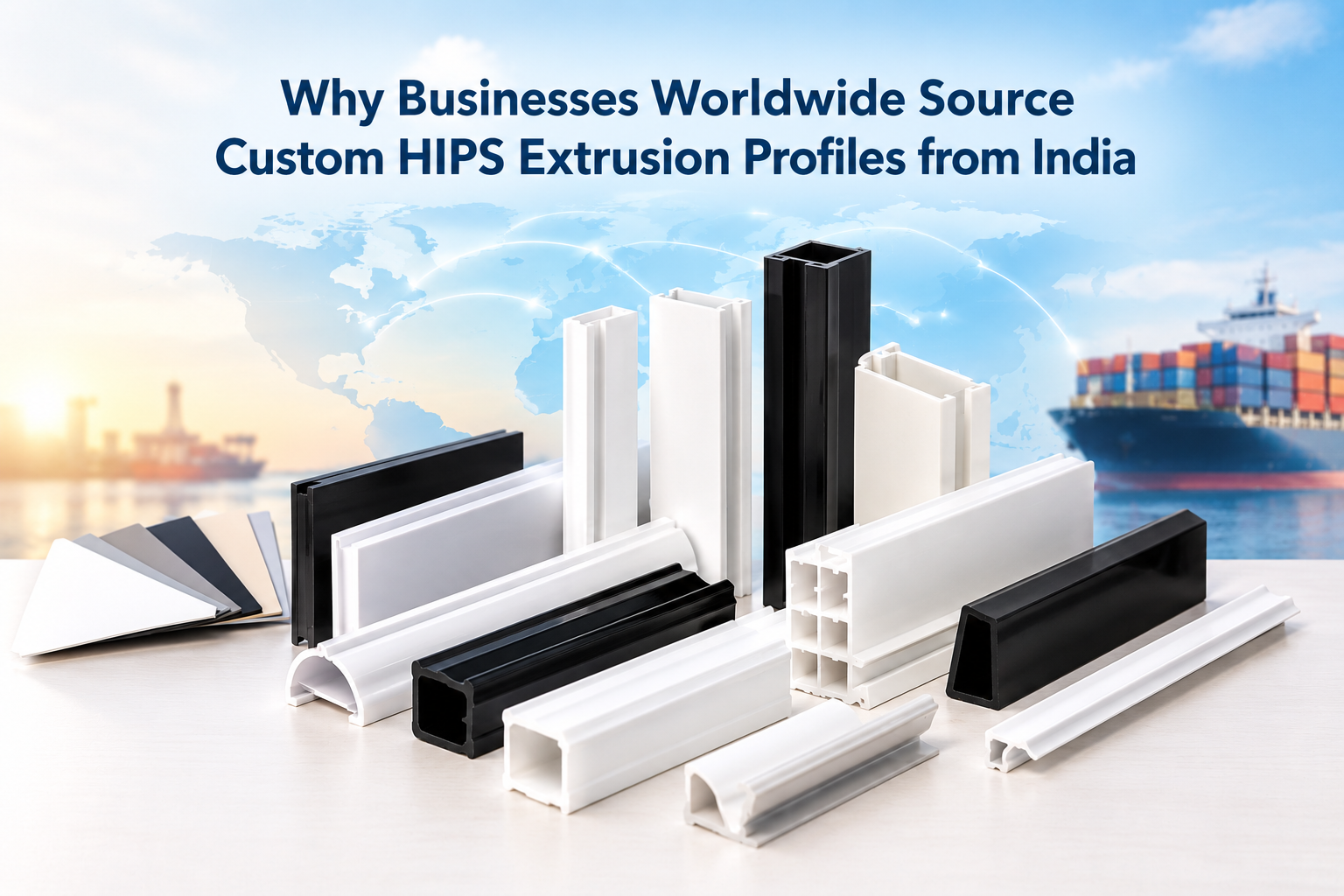
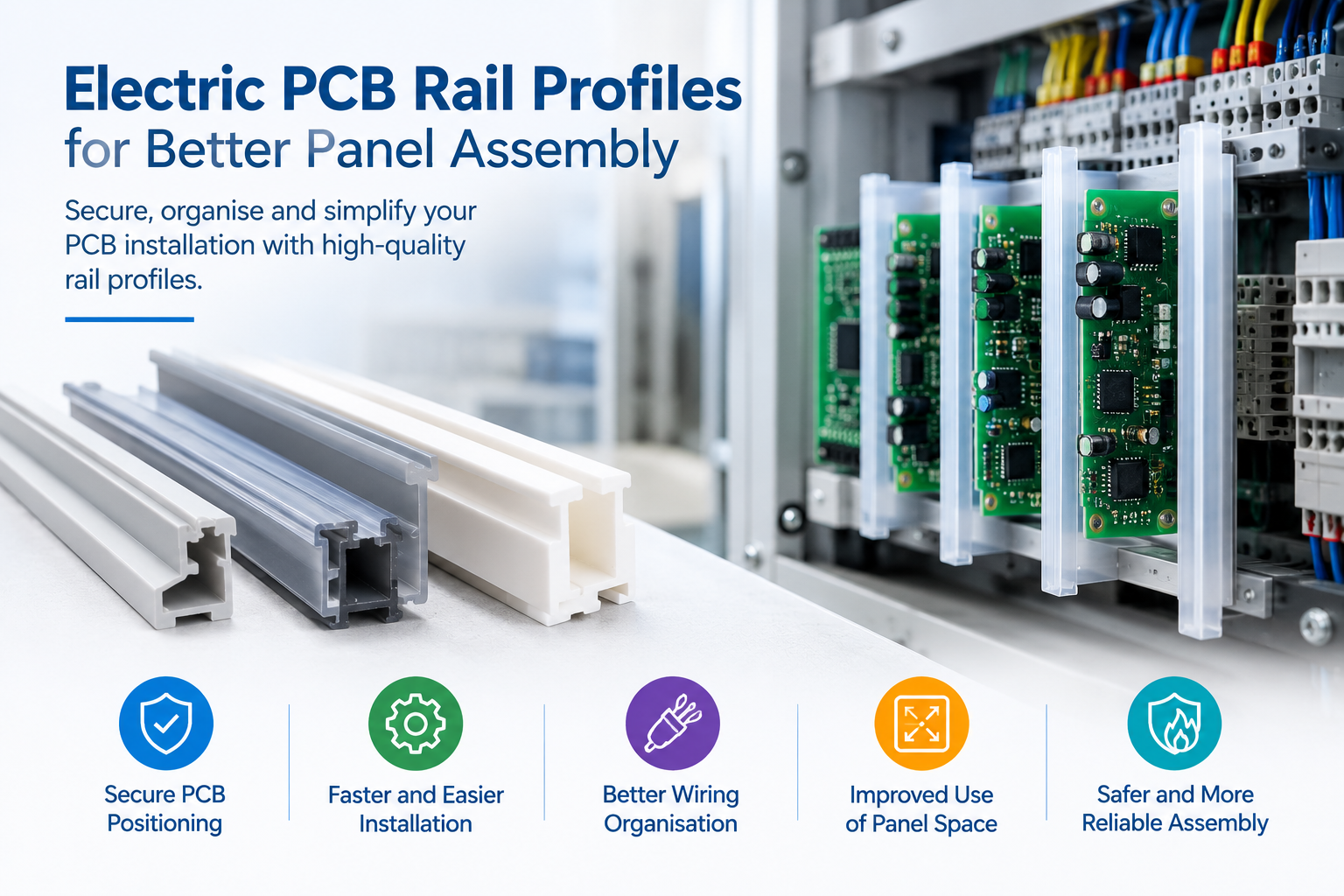
Over the years, ABS profiles have become immensely popular and are widely used for support and protection in different parts of production systems. Not only do they help hold machine components in place and protect sensitive areas, but they also support smooth and stable operation during daily use.
While the ABS profiles offered by industrial ABS plastic extrusion solutions in India offer numerous benefits, they still face failure in real working conditions. When this happens, production slows down. Machines may stop working or need repairs. Small faults in profiles can turn into bigger problems in the full system.
Most failures come from simple issues like wrong material, poor fit, or harsh working conditions. Nonetheless, with careful selection and proper handling during use, these failures can be avoided.
What Are ABS Profiles?
ABS profiles are plastic parts made from acrylonitrile butadiene styrene. They are formed using a process called extrusion. In this process, heated plastic is pushed through a shaped die. Once it cools, it keeps that shape.
These profiles are made in fixed shapes based on the machine’s needs. They can be designed in many forms, such as:
- Channels
- Tubes
- Bars
- Covers
- Edges
- Guides
In production lines, ABS profiles are used for many tasks. They help hold parts in place, protect wires or edges, and guide movement in machines. They also help keep systems clean and organised.
Since they can be shaped as needed, they reduce the need for extra fitting parts. This helps improve machine design and lowers setup issues.
Common Reasons Why ABS Profiles Fail in Production Lines
ABS profiles fail when they cannot handle working conditions or when they are not used in the right way. Below are the main causes.
Poor Material Quality
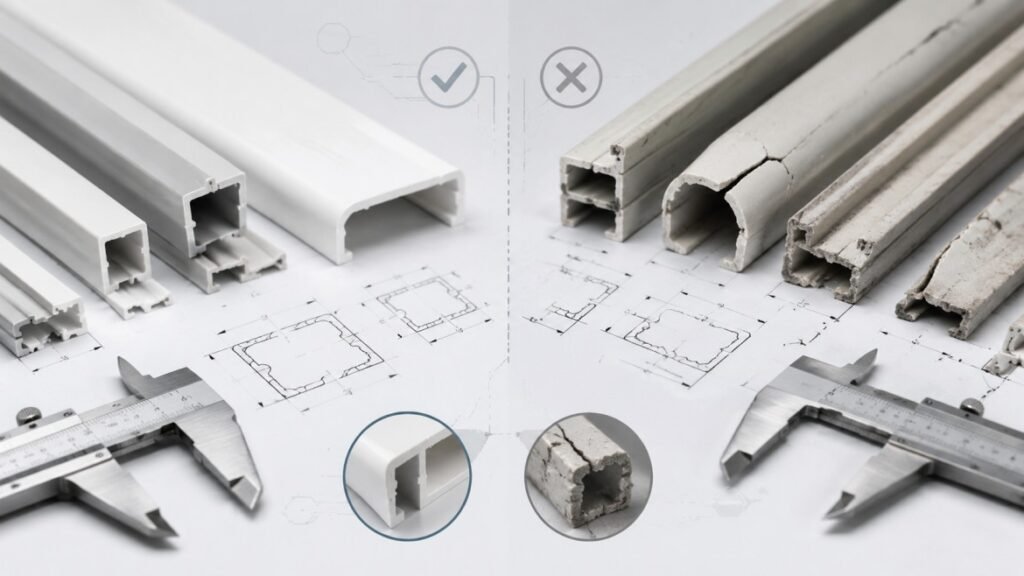
ABS profiles often fail when low-grade ABS material is used. Besides, not all ABS is the same. Some grades are not made for heavy use.
Low-grade ABS can:
- Crack under pressure
- Break under load
- Lose strength over time
In production lines, machines often run for long hours. Weak material cannot handle this stress. Over time, small cracks form and spread. This leads to part failure.
Consistent use of high-grade ABS ensures better durability and long-term performance in demanding applications.
Wrong Design Fit
A proper fit between ABS profiles and the system parts is critical for stable performance. When the profile does not match the exact shape and size needed, problems start to appear. Even small size errors can cause issues.
When the fit is wrong:
- Parts do not sit properly
- Gaps appear between components
This leads to uneven force on the profile. In moving systems, even a small misfit can create vibration or shifting.
A proper fit keeps the system stable. It also reduces wear on the ABS profile as well as connected parts.
Heat Damage
ABS plastic can handle only a limited range of heat before it starts to lose its normal strength and shape. In high-temperature zones, it can soften.
When heat levels go beyond the safe range:
- The profile may bend
- Shape may change
- Strength may drop
This affects how the part works inside the machine. In production lines where heat is constant, this becomes a serious issue.
Heat damage is often slow. It builds up over time, making it harder to detect early.
Chemical Exposure
Many production lines use oils, cleaners and other chemicals. ABS profiles can react with some of these substances.
Chemical exposure can:
- Weaken the surface
- Cause cracks or marks
- Reduce overall strength
Even if damage is not visible at first, internal strength can drop. Over time, the profile becomes weak and may fail under load.
Choosing the right material grade helps reduce this risk.
How to Avoid ABS Profile Failures
While ABS profiles can perform well in many production systems, they can still fail if they are not selected or used with care. By paying attention to key factors during selection, design and use, many of these issues can be avoided.
Here are the main steps to reduce ABS profile failures in production lines.
Choose the Right ABS Grade While Purchasing
Not all ABS profiles available on the market are suitable for industrial use. Some are made for light-duty applications and may not perform well in demanding conditions. When selecting ABS extrusion manufacturers, checking the material grade before purchase is important.
To avoid failure:
- Choose industrial-grade ABS profiles while buying from suppliers
- Match the profile grade to the weight it needs to support and the working conditions before purchase.
- Avoid low-quality or unverified products in the buying stage
Selecting the right grade at the time of purchase helps prevent issues in later use and reduces the risk of early failure.
Ensure Correct Design and Fit Before Installation
Design accuracy plays a key role when ABS profiles are used in production systems. Before installation, it is important to check if the ABS profile matches the required fit for the equipment.
To improve fit:
- Verify if the dimensions fit properly in the intended application before use
- Check fit during trial installation
A proper fit helps reduce stress and keeps movement smooth.
Control Heat Exposure in Use
Heat levels in the working environment have a direct impact on ABS profile performance. Before using them, it is important to check whether the application area stays within safe temperature limits.
To reduce heat issues:
- Avoid using ABS profiles in high-heat zones
- Keep ABS profiles away from direct heat sources in the system
This helps maintain shape and strength over time.
Protect ABS Profiles from Chemical Contact
Chemical exposure in production environments can reduce the life of ABS profiles after they are installed. It is important to assess working conditions before and during use.
To reduce damage:
- Choose chemical-resistant profiles while sourcing from suppliers
- Keep strong cleaning agents as well as oils away from direct contact
- Follow safe cleaning practices in the system
This helps protect the surface and structure during operation.
Frequently Asked Questions
How to check the quality of ABS profiles?
To check the quality, make sure you look at the surface finish, dimensional accuracy, and consistency of shape. Trusted suppliers also provide material details and specifications for verification.
Are ABS profiles suitable for high-heat environments?
Even though ABS profiles can handle moderate temperatures well, they won’t be able to maintain their shape and performance in very high-heat conditions where excessive heat can cause softening and deformation.
Why do ABS profiles crack in machines?
Cracks form due to weak material, poor fit or continuous stress. Over time, repeated force leads to surface damage and failure.
Can chemicals damage ABS profiles?
Yes. Oils, solvents, and strong cleaners can weaken ABS profiles. This reduces strength and may cause surface damage over time.
Conclusion
ABS profiles play an important role in production lines. They support structure, guide movement, and protect machine parts. But they can fail if not used correctly.
Most failures come from simple issues like weak material, poor fit, heat, or chemical exposure. These problems can be avoided with proper selection and careful use.
Are you looking for strong and reliable ABS profiles for industrial use? M3 Extrusion offers ABS profiles designed for strength, accuracy, and long service life.