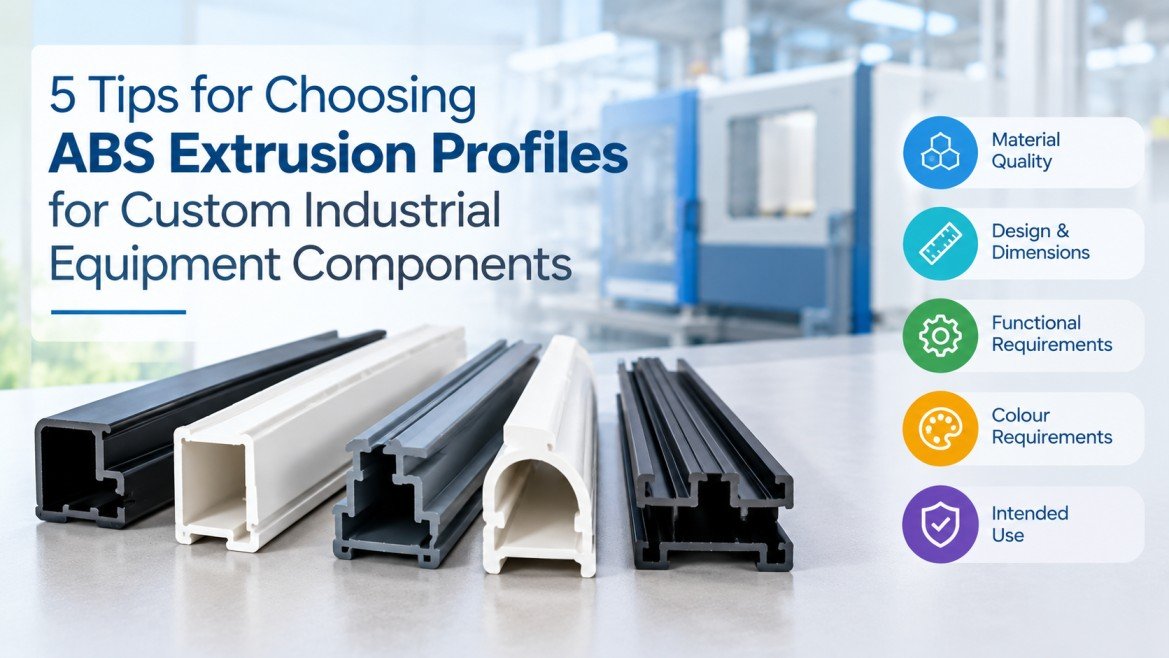
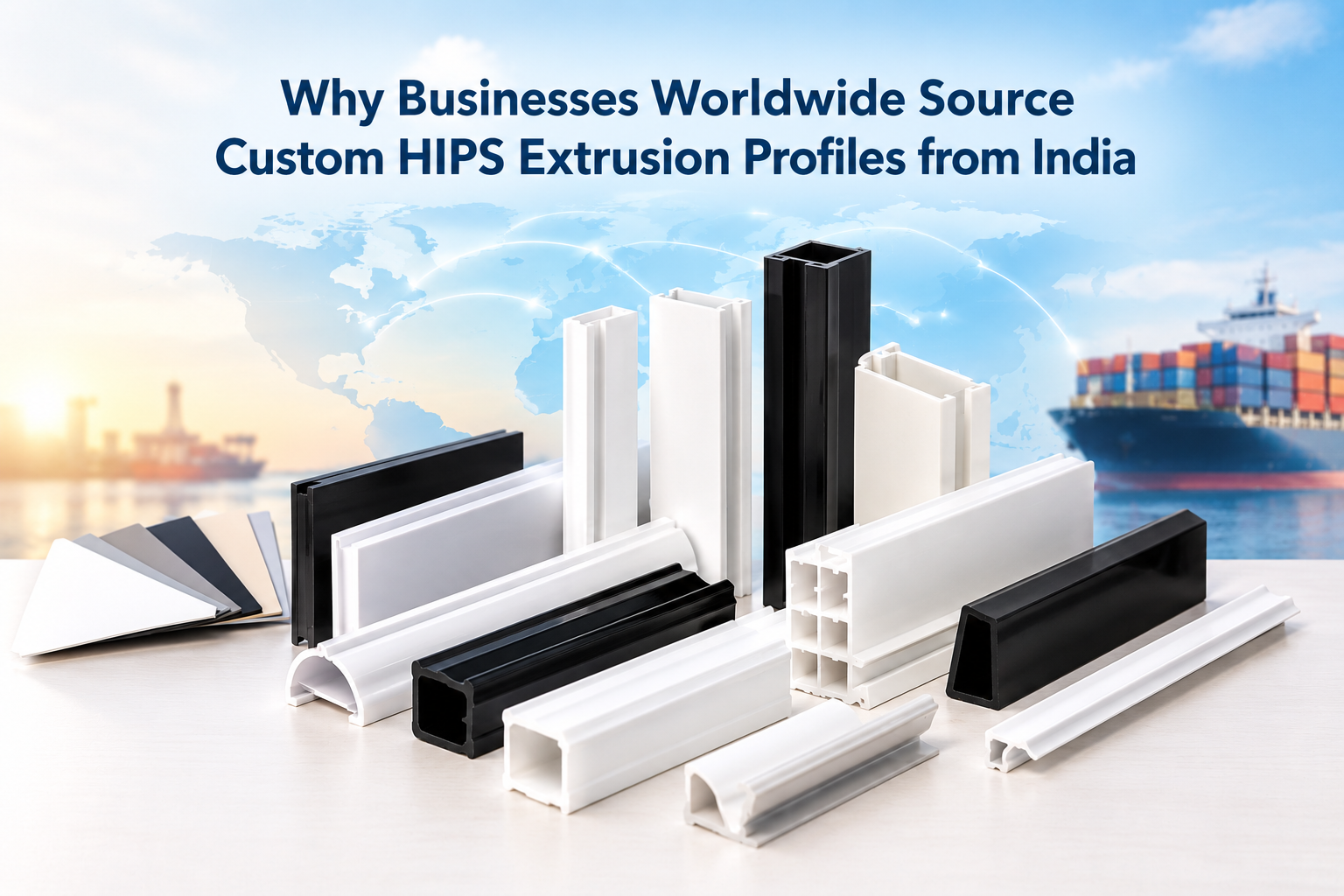
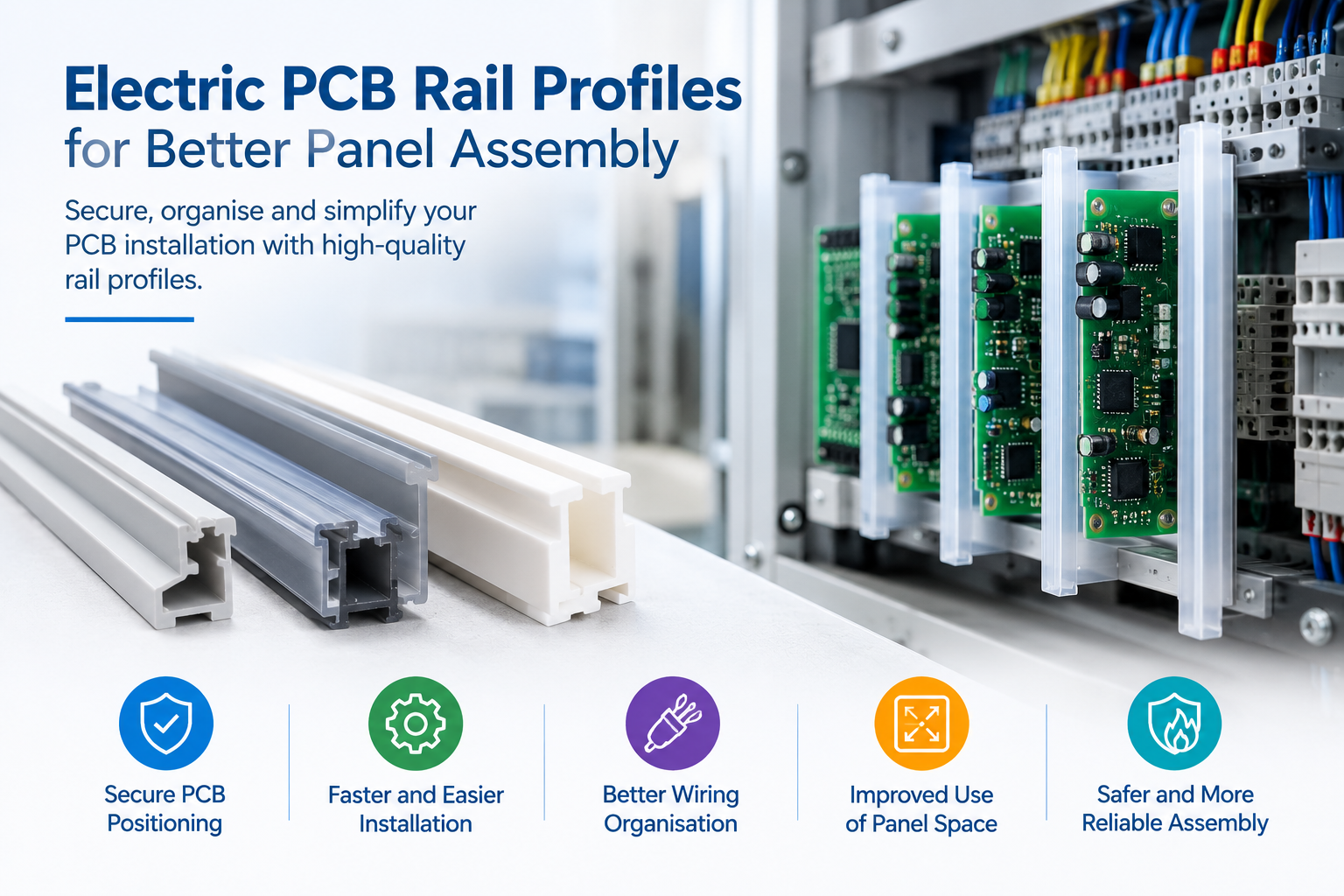
Made from acrylonitrile butadiene styrene (ABS), ABS extrusion profiles have become popular for making custom components for industrial equipment because they can be formed into different shapes and sizes to suit specific component designs. Not only do they offer good strength and impact resistance, but they also have good resistance to moisture, making them suitable for many industrial applications.
However, buying custom ABS extrusion profiles in India for custom industrial equipment components can be a daunting task since different profiles may vary in material grade, dimensions, design, and working performance. Even a small mistake in choosing the profile size, shape, or material can affect how well the component fits and works with the equipment.
Nonetheless, by doing some research and keeping in mind a few key factors, you can choose ABS extrusion profiles that match your equipment design and application needs.
5 Tips for Choosing ABS Extrusion Profiles for Custom Industrial Equipment Components
Choosing ABS extrusion profiles for custom industrial equipment involves more than just knowing the size and shape requirements. The profile also needs to work well as part of the finished component and suit the demands of the equipment. Taking a few important factors into account before placing an order can help reduce the risk of ABS profile production problems and issues during assembly.
Here are five tips to help you choose the right ABS extrusion profiles for your application.
Check the ABS Material Quality
One of the major factors that you need to take into account when choosing ABS extrusion profiles for a custom industrial equipment component is the quality and grade of the ABS material. Besides, the material affects how the profile performs during use.
Industrial equipment may expose a profile to impact, heat, moisture, or regular handling. The ABS material should be suitable for the conditions in which the component will operate.
Before choosing an ABS extrusion profile, check:
- Material Grade: Make sure the ABS grade suits the application.
- Impact Resistance: Check whether the profile can handle the level of impact expected during use.
- Heat Exposure: Consider the temperature around the component.
- Surface Quality: Check whether the profile has the required surface finish.
- Material Testing: Ask about test reports when certain material properties need to be confirmed.
Choosing the right ABS material can help the profile meet the needs of the equipment and its intended use.
Check the Profile Design and Dimensions
In addition to checking the ABS material quality, make sure you also check whether the profile design and dimensions match the requirements of the custom industrial equipment component. Even a small change in the profile shape or size can affect how the finished component fits, connects, or functions.
Before ordering, review the profile’s shape, width, height, wall thickness, and cutting length. Technical drawings, samples, or measurements can help the manufacturer understand the required profile.
Pay attention to:
- Profile Shape: Make sure the cross-section matches the component design.
- Profile Size: Check the required width, height, and overall dimensions.
- Wall Thickness: Select a wall thickness that suits the component’s intended use.
- Cutting Length: Confirm the required length for each finished profile.
- Dimensional Accuracy: Make sure the required dimensions can be maintained during production.
Clear and accurate dimensions can help ensure the ABS profiles match the requirements of the finished component.
Consider the Component’s Functional Requirements
When choosing an ABS extrusion profile, look at what the custom industrial equipment component needs to do during use. The profile design should include the features needed for that function, rather than focusing only on its overall shape and size.
Consider:
- Support: If the profile needs to hold another part, check whether its design can provide the required support.
- Protection: If it covers another component, make sure the profile provides enough coverage for the exposed area.
- Guidance: If it helps position or guide a part, check that the profile has the right channel, groove, or shape.
- Separation: If it keeps two parts apart, consider the required gap between them.
- Edge Coverage: If it covers an exposed edge, check that the profile shape matches the edge it needs to cover.
Choosing the profile based on the component’s actual function helps ensure the finished part performs its intended role.
Check Colour Requirements
The colour of an ABS extrusion profile may also be important when it is used as part of a custom industrial equipment component. The required colour can depend on the component design, product appearance, or the need to identify different parts.
Before ordering the profile, check:
- Colour Match: Make sure the profile matches the required colour of the finished component.
- Custom Colour: Check whether a specific colour is needed for the application.
- Colour Consistency: Make sure the same colour can be maintained across the required profiles.
- Surface Appearance: Consider whether the profile needs a particular level of gloss or finish.
- Colour Identification: Check whether different colours are needed to distinguish between components.
Checking the colour requirements before production can help ensure the finished ABS profiles match the design and identification needs of the component.
Match the Profile to Its Intended Use
The conditions in which the custom industrial equipment component will be used can affect the ABS profile you choose. The finished component may face heat, moisture, impact, chemicals, or regular handling during use.
Consider the conditions the profile will face before placing an order.
Look at:
- Temperature: Check the temperature range the profile will be exposed to.
- Impact: Consider whether the component may face knocks or repeated physical stress.
- Moisture: Check whether the profile will be used in areas with moisture or humidity.
- Chemicals: Consider whether it may come into contact with oils, cleaners, or other substances.
- Handling: Think about how often the component will be handled or moved.
Matching the ABS profile to its intended use can help ensure the material and design suit the working conditions of the custom industrial equipment component.
Get High-quality ABS Extrusion Profiles from M3 Extrusion
M3 Extrusion manufactures ABS extrusion profiles based on customer drawings, samples, dimensions, and technical requirements. The profiles can be produced in different shapes, sizes, colours, and cutting lengths for industrial applications.
Custom ABS Profile Manufacturing
M3 Extrusion supports custom ABS profile production for different component designs and requirements. Its manufacturing facility has 14+ extrusion lines and provides samples before bulk production, allowing buyers to review the profile before placing a larger order.
Bulk Order Support
M3 Extrusion supports bulk and repeat orders for ABS extrusion profiles. The standard minimum order quantity starts at 1,000 kg, with the usual production lead time around 45 days after order confirmation, depending on the profile and order volume.
Export Support
For international orders, M3 Extrusion offers FOB and CIF shipping terms for ABS extrusion profiles. Air freight can also be arranged for urgent orders.
Conclusion
Choosing the right ABS extrusion profiles can make or break the overall quality and performance of a custom industrial equipment component. By checking the material, profile design, dimensions, and other profile requirements, you can select an ABS extrusion profile that matches the needs of your component.
Are you looking for ABS extrusion profiles for custom industrial equipment components? M3 Extrusion offers high-quality ABS extrusion profiles at affordable rates. Contact us today to discuss your requirements.
Frequently Asked Questions
What are ABS extrusion profiles used for?
ABS extrusion profiles are used to make custom parts for industrial equipment and other products. They can be designed for applications that need a shaped plastic component with consistent dimensions.
Can ABS profiles be made in different sizes and colours?
Yes. ABS profiles can be produced in different sizes and colours based on the profile design and application requirements. Cutting lengths and other design details can also be customised.
What properties make ABS suitable for industrial components?
ABS offers good strength, impact resistance, and durability. These properties make it suitable for many industrial components where the profile needs to handle regular use and physical stress.
What is the difference between standard and custom ABS extrusion profiles?
Standard ABS profiles follow set shapes and sizes. Custom ABS extrusion profiles are made to match specific drawings, dimensions, shapes, and equipment requirements.